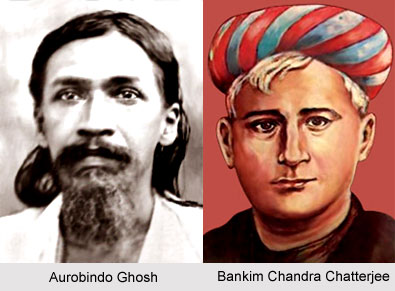
 The workings of the Congress led to a discontentment in the minds of people. The feeling gets blazed out with the comments of Bankim Chandra Chatterjee, as he described the Congressman "place-hunting politicians". From the writings of prolific persona like Aurobindo Ghosh the clear picture of such scenario comes out. To him the Congress was `dying of consumption`. Some causes have been pointed out that are thought to be resulted into the rise of Extremism.
1. True nature of the British Raj ---- The extensive and rigorous studies of the Nationalist leaders like, Ananda Charlu, R.N. Mudholkar, D.E. Wacha, G.K. Gokhle, Madan Mohan Malaviya debunked the true nature of British rule in India in terms of economy, politics, various policies etc. Their studies exposed the exploitative nature of British Raj. R.C Dutta and G.V. Joshi had also attempted to show the exploitative nature of British Land Revenue policy. The conspicuous disparity between the avowed aims and practiced policy in cases of recruitment to public service has been exposed with the studies of S.N. Banerjee. Even at the second session of the Congress held in Calcutta in the year 1886, a resolution was taken to control all the disparity. But the resolution was affirmed year after year without proper application. All this resulted naturally into Extremist ideology.
2. Increasing Westernization ---- Westernization started influencing Indian life, thought as well as politics. Indian religion, thought, culture and civilization started facing real challenge from Christianity, utilitarianism and Western civilization. Another attempt was also taken to coalesce Indian national identity into the British Empire. But though their writings Bankim Chandra Chatterjee, Vivekananda and Swami Dayananda attempted to appeal to the people of India. Bankim Chandra Chatterjee through his works in Bengali tried to incorporate the mantra `Service to the Motherland` into the minds of people. A feeling of self-confidence has been injected to the youth by a great Vedantist Vivekananda. Swami Dayananda blows up a new mission to conquer the West with the Indian Spirituality. Dayananda played an important role in building a new confidence within Hindus with his notions and political message `India for the Indians`.
3. Dissatisfaction rose with the achievement of the Congress ---- The younger members of the Congress were discontented with the cold and reactional attitude of the government. The younger generations of Congressman also known as Nationalist or Extremists were disgusted for the old one. The methods of peaceful and constitutional agitation known as 3 Ps - petition, prayer and protest faced savior criticism from the young members. These three methods were described as `political mendicancy` by them. Instead of these slow, negligible achievements they were in favor of adopting the rapid European revolutionary methods to contest the European imperialism. The visit of Lala Lajpat Rai to England also gave light on the real picture of British democracy. His message to the countrymen was, `they would have to strike a blow for freedom themselves, and they should be prepared to give unmistakable proof of their earnestness`.
4. The economic Scenario of India ---- During the British Raj, the economic condition of India was miserably deteriorating, which ultimately resulted into the growth of extremism. Additionally famines of 1896-97 and 1899-1900, bubonic plague in Maharashtra took a grievous toll of life. Government however failed to control the situations. In the Deccan, riots broke out. All these events led to the utter helplessness of the Indians.
5. International influence ---- Nationalist movements in Egypt, Persia, Turkey, Russia; humiliating treatment to the Indians in British Colonies in South Africa influenced the younger Indian generation. Abyssinia`s repulsion of the Italian Army and Japan`s thumping victory over Russia gained Indian nationalists more confidence to revolt against the British Empire.
6. Reactionary Policies of Lord Curzon`s ---- Lord Curzon during his seven years rule in India however managed to create a strong reaction in the minds of Indian people. The Calcutta Corporation Act, the official Secrets Act and the Indian Universities Act were the acts constituted by Curzon, which resulted into great bitterness in India.
7. The Partition of Bengal ---- The partition of Bengal has been considered as one of the most hated aspect of Curzon`s administration.