Acharya Hemachandra was an Indian Jain scholar, poet and polymath who lived in the 11th century. He is credited with writing on grammar, doctrine, prosody and contemporary history. He was noted as a prodigy by his contemporaries and was bestowed the title "Kalikal Sarvagya", literally meaning "the all-knowing of the Kali Yuga (age of vice)".
Early Life of Hemachandra
Acharya Hemachandra Suri was born in 1088 AD in the town of Dhandhuka, present Gujarat, around 100 kilometres southwest of Ahmedabad. His father Chachadev and mother Pahini named him Changdeva. The Jain temple of Modhera Tirtha is located at his birthplace. In his childhood, the Jain monk Devasuri visited Dhandhuka and was impressed by the young Hemachandra`s intellect. His mother and maternal uncle concurred with Devasuri, in opposition to his father, that Hemachandra be a disciple of his. Devasuri and Hemachandra travelled to Khambhat, where he was initiated a Jain monk on Magha Sud Chauth (4th day of the bright half of Magha month) and was given a new name, Somchandra. He was trained in religious discourse, philosophy, logic and grammar and became well versed in Jain and non-Jain scriptures. At the age of 21, he was ordained an Acharya of the Svetambara school of Jainism, at Nagaur in Rajasthan, and was named Acharya Hemachandra Suri.
Spiritual Impact of Hemachandra
During the time of Acharya Hemachandra, Gujarat was ruled by the Solanki Dynasty. Under the reign of Siddharaja Jaisinh I, Hemachandra rose to prominence. The fame of Hemachandra`s efficacy and knowledge gradually spread everywhere and the noble culture was on the rise in Gujarat due to the ability of Hemachandra and the cooperation of King Siddharaja. King Siddharaja was succeeded by Kumarapala. Hemachandra had predicted seven years earlier that Kumarapala would be the king. Also, the Acharya had once saved Kumarapala`s life. Therefore, Kumarapala considered Hemachandra his spiritual "guru" (teacher) and benefactor. Kumarapala gave him exceptional honour in his court and sought his advice in the shaping of his kingdom in Gujarat. In a very short time, Gujarat became a centre of non-violence, learning and good culture. In the year 1121, Hemachandra was involved in the construction of the Jain temple at Taranga.
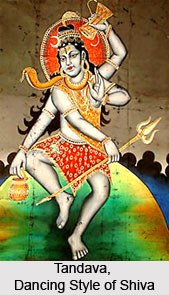
Taking an approach of Anekantavada, Acharya Hemachandra is said to have displayed a broad minded attitude and pleased Kumarapala, with his perspective of universal welfare over own career development. Perceiving the rise and popularity of Hemachandra, certain Brahmins grew jealous of him and complained to the Emperor that Hemachandra was a very arrogant person who did not have any respect towards the Hindu Gods, and that he refused to bow down to Lord Shiva. Though King Kumarpal was not ready to accept these views about his spiritual teacher, he invited Hemachandra to the temple of Lord Shiva (God of destruction). To the surprise of those Brahmins, Hemachandra readily bowed before the idol of Shiva, but by saying:
"Bhavbijaskurajanana ragadayah kshaymupagata yasya; Brahma va Vishnurva haro Jino va namastasmai", meaning that he was bowing down only before that God who has demolished the passions like attachment and hatred which are the cause of worldly life, whether he is Brahma, Vishnu, or Jina. He ensured that he always remained true to the principles of Jainism, like a Jain should bow down only to a passionless and detached god. This approach of Hemachandra pleased Kumarapala who became an ardent devotee and follower of Hemachandra, also the Jain religious faith had also become the official religion of Gujarat, with even animal slaughter being banned.
Literary Works of Hemachandra
In addition to preaching Jainism, Acharya Hemachandra was a prodigious writer who wrote grammars of Sanskrit and Prakrit, poetry, prosody, lexicons, texts on science and logic and practically all branches of Indian philosophy. It is said that Hemachandra composed in total about 3.5 Crore verses, of which many are now lost.
In Grammar, Hemachandra wrote "Siddha-Hema-Sabdanusasana", a Sanskrit grammar written in the Ashtadhyayi style of Panini, also including six Prakrit languages. In poetry, he wrote "Dvyashraya Kavya" and "Trishashthi-Shalaka-Purusha", the former being on the history of the Solanki dynasty. It is an important source of history of region of the time. In Lexicography, Hemachandra wrote lexicons "Abhidhan-Chintamani", "Anekarth Kosha" of words bearing multiple meanings, "Deshi-Shabda-Sangraho" of non-Sanskrit origin and "Niganthu Sesa" that is a botanical lexicon. In Mathematics, Hemachandra, following the earlier Gopala, presented an earlier version of the Fibonacci sequence. It was presented around 1150, about fifty years before Fibonacci (1202). His other works include prosody "Chandanushasana", commentary in rhetoric work "Alankara Chudamani", "Abhidhana-chintamani", "Yoga-Shastra" (treatises on Yoga), "Pramana-mimansa" on Logic and "Vitaraga-Stotra" on prayers.
Death of Acharya Hemachandra
Acharya Hemachandra announced about his death six months in advance and fasted in his last days, a Jain practice called Sallekhana. He died at Anhilwad Patan. The year of death differs according to sources, but 1173 is generally accepted. The Jain culture still shines brightly in Gujarat, due to the influence of the literary works contributed by the great Acharya Hemachandra.
Related Articles:
Sages of India
Sanskrit Grammar
Kali Yuga
Jain Scriptures
Swetambara Sect, Jain Sects
Solanki Dynasty
Siddharaja Jaisinh
Kumarapala
Taranga Jain Temple, Mehsana, Patan, Gujarat
Indian Philosophy
Jain Rituals
Jain Fasting