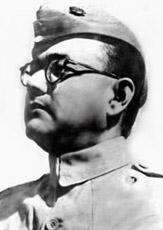
The Andamans, at one time, precisely during 1942, had fallen into the strong hands of the Japanese, when they made a fantastic effort and overpowered the Britons. And it was during this time that Subhas Chandra Bose had paid a visit to the Cellular Jail, during his brilliant period of escapade to various places outside India. While in Singapore, Rash Behari Bose had handed over the responsibilities of Indian Independence League to Subhas Chandra. It was here that he formally announced the establishment of Azad Hind Fauj, and was christened Netaji. After conducting several meetings, Bose visited the Andamans and Cellular Jail in 1943. The eerie muteness of the place reminded him of the torture and toil the prisoners had to face in the hands of the merciless British. And it was here in 30th December that Netaji had hoisted the Indian National flag, making the historical effort to make the Andaman and Nicobar Islands free from the yoke of the oppressing British.
During the Second World War, the
Andaman and Nicobar Islands fell to the Japanese forces on 23rd March 1942, when the ships of the Imperial Japanese Navy swooped on the islands of Ross and Chatham which were the entry points to Port Blair. Within the next two days the Japanese completed the occupation of Port Blair, arrested the British officials and established their own administration. It lasted till October 1945.
Subhas Chandra Bose visited Andamans in December 1943.
After his dramatic escape from Calcutta in 1941, Subhas Chandra Bose reached Tokyo from Germany in the first week of June 1943 and from there he went to Singapore. In a historic public meeting held in Singapore on 4th July 1943, Rash Behari Bose handed over the reigns of the
Indian Independence League to him. After assuming command as president of the League, Subhas Chandra Bose came to be known as `Netaji`.
The formation of the Azad Hind Fauj (
Indian National Army) was formally announced on 5th July 1943 when Netaji gave his comrades a war cry of `Delhi Chalo`.
Netaji took over the direct command of the Indian National Army on 25th August 1943. He inspired his companions in this words: "Comrades, Officers and Men, with your unstinted supported and unflinching loyalty, Azad Hind Fauj, will become the instrument of India`s liberation.... With the slogan... onwards to Delhi.... on our lips let us continue to fight till our national flag flies over the Viceroy`s house in New Delhi and Azad Hind Fauj holds the victory parade inside the ancient Red Fort of the Indian Metropolis."
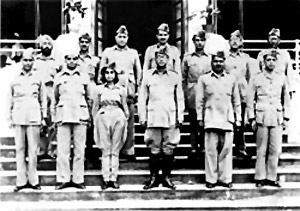
The provisionary government of Azad Hind was formed on 21st October 1943. The event was announced with solemness at a meeting of Indian representatives from all over East Asia at Sathey Cinema Building in Singapore. A proclamation was issued under the signatures of Subhas Chandra Bose as head of state, prime minister and minister for foreign affairs, who took the oath of allegiance to India in the following words:
"In the name of God, I take this sacred oath that to liberate India and the thirty eight crores of my countrymen I, Subhas Chandra Bose, will continue this sacred war of freedom till the last breath of my life. I shall always remain a servant of India and look after the welfare of the 38 crores of Indian brothers and sisters. This shall be for me my highest duty.
Even after winning freedom, I will always be prepared to shed the last drop of my blood for the preservation of India`s freedom."
Apart from the ministers, there were advisors to the provisional government of Azad Hind. Rash Behari Bose was nominated as the supreme advisor. A number of high-flying Indians of East Asia who had been playing a very significant role in the Indian Independence League were also nominated as advisors to the provisional government.
The provisional government of Azad Hind was recognised by Japan on 23rd October 1943, and was also recognised by Germany, Way, Manchuko, Philippines, Burma, National China, Hungry and Croatia.
The provisional government in a Cabinet meeting decided and declared war on the United Kingdom and the United States of America at 12.15 a.m. on 24th October 1943.
The assembly of the greater East Asiatic Nations opened its session in Tokyo on 5th November 1943. Premier Tojo announced in this assembly on 7th November 1943, Japan`s decision to hand over the
Andaman and Nicobar Islands to the Indians.
On 8th November 1943, Netaji announced in a press release that the return of the Andamans to the Indians would be the first territory to be liberated from the British yoke.
After mutual discussions it was settled that the defence and foreign affairs would continue under the Japanese government, but the charge of other departments of the administration would be handed over to the Azad Hind Government.
At mid-day on 29th December 1943, Netaji accompanied by Saravshri Anand Mohan Sahay, Captain Rawat ADC and Col. D.S. Raju, personal physician of Netaji reached the Andamans. He was received by the Japanese admiral at Port Blair. The enthusiastic Indians and Burmese also consorted a warm reception to him. Netaji went around the historic
Cellular Jail where the walls told him, in silence, the woes of the
political prisoners who were tortured there. He also saw the courage and enduring spirit that braved the vehemence of the authorities. Netaji paid glowing tributes to the noble sacrifices of the Indian heroes.
On the following day, 30th December 1943, the National Flag was hoisted by Netaji on the liberated Indian soil, an act first of its kind in the history of British rule in India. All the ceremonies of retrieving the lost territory from the enemy were held with joy and jubilation. The national anthem was sung in chorus by all present, which added to the gravity of the occasion. During the course of the day, the National Flag was hoisted atop the British chief commissioner`s residence in
Ross Island. Netaji expressed the hope that some day the same flag would fly on the Viceroy`s House in New Delhi.
In a press interview in the first quarter of 1944, Netaji had stated that by the acquisition of the Andaman and Nicobar Islands, the provisional government had become a national entity in fact as well as in law. The liberation of the Andamans had symbolic significance, because the British always used them as a jail for political prisoners. Part by part, Indian territory would be liberated, but it was always the first plot of land that held the significance. The Andamans were renamed as `Shaheed` in the memory of these martyrs and Nicobar as `Swaraj`.
The administration of the Andaman and Nicobar Islands was formally handed over to the Azad Hind Government on 17th February 1944.
The Indian National Army started its attack in the mountain regions of Arakan near the Indo-Burma border on 4th February 1944. Taung Bazar was occupied on the same day, Sectabin in the Kaladon sector on 1st March, Kaladon on 5th March, Port White was captured on 8th March and Lavecot on 12th March 1944. Indian soil was now brooding large in the eyes of the conquering heroes from Kennedy Peak, which was occupied on 18th March 1944.
Half of the province of
Assam and a small portion of Bengal had been captured by the Azad Hind Fauj. Chittagong was expected to fall at any moment and the troops had occupied a part of the town of
Imphal.
In April 1945, the situation suddenly changed and Subhas Chandra Bose was advised to leave Burma on 24th April 1945.
Netaji carried on the struggle for Indian independence. He became a part of history when he died in an air crash in Taipei (Japan) on 18th August 1945. The British however recaptured the Andamans in October 1945.

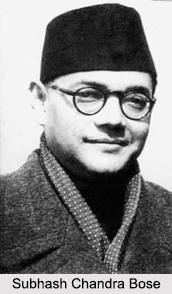 Subhash Chandra Bose, affectionately known as "Netaji" was a fierce freedom fighter and popular leader in the political scene in pre-independence era with strong patriotism and great visionary ideas. He founded Indian National Army (Azad Hind Fauj) to overthrow British Empire from India. Subhash Chandra Bose strongly believed that India could achieve political freedom only if it had political, military and diplomatic support from outside.
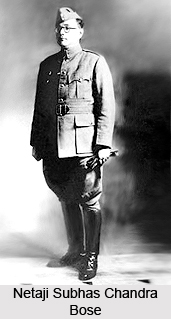 During his service with the Indian National Congress, he was greatly influenced by
 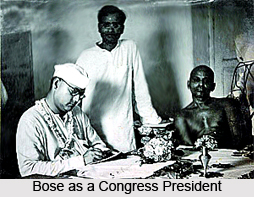 Bose was elected to the post of Chief Executive Officer of the newly constituted Calcutta Corporation in April 1924. That same year in October, Bose was arrested on suspicion of terrorism. At first, he was kept in
 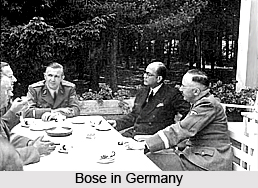 In his call to freedom, Subhas Chandra Bose encouraged full participation of the Indian Masses to strive for independence. Bose initiated the concept of the "National Planning Committee" in 1938. His correspondence reveals that despite his clear dislike for British subjugation, he was deeply impressed by their methodical and systematic approach and their steadfastly disciplinarian outlook towards life.
The contrast between Gandhi and Bose is captured with reasonable measure in a saying attributable to him ""If people slap you once, slap them twice". Having failed to persuade Gandhi for the mass civil disobedience to protest against Viceroy Lord Linlithgow`s decision to declare war on India`s behalf without consulting the Congress leadership, he organised mass protests in Kolkata. The disobedience was calling for the `Holwell Monument` commemorating the Black Hole of Kolkata. He was thrown in Jail and was released only after a seven-day hunger strike.
In his call to freedom, Subhas Chandra Bose encouraged full participation of the Indian Masses to strive for independence. Bose initiated the concept of the "National Planning Committee" in 1938. His correspondence reveals that despite his clear dislike for British subjugation, he was deeply impressed by their methodical and systematic approach and their steadfastly disciplinarian outlook towards life.
The contrast between Gandhi and Bose is captured with reasonable measure in a saying attributable to him ""If people slap you once, slap them twice". Having failed to persuade Gandhi for the mass civil disobedience to protest against Viceroy Lord Linlithgow`s decision to declare war on India`s behalf without consulting the Congress leadership, he organised mass protests in Kolkata. The disobedience was calling for the `Holwell Monument` commemorating the Black Hole of Kolkata. He was thrown in Jail and was released only after a seven-day hunger strike.
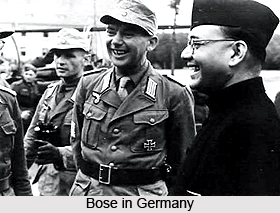 Through the INA Subhas Chandra Bose persuaded the British to think about India`s Independence. His various instructions given to the soldiers reflect his immense dedication towards attaining independence for India. This marks perhaps the most significant event in the annals of India`s fight for independence.
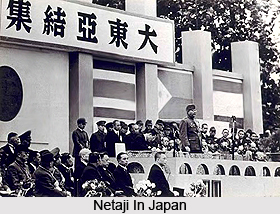 In early March 1942, the Japanese proposed that the INA become the military arm of the Indian Independence League (IIL), and Rash Behari Bose, an Indian revolutionary who had earlier fled to Japan, lead the movement. This was formally announced in June 1942 in Bangkok. By late 1942, the Indians increasingly felt that the Japanese were making use of them and they distrusted Rash Behari Bose. In December, Mohan Singh and other INA leaders ordered the INA to split up after severe disagreements with the Japanese. Mohan Singh was subsequently arrested by the Japanese and exiled to Pulau Ubin.
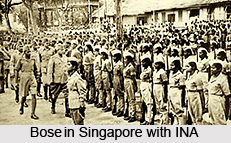
Nevertheless, when Subhas Chandra Bose arrived in the Far East in 1943, he revitalized the idea of a liberation army. In July, at a meeting in Singapore, Rash Behari Bose handed over control of the organisation to Subhas Chandra Bose. The Army consisted of some 85,000 regular troops including a separate women`s unit named after Rani Lakhmi Bai which was the first women`s combat army unit of its kind in Asia. These troops were under the patronage of a provisional government, with its own currency, court and civil code, called the "Provisional Government of Free India" or the Arzi Hukumat-e-Azad Hind.
In early March 1942, the Japanese proposed that the INA become the military arm of the Indian Independence League (IIL), and Rash Behari Bose, an Indian revolutionary who had earlier fled to Japan, lead the movement. This was formally announced in June 1942 in Bangkok. By late 1942, the Indians increasingly felt that the Japanese were making use of them and they distrusted Rash Behari Bose. In December, Mohan Singh and other INA leaders ordered the INA to split up after severe disagreements with the Japanese. Mohan Singh was subsequently arrested by the Japanese and exiled to Pulau Ubin.
Nevertheless, when Subhas Chandra Bose arrived in the Far East in 1943, he revitalized the idea of a liberation army. In July, at a meeting in Singapore, Rash Behari Bose handed over control of the organisation to Subhas Chandra Bose. The Army consisted of some 85,000 regular troops including a separate women`s unit named after Rani Lakhmi Bai which was the first women`s combat army unit of its kind in Asia. These troops were under the patronage of a provisional government, with its own currency, court and civil code, called the "Provisional Government of Free India" or the Arzi Hukumat-e-Azad Hind.
 This second INA fought along with the Imperial Japanese Army against the British and the commonwealth forces. They were well-known among the nine Axis states-Germany, Japan, Italy, the Independent State of Croatia, Wang Jingwei`s Government in Nanjing, Thailand, a provisional government of Burma, Manchukuo and Japanese-controlled Philippines. When the Japanese pressed forward towards India through Burma, the INA`s troops assisted in the Japanese victory over the British in the battles of Arakan and Meiktila, along with the Burmese National Army led by Ba Maw and Aung San.
The INA were established in the Andaman and Nicobar Islands in the Bay of Bengal, part of the British Indian Empire under Japanese occupation, was renamed `Shaheed` (Martyr) and `Swaraj` (Self-rule). Bose visited the islands on just one occasion late in 1943, when he was carefully shielded from the local population by the Japanese authorities because at that time they were torturing the leader of the Indian Independence League on the Islands, Dr. Diwan Singh (who later died of his injuries, in the Cellular Jail). The islanders made several attempts to alert Bose to their unfortunate conditions, but they did not succeed.
This second INA fought along with the Imperial Japanese Army against the British and the commonwealth forces. They were well-known among the nine Axis states-Germany, Japan, Italy, the Independent State of Croatia, Wang Jingwei`s Government in Nanjing, Thailand, a provisional government of Burma, Manchukuo and Japanese-controlled Philippines. When the Japanese pressed forward towards India through Burma, the INA`s troops assisted in the Japanese victory over the British in the battles of Arakan and Meiktila, along with the Burmese National Army led by Ba Maw and Aung San.
The INA were established in the Andaman and Nicobar Islands in the Bay of Bengal, part of the British Indian Empire under Japanese occupation, was renamed `Shaheed` (Martyr) and `Swaraj` (Self-rule). Bose visited the islands on just one occasion late in 1943, when he was carefully shielded from the local population by the Japanese authorities because at that time they were torturing the leader of the Indian Independence League on the Islands, Dr. Diwan Singh (who later died of his injuries, in the Cellular Jail). The islanders made several attempts to alert Bose to their unfortunate conditions, but they did not succeed.
 Subhas Chandra Bose hoped that large numbers of soldiers would come to join the INA as soon as they would discover that INA were attacking the British India from outside. But this did not materialize on the expected scale. As the war situation worsened for the Japanese, troops began to desert from the INA. As a result Japanese funding for the army diminished, and Bose was forced to raise taxes on the Indian populations of Malaysia and Singapore, sometimes extracting money by force. The Provisional Government`s aim of establishing a base in mainland India was lost forever when the Japanese were defeated at the battles of Kohima and Imphal. The INA was forced to pull back, along with the defeated Japanese Army. Japan`s surrender also led to the eventual surrender of the Indian National Army.