 Marathi literature defines that bulk of literature in Marathi language, deduced from a version of Sanskrit language, and spoken primarily in the Indian state of Maharashtra and penned in the Devanagari script.
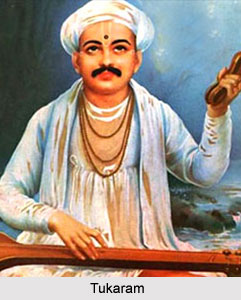
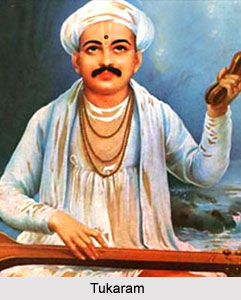
Marathi literature and its initiation can be traced back far beyond the 10th century. It had descended from Sanskrit through Pali, Maharashtri and Maharashtra - Apabhramsa. Though the earliest known Marathi literary inscription discovered at the foot of the statue at Shravanabelgola in Karnataka is dated back to c. 983 C.E., Marathi literature in fact had begun with religious writings by the saint-poets belonging to Mahanubhava and Warkari sects. Mahanubhava saints were believed to employ prose as their principal medium, whereas, Warkari saints chose poetry as the basic medium. The early saint-poets in this literary genre were Mukundaraj who penned Vivekasindhu, Dnyaneshwar (1275-1296) (who penned Bhawarthadeepika, which is prevalently known as Dnyaneshwari, a 9000-couplets long commentary on the Bhagavad Gita) and Namdev. The Marathi litterateurs were soon succeeded by the Warkari saint-poet Eknath (1528-1599). Mukteswar is legendary for translating the colossal epic Mahabharata into Marathi. Social reformers like saint-poet Tukaram virtually had transformed Marathi literature into an enriched literary language. Ramdas`s (1608-1681) Dasabodh and Manache Shlok are well-known renditions of this tradition. The origin and growth of Marathi literature is however indebted to two significant events. The first was the rise of the Yadava dynasty whose capital was situated at Devgiri. The Yadava dynasty of 1189-1320 A.D., which had embraced Marathi as the court language and massively patronised Marathi learned men, contributed profoundly in the origin and tremendous growth of Marathi literature. The second event was the coming of two religious sects known as Mahanubhav Panth and Warkari Panth, described above.
Marathi literature can principally be classified into two ages: Ancient or Old Marathi literature (1000-1800 A.D.) and Modern Marathi Literature (1800 onwards). The former consisted chiefly of poetry composed in metres and restricted to the poet`s choice of words and rhythms. It was particularly devotional, narrative and pessimistic in nature, for old Marathi poets had not been able to formulate satire, parody, irony and humor into their poetry. The Modern Period can further be sub-divided into four ages. The first period commences from 1800 to 1885, the second from 1885 to 1920, the third from 1921 to 1945, and the culminating from 1946 to the present times. This period had remained witness to the development of all forms of prose and poetry, also encompassing scientific and technical literature.
During the 18th century, some widely-acknowledged works like Yatharthadeepika (by Vaman Pandit), Naladamayanti Swayamvara (by Raghunath Pandit), Pandava Pratap, Harivijay, Ramvijay (by Shridhar Pandit) and Mahabharata (by Moropant) were developed one after the other in Marathi literature. Nevertheless, the most versatile and competent writer amongst the Marathi poets was Moropanta (1729-1794), whose Mahabharata was the first ever epic poem in Marathi. The historical section of the old Marathi literature was unparalleled, due to its incorporation of both prose and poetry. The prose section contained the Bakhars that were authored after the foundation of the Maratha kingdom by emperor Shivaji. The poetry section comprised the Povadas and the Katavas, composed by the Shahirs. The period from 1794 to 1818 is regarded as the closing period of the Old Marathi literature and the commencement of the Modern Marathi literature.
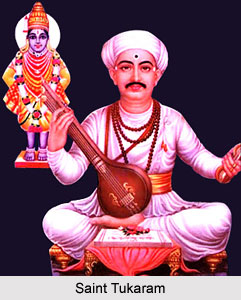
In the history of Marathi literature, Tukaram (1608-1651) has been lent a unique and unbeatable stature. A true genius, Tukaram`s poetry sprang forth from his magnificent inspirations. He was a radical reformer and has often been termed `Sant Tukaram`. Terseness, clarity, vigour and earnestness could be pointed out in each line of his poetry. Tukaram`s associate Ramdas (1608-1681), and his unforgettable Dasabodha is an inspiring and impressive piece in Marathi. Eighteenth century poetry of Marathi literature is well represented by Vaman Pandit (Yathartha Dipika), Raghunath Pandit (Nala Damayanti Swayamvara) and Shridhar Pandit (Pandavpratap, Harivijay and Ramvijay).
Under the British rule, Marathi literature again was to witness its metamorphosis into fresh kind of publishing. Attempts were made to enrich both the language and literature. The Raja of Tanjore had triumphantly endeavoured to translate the first English Book into Marathi in 1817. Several more such endeavours were made and translation work was encouraged and promoted a lot. Chhatre, Bal Shastri Jambhekar, Lokahitavadi and Jotiba Phule had begun to pen on various topics in Marathi.
The first Marathi newspaper was started in 1835, and Baba Padamji`s Yamuna Paryatan was the first Marathi novel devoted to social reform in 1857. However, this period was a lean one for original poetry and only translations of Sanskrit poems were produced. Establishment of the University of Bombay in 1858 and the starting of the newspaper Kesari in 1880-81 lent a boost to the development of Modern Marathi Literature. Keshavasuta (1866-1905), the first Marathi revolutionary poet, launched the genre of Modern Marathi poetry with his first poem. During this period two groups of poets, Ravikiran Mandal and Kavi Tambi, together boosted some great poets like Ananta Kanekar (Chandarat), Kavi Anil (Phulwat) and N G Deshpande towards perfection in the art. Poetry in Marathi literature post the 1945 era, basically started to explore and scout human life in all its shades. B S Mardhekar set the fashion of this trend for P S Rage, Vinda Karandikar, Vasant Bapat and Shanta Shelke.
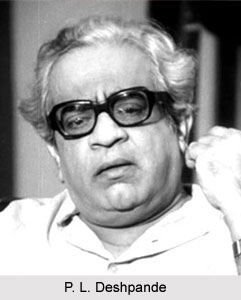 Born in 1843, Vishnudas Bhave was the pioneer of Marathi drama, bringing in yet another new era of modernism and radicalism against the colonialists. Other great dramatists in Marathi literature comprised: B P Kirloskar (Saubhadra), G B Deval (Sharada), R G Gadkari (Ekach Pyala), Mama Varerkar (Apporva Bangal) and P L Deshpande (Amaldar). The first Marathi novel to be published during pre-independence India was Madhali Sthiti by Hari Narayan Apte (1864-1919). Natha Madhav, CV Vaidya, Prof. V M Joshi, V S Khandekar, Sane Guruji, Kusumvati Deshpande, Kamalabai Tilak are some of the prominent novelists of the Marathi language. The short story and essay forms in Marathi came into existence precisely during this period, in the hands of men like Diwakar Krishna, H N Apte and V S Gurjar. S M Mate, Durga Bhagwat, N S Phadke are well-known essayists in Marathi, a rich language in all its forms and branches with a history of more than a thousand years. It occupies a distinguishable position in the field of Indian Literature and continues to do so even in the 21st century, under stalwarts like Mahesh Elkunchwar (Yugant), Arun Kolatkar (Bhijaki Vahi) or, Asha Bage (Bhoomi).
The first English book was translated in Marathi in 1817; the first Marathi newspaper was begun in 1835; Baba Padamji had penned numerous books on social reforms, like the Yamuna Paryatana in 1857. Lokmanya Tilak`s newspaper Kesari, set up in 1880, had provided a platform for sharing literary views. These exceedingly blood-boiling news during the then British-occupied India was reason enough for Marathi literature to walk tall in every sphere of life. Truly literature in the Marathi language had contributed whole-heartedly to the evolving modern Indian society. Marathi drama efficiently had further aided Indians at this time. Here also a different genre called Sangit Natya or Musicals could be witnessed. The first play to be staged was V.A. Bhave`s Sita Swayamvar in 1841. Later, Kirioskar (1843-85) and G.B. Deval (1854-19l6) brought in a romantic aroma and social content to the highly matured Marathi literary genre. But, Krishnaji Prabhakar Khadilkar (1872-1948) with his banned play Kichaka-Vadh (1910), indeed had set the trend of `political playwriting` moving. Later on stalwarts like Ram Ganesh Gadkari and Prahlad keshav Atre ably sufficed this "stage".
Marathi drama began flourishing during the 1960s and 1970s, with few of the best Indian actors available to take on a variety of protagonists. Mohan Agashe, Sriram Lagoo, Kashinath Ghanekar, Prabhakar Panshikar playacted umpteen immortal characters penned by greats like Vasant Kanetkar, Kusumagraj, Vijay Tendulkar to name a few. This Drama Movement was ably supported by Marathi films, which did not however enjoy a continuous success, as did the continuing Marathi literature. Starting with V. Shantaram and before him the pioneer Dadasaheb Phalke, Marathi cinema however went on to influence contemporary Hindi cinema, giving rise to a new direction of Marathi literary domain. Director Raja Paranjape, music director Sudhir Phadke, lyricist G. Madgulkar and actor Raja Gosavi came together to render quiet a few hits in later periods.
Marathi language as spoken by people in Maharashtra was throughout influenced by drama and cinema, together with contemporary literature. Modern Marathi poetry began with Mahatma Jyotiba Phule`s compositions. The later poets like Keshavsuta, Balakavi, Govindagraj, and the poets of Ravi Kiran Mandal like Madhav Julian penned poetry, which was heavily influenced by Romantic and Victorian English poetry; it was largely sentimental and lyrical. P. K Atre, the renowned satirist and politician, authored a parody of this sort of poetry in his collection Jhenduchi Phule.
As time progressed, Marathi literature also gained its potential in the extremely competitive world of literary section, with Sane Guruji (1899-1950) contributing to children`s literature in Marathi. His major works comprise Shyamchi Aai (Shyam`s Mother), Astik (Believer), Gode Shevat (The Sweet Ending), etc. He also had translated and simplified numerous Western Classics and published them in a book of stories titled Gode Goshti (Sweet Stories). Vishnu Sakharam Khandekar (1889-1976)`s Yayati had earned him the Jnanpith Award for 1975. He also had penned umpteen other novels, short stories, essays etc. Khandekar`s major works include Don Dhruv (Two Poles), Ulka (Meteorite), Krounchavadh, Jalalela Mohar and Amrutvel among many others.
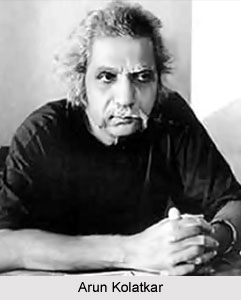 The major prototypal shift in Marathi literature awareness began in the forties with the avant-garde modernist poetry of B.S. Mardhekar. In the mid fifties, the `little magazine movement` had gained its sufficient momentum. With the aid of this movement, the literature published writings, which were non-conformist, radical and experimental. The Dalit literary movement also had gained intensity due to the little magazine movement. This radical movement was influenced by the philosophy of Dr. Babasaheb Ambedkar and challenged the literary establishment, which largely comprised middle class, urban and upper caste men. The little magazine movement, in fact, had thrown up many excellent writers. Bhalchandra Nemade is a well-known novelist, critic and poet. The poetry of Arun Kolatkar, Dilip Chitre, Namdeo Dhasal, Vasant Abaji Dahake, Manohar Oak and many other modernist Marathi poets is complex, rich and provocative. Bhau Padhye, Vilas Sarang Shyam Manohar and Visharm Bedekar are also well known fiction writers.
Datta Raghunath Kavthekar was a renowned Marathi novelist of the 1930s, sweeping through the late 1970s era and was popular for novels and collections of short stories, depicting aspects of human relationships and emotions. Movies based on his stories include Kunkavacha Karanda. Narayan Sitaram Phadake (N.S. Phadake), Prahlad Keshav Atre (P.K. Atre), Krishnaji Keshav Damale (known as Keshavsut), Purushottam Laxman Deshpande (affectionately referred to as "Pu La") are some of the very few mentioned greats in Marathi literature, ever to have contributed to almost all sorts of genres. Ranging from pure situational humour to modern classics, to Marathi film music direction, "Pu La" virtually achieved everything. He has written, directed and rendered music to a Marathi classic - Gulacha Ganpati. Marathi literature also was enlightened by his contribution of a great deal to Indian classical music, by way of his enthused solo performances on the harmonium.
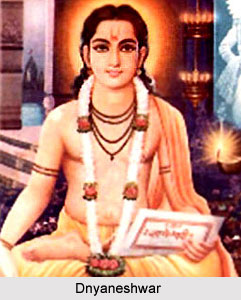 Early Marathi Literature goes back a long way and can be traced to almost the eleventh century. A lot of the literary works of early
 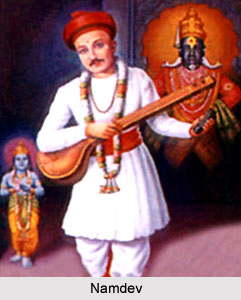 From the times of Dnyaneshwar and Namdev till the seventeenth century, Maharashtra saw the decline of the Yadav dynasty and the emergence of Muslim rule. The new Muslim rulers consolidated their political and military domination for the next three centuries. During this period, Maharashtra`s cultural and spiritual integrity was sustained by the teachings of Dnyaneshwar, Namdev,
  During this period, prose did not develop beyond the form of `bakhar` which was used to record accounts of battles and administrative and political orders and events. These bakhars provide us with contemporary accounts of the times in clear and precise terms. This form flourished later during the times of the Peshwas.
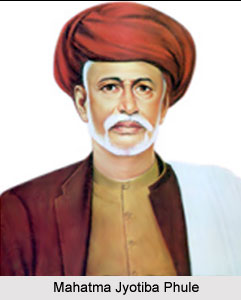 With the advent of printing technology, the Maharashtrians now started to explore newer possibilities in the changed context of society and state. The periodicals in English provided a useful model for the educated Maharashtrians and an opportunity to revive interest in older Marathi poetry and other classics. Along with literary periodicals, there were other periodicals countering the attacks of the missionaries on Hinduism. While upper-caste, educated Hindus were countering the missionaries, through writings on social, political, religious, and philosophical issues, they were also translating literary works from English. Printing technology and education enabled the non-Brahmins to forge alliances with the reformist elements among the Brahmins and later pave an independent path to reject the caste system. The revolutionary work of Mahatma Jyotiba Phule (1827-90) in educating women and persons from lower castes is important in this period. Hari Deshmukh (1823-92) was an important reformist writer of this period. Through his contribution to the weekly Prabhakar, he criticized the superstition, idleness, and ignorance widespread in Maharashtra of his times and extolled the virtues of the British, namely, learning, efficiency, industriousness, and scientific knowledge.
 Marathi literature in the late nineteenth century was a mix of several factors that were moulding the life of the Indian people. The period between the demise of the peshwa rule, establishment of the British administration, and 1874 was characterized by a strange mix of strength and vulnerability. A number of changes had been brought in the life of the Indian people which forced them to reconsider their earlier convictions and social customs. There was an increasing spread of periodicals, the introduction of a new educational system which comprised English and the spread of Western social, economic, and political thoughts. The new class of educated people, exposed to Western ideas, began to see the problems and limitations of traditional social structure and relations. The initial attempts at social change had brought about and exposed new cleavages in the society: orthodox and reformist, educated and uneducated,
  The differences in the social surroundings of
 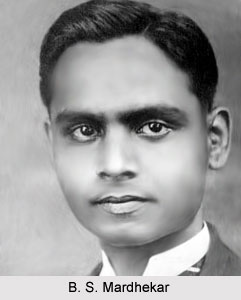 Modernism in Marathi Literature is most distinctly seen in the poetry written during the time. B. S. Mardhekar (1909-56) is recognized as the originator of the "modernist" trend in Marathi literature. His early poetry was along the lines of the works of Ravikiran Mandal and Balkavi Thombre. His initial collection of poems, Shishiragama (1939), reflects those influences. However, in 1947, he published his second volume, `Kahi Kavita`, which changed the tone of Marathi poetry. In this collection, he expresses the disappointment, irony, and strangeness of human life in contemporary society. He says that as the society undergoes a change, the earlier established structures, kinds of relationships and interactions also go through changes. However, what is strange to note here is that in the period during which he wrote, there was no noticeable degradation of human life in India than before. Development of science, technology, and industry remained vague and restricted. The capitalist mode of production was not yet the dominant one. The de-humanization, disillusionment, and uncertainties that he expresses through this volume are more reflective of the postwar European situation. This is not to suggest that conditions in
 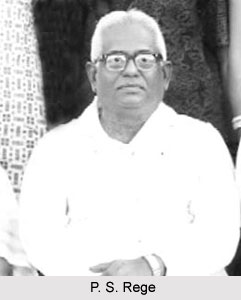 P. S. Rege (1910-78) is acknowledged as an important poet of contemporary Marathi poetry. He, along with Mardhekar and Muktibodh, is credited for revival of poetry in the post-colonial period. Yet, his approach to poetry is quite different from that of the other two. He is more focused with form, style, rhythm, lyricism, and sensual expression. His poetry avoids the dimensions of time and space. Thus it is held that there was a very strong private element in his poetry. He published his first collection of poems, Sadhana am Itar Kavita, in 1931. Himaseka (1943) is acknowledged as his first major collection. There is a constant theme which seems to haunt his imagination, and that is of a woman in love. He feels that feminity embodies the essence of love that goes beyond time and event. His later collections of poetry include Dusara Pakshi (1966), Priyala (1972), and Suhrudgatha (1975). He also wrote three novels, two volumes of essays and literary criticism, and several plays.
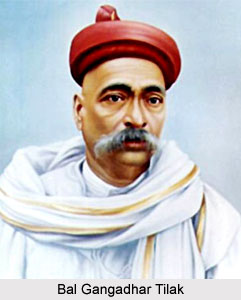
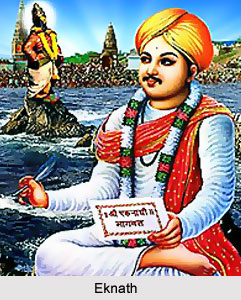 Renaissance in Modern Marathi Literature gets reflected through the different literary works including prose, fiction, poetry and drama.
  While poetry is becoming more and more unintelligible, drama continues to thrive and maintain its rich tradition. Marathi stage was born in 1843 and has an illustrious line of great dramatists. Vaatak translated Bjornson`s `The Gauntlet` in 1933 and with Rangnekar and P. K. Atre, a new school of drama used as a form of social satire started. Both playwrights of immense popularity, Atre and Rangnekar, however, did not raise the literary standard of Marathi drama. Further, there has been a new realisation of writing psycho-analytical plays meant for the new stage. P. L Deshpande, Vijay Tendulkar and Vasant Keretkar experimented in reviving the stage with the very significant contribution of creating new round characters instead of mere flat monochrome `types`, in handling situations of social helplessness and frustration with an underlying streak of comedy and satire, and in reviving historical plays without their old insistence on sabre-rattling and clap-trap trick scenes and thundering speeches.
 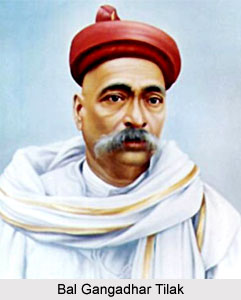 Marathi Literature during the Indian National Movement was the outcome as well as a motivating factor for the many social and political changes that were taking place at the time. One of the major influences on Marathi Literature during the Indian National Movement was
 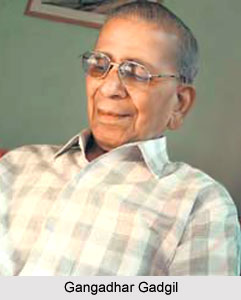 Prose in Marathi literature took a distinct turn in the twentieth century. Gangadhar Gadgil (1923), with Arvind Gokhale, Vyankatesh Madgulkar, and P. B. Bhave, ushered in what has been called the "new short story." The newness implied in the label refers to the return of realism. Gadgil led the charge against the false romantic-imaginary world exemplified in the works of Phadke and Khandekar. The de-humanizing industrial world, horrors of war, the partition, and changing social reality provided the writers of his generation with many themes to explore in their works. The newness of short stories of Gadgil and his contemporaries lay in their willingness to experiment with new techniques and themes with a sense of purpose.
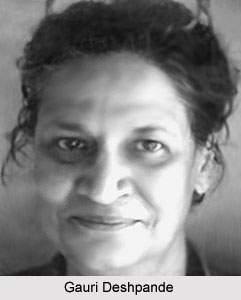 Gauri Deshpande (1942) was one of the important women writers in contemporary Marathi literature. She has also published three collections of her poetry in English. She has made her mark on the Marathi short story and novel with themes and concerns that centre on the upper-middle-class cosmopolitan women. Her `Eka Paan Galavaya` (1980) is a collection of three long stories. `Turungatil Patre` is a story of an urbane and sensitive young woman who is trying to comprehend her relationships to men in her life. The second story in the collection, `Madhya Latapatita,` is again a story of a happily married woman in that anxious passing phase of approaching middle age. She is unsure of the meaning and purpose of her married life. She leaves her husband, with whom she is living in a foreign country, and returns to