The history of Indian coins has been one of profound historical significance, a journey which has been momentous enough to stand at par with the history of India itself. Indeed, India`s prolonged journey of historical evolution would perhaps never have been thus eventful, had it not been for the discovery of these ancient Indian coins, the later medieval coins and coinage and the ruling dynasties who had issued them for their subjects. However, history and its everlasting traversing through ages never really stops at a given specific time period. As such the concept of coins, mintage and coin-making and currency did also advance towards modernity, leaving back the yesteryears of perhaps little ancientness. The era of modern coins in India was authentically ushered in by the arrival of European powers into India, with a gradual declination of the Mughal Empire, since the arrival of Aurangzeb to the Mughal throne. Coins of modern India further had received its much-wanted and much-unwanted impetus from the East India Company and the eventual British Empire for its 200 years of supreme reign.
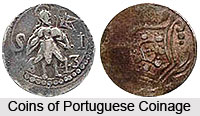
Coins and coin making of modern India had begun its journey precisely in the wake of the first rising sun of the early 16th century. Except the Marathas, no other dynasty considered the importance of a potential navy to shield India from foreign incursion via sea route. Vasco da Gama was the first European to reach India by means of sea route in 1498. By 16th century, European countries like Portugal, Spain, France, England, Netherlands and Denmark had achieved substantial naval pre-eminence and had grounded various factories (or had colonies) in several of the subcontinents. In 1613, Mughal Emperor Jehangir had permitted the English to establish a factory at Surat. Soon the King of England James I had sent an ambassador, Sir Thomas Roe to Jehangir`s court, who brilliantly had negotiated to earn the permission for many more such factories, amongst which coin making was perhaps ranked at the top. The East India Company slowly expanded their trade and fortune till early 18th century. The fall of Marathas was the cardinal event which indeed had opened the doors of Indian dominance for British in the mid 18th century. Coins of modern India had started to make its headway under the thriving prosperity of British East India Company, precisely in Bengal. The then Bengal was the province where the British had tasted fruits of their first success. In 1698, the British had purchased `Zamindari` (authority to collect taxes) of three villages of Govindpur, Sutanuti and Kalighatta (Calcutta) for 1200 rupees. Warren Hastings further had seized control of Oudh, Mysore, Hyderabad, Karnataka, Surat, Tanjavore, mostly by bribery and violence. The ruthless English finally took control of Delhi in 1803 and Mughal Emperor Shah Alam II virtually lived as a Company pensioner, thus bringing down the curtain of the dignity of Mughal Empire entirely.
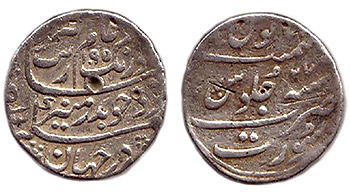
Early English settlements in India had three broad grouping, comprising: those in Western India (Bombay and Surat), those in South India (Madras) and those in the Eastern Province of Bengal (Calcutta). Early English coins of modern India accordingly were developed along three broad strands in rhyme with the local satisfactoriness of the coins for the intentions of trade and successful commerce. The coins of Bengal were formulated along the lines of Mughal pattern; those of Madras were moulded along South Indian lines both in design and metrology (Pagoda) as well as along Mughal designs. The English coins of Western India grew along Mughal as well as English patterns. It was only in 1717 A.D. that the English obtained permission from the Emperor Farrukhsiyar to strike Mughal money at the Bombay mint. English patterned modern Indian coins were cast at the Bombay Mint. The gold coins were termed Carolina, the silver coins Anglina, the copper coins Cupperoon and tin coins Tinny.
Beautiful and dainty gold coins were begun to be minted in Murshidabad, Calcutta by the East India Company. Coins of modern India for the very first time were being moulded in factories through machine and also struck meticulously, popularly referred to as Mohur or Muhar. However, in its nascent stage modern coins and coin making in India, i.e., the gold coins minted by the East India Company were done up in subtle Mughal style and also used extensively till they had introduced their own monetary system much later, in 1835 A.D. Quite understandably, by the early 1830, the English had become the predominant power in India. The rise of British as the most overriding power after over a hundred years of violent agitation, lead them to enact the Coinage Act of 1835 and for further uniform coinage to be issued. Newly designed coins of `modern India` with the image of William IV on the obverse and the value on the reverse in English and Urdu, were begun to be issued in 1835. The coins from that time onwards were minted in Western style, moving away from the Mughal shadow, depicting portraits of King/Queen of England.
Coins and coin making in modern India however was to receive a transitory encumbrance in the form of The Revolt of 1857 and its aftermath. The British East India Company had cast coins in India till 1857, when the First War of Independence broke out, more respectably referred to as the Sepoy Mutiny. Most native rulers were exceedingly bitter at the British presence on Indian soil - this very factor brought them together and they revolted against the Company policies. In spite of such intimidating intentions, the British were better organised, had better resources and better schooled troops. With a sharp presence of mind they had acted swiftly, the revolt was quickly suppressed and finally the whole Indian subcontinent was efficiently brought under complete control of the British East India Company. British politicians, however, at that juncture had decided to intervene. A bill was passed in the English Parliament and this resulted in loss of Company control over the entire Indian subcontinent. In 1858 A.D., just after the culmination of the Sepoy Mutiny, the property and powers of East India Company were transferred directly to the British Crown. Queen Victoria of England was declared as Queen and later Empress of India. The following years and centuries had remained witness to uncountable designs being contrived to coin making in modern India, which were minted during the reign of British monarch William IV (1835-1840 A.D.) and Queen Victoria (1840-1857 A.D.).
Some of these coins from the then `modern India` were also minted in Proof, thus making King William`s gold coins to be one of the earliest `proof gold coins` of India. The double Mohur of William IV had held a dainty reverse, which was represented by a symbol of Lion and a Palm tree. When the Reserve Bank of India was lent its first life, the English rulers had started looking for an emblem or seal design for the ideal representation of the bank. After a lot of research and explorations, it was decided that the reverse of Double Mohur, the Lion and Palm design should be used as the emblem of RBI (Reserve bank of India, as it was prevalently renamed in short). The last minute modification was made introducing a Tiger instead of Lion. All the currency notes (which are issued by the present day RBI) of modern India still possesses this design, which had originated from King William`s double Mohur.
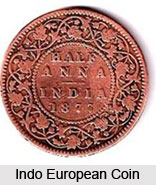
 The British Raj coins (after the curtain call of the East India Company) were initially minted with a mature portrait of Victoria, as Queen on the obverse. Modern coins in India were minted in both silver (Rupees) and gold (Mohurs). Later, when she was declared as Empress of India, it was promulgated by issuing coins in her name as Empress, Her Highness. The modern coins issued after 1840 in India, bore the portrait of Queen Victoria. The first coinage under the Crown was issued in 1862 and in 1877 Queen Victoria assumed the title the Empress of India. Other British monarchs, who succeeded Queen Victoria, later appeared on the coins too. The lower denomination in silver and copper (example: half, quarter and 1/8th of rupee etc.) with selfsame style were also minted. In gold, the Double mohur coin initiated during William IV`s reign was put to an end and thus during the Victorian era, only one Mohur coin was issued. The silver coins of `modern` India were minted in millions in India, which were to become the linchpin of economy of the entire Indian subcontinent and many neighbouring countries. They are the most abundant coins of India still, in contemporary times.
Edward VII had succeeded Queen Victoria and the modern coins in India issued during this moment, thus, bore his model. The Indian Coinage Act, 1906 was passed, which governed the establishment of Mints as well as the coins that would be issued and the standards that would be maintained (Rupee 180 grains, Silver 916.66 standard; Half Rupee 90 grains, Quarter Rupee 45 grains). George V later had succeeded Edward VII.
During the First World War, gold sovereigns were struck in the Bombay mint. This was a war time measure. The Bombay sovereigns bore the mint mark `I` and were struck from August 15, 1918 to April 22, 1919. This is the only instance of British gold Sovereign being struck at any Indian mint. However, a significant change had taken place in modern coins of India and its mintage during the trying times of World War I. Acute shortage of silver on account of First World War, had led the British Government to issue paper currency of One Rupee and Two and a half Rupees, which was perhaps a ground-breaking decision of introduction of paper currency into India, a decision which is abided by still in India, with much different measures and contemplations. The silver coins of humbler denominations were issued in cupro-nickel. George V was in turn followed by Edward VIII. However, no coins were issued during his short reign. George VI ascended the throne in 1936. The compulsion of the Second World War led to experiments in modern Indian coinage, where the standard rupee was replaced by the "Quaternary Silver Alloy". The Quaternary Silver coins were begun to be supplied from 1940. In 1947, these were replaced by pure Nickel coins.
The concept of modern coins in India had earned its absolute overhaul, as can be understood, just after its poorna swaraj in 1947. India had achieved its Freedom of Independence on 15th August 1947. India was Partitioned into three parts - India, Pakistan and Bangladesh (former East Pakistan). However the existing coinage was continued as the `frozen series` till January 26th 1950, when India became a Republic. During this period of transition, India nevertheless had retained the monetary system and the currency and coinage of the earlier period that was espoused by the British Empire. While the just Divided Pakistan had introduced a new series of coins in 1948 and notes in 1949, India brought out its distinguishing and unique coins on 15th August, 1950. On this date, Independent and modern India was proud to present and introduce its own set of coins and coinage, all of which possessed Ashoka`s (the great Mauryan Emperor) Lion Capital motif. This Lion-Capital erected by Ashoka (the legendary four-lion pillar) glimmering in svelte white sandstone, realistically represents the artistic achievements of Indian artists and patronage of their masters, during the ancient period. This Lion-Capital, erected at Sarnath (in modern day Madhya Pradesh) has become the National Emblem of modern Republic of India. All the coins and currency notes of modern India have this four-lion symbol embossed on it.
Chronologically, the principal considerations shaping up the coins of modern India and coinage policy of Republic India over time have been:
•The assimilation of symbols of sovereignty and indigenous motifs on independence;
•Coinage reforms with the initiation of the metric system;
•The need felt from time to time to forefend the risk of the metallic value of coins rising beyond the face value;
•The cost-benefit of `coinisation` of currency notes;
However, leaving aside these principles and rationales of coins of modern India, the country did go through a series of idiosyncratic phases of its own.
These Independent India coin Issues can broadly be categorised as:
The Frozen Series - 1947-1950
This era of modern coins in India had represented the currency agreements during the transition period, up to the establishment of the Indian Republic. The Monetary System however had remained unchanged, at One Rupee consisting of 192 pies.
1 Rupee = 16 Annas
1 Anna = 4 Pice
1 Pice = 3 Pies
The Anna Series This series was premised on 15th August, 1950 and exemplified the first coinage of Republic India. The King`s Portrait was substituted by the Lion Capital of the Ashokan Pillar. A corn sheaf replaced the Tiger on the one Rupee coin. In some fashions, this symbolised a modification in focus towards `progress and prosperity`. Indian motifs were also integrated onto other coins. The monetary system was largely retained unaltered with one Rupee consisting of 16 Annas.
The Decimal Series The move towards decimalisation was underway in modern coin making in India, for over a century. However, it was only in September, 1955 that the Indian Coinage Act was amended for the country to adopt a metric system for coinage. The Act came into force with effect from 1st April, 1957. The rupee remained unchanged in value and terminology. It, however, was now divided into 100 `Paisa` in place of 16 Annas or 64 Pice. For public acknowledgment and acceptance, the new decimal Paisa was termed `Naya Paisa` till 1st June, 1964 when the term `Naya` was dismissed.
 Naya Paisa Series - 1957-1964
With commodity prices escalading during the sixties, small denomination coins which were manufactured of bronze, nickel-brass, cupro-nickel and Aluminium-Bronze, were gradually minted in Aluminium. This modification was started out with the introduction of the new hexagonal 3 paise coin. A twenty paise coin was also initiated in 1968, but did not earn much citizen admiration.
Aluminium Series - 1964 onwards
Over a period of time, cost benefit consideratenesses led to the gradual discontinuance of 1, 2 and 3 paise coins in the seventies; stainless steel coinage of 10, 25 and 50 paise, were introduced in 1988 and of one rupee in 1992, as an effective curriculum of coins in modern India. The very considerable costs of managing note issues of Re. 1, Rs. 2 and Rs. 5, had led to the gradual coinisation of these denominations in the 1990s.