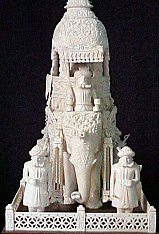
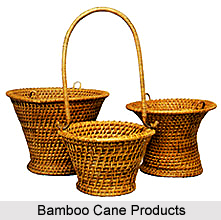
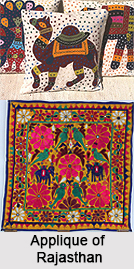
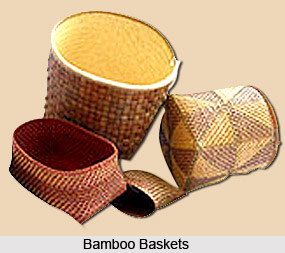
 This large state on the southwestern Indian coast is a home to varying crafts. Crafts in Maharashtra have received royal patronage in the past, which can be seen as a primary reason for the culture of crafts to flourish in the state. The various craft forms include bidri ware, lacquer ware, toy making, weaving, printed textiles and the famous Kolhapuri chappals.
Bidri Craft
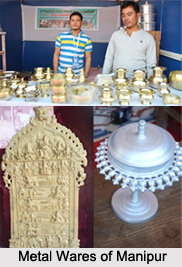
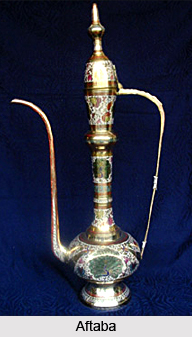
Bidriware mainly made in Aurangabad is an ancient craft of the region. As raw materials, zinc and copper are required. It usually involves adroitness and intricate workmanship of pure silver, etched, overlaid or inlaid on the metal surface. In the past, bidri items were used as hookahs or paan daans but now these are used as mementos.
Lacquer Craft
For lacquerware, hale and pangora wood is used and it is usually done in Savantvadi in Ratnagiri district. The traditional lacquer craftsmen were known as chittorees. In Savantvadi, making toys and dolls is also an ancient craft, which is still in practice. Some of the wooden toys are lacquered and have a local essence, which distinguishes it from other toys. The toys are basically depicting human beings in standing or sitting postures. They also make wooden imitation fruits and vegetables.
Kolhapuri Chappals
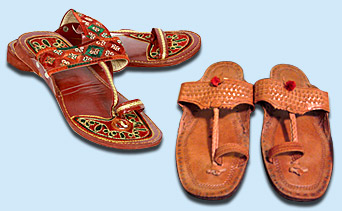
Maharashtra is famous for the Kolhapuri chappals from Kolhapur. These are handmade leather chappals or sandals. The chappals are in huge demand not only inside the country but outside as well because they are simple in design, gorgeous in look and durable in quality.
Weaving Craft
Saree weaving is a craft, which has passed on from generations. The art of weaving Paiyhani saree is very old. The yarn used is pure silk and the zari or gold threads, which are drawn from pure gold. It takes nearly six months to weave a heavily brocaded Paithani sari. A traditional Maharastrian sari from around Sholapur, the Narayan Peth is another variety. It is beautifully woven in silk with a contrasting zari border, generally with ` rudraksha` motifs.
Tussar Silk produced here is known by the Sanskrit name kosa. The other varieties of tussar silk are motha choukada, a design in big squares, lahan choukada, a design in small squares, gunja salai, diagonal designs on cloth along with coloured lines at regular intervals in green, blue or orange, teen dhari choukada, the three square pattern, and rasta choukada, square pattern with horizontal lines running through.
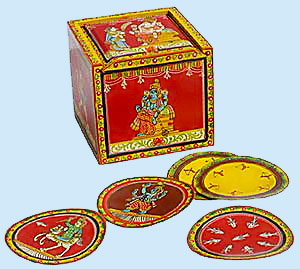
 Ganjifa Cards
Ganjifa Cards are circular playing cards made from paper that is covered with a mixture of tamarind seed powder and oil, painted and coated with lac. Out of them, Darbari cards have decorative borders and Bazaar cards are without borders. It used to be a popular pastime at the ancient Indian courts.
Silver Crafts
Silver Filigree in Odisha">Silver artifacts form an integral part of Maharashtrian religious ceremonies and has now evolved into a flourishing trade. Silver jewellery is an ancient craft of Hupri. Silversmiths at Hupri specialize in making oxidized jewellery embellish with meenakari. Silver crafts of the region are known for their delicate patterns imitating peepal tree, champak, babul, aonla flowers and ambi (mango).
Banjara Embroidery
The nomadic Tribal people form the banjara community who trace their origins in Rajasthan and often settle in Maharashtra for a living. they create beautiful embroideries on cloth. Banjara women, called as Lamani make symmetrical embroidery by lifting the wrap thread of the fabric with a fine needle and making triangles, diamonds and lozenges, parallel to the weft thread, giving the effect of an extra weft weave.