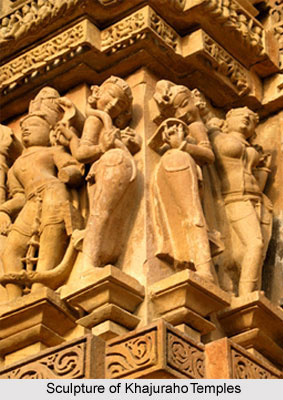
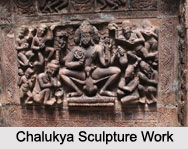
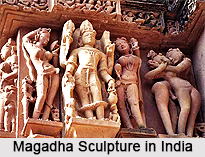
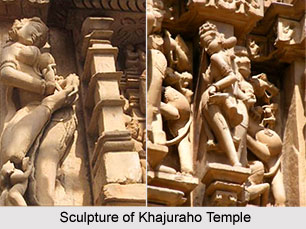
 Temple Sculpture of Khajuraho is clouded by an aura of smoothness and softness with the depiction of human body in various sensuous postures. These sculptures represent a variety of themes showing pure spirituality which are not affected by sexual desires but the other characteristics of the earthly physicality as well.
History of Temple Sculpture of Khajuraho
Khajuraho group of monuments was built throughout the rule of the Chandela dynasty. Most Khajuraho temples were built under the controls of the Hindu kings Yashovarman and Dhanga. The temple dedications imply a lot of the surviving temples which were completed between 970 and 1030 CE, with additional temples completed in the next decades. Khajuraho temples were built around 35 miles from the medieval city of Mahoba, Uttar Pradesh. Khajuraho temples were in dynamic use through the end of the 12th century.
Myths of Temple Sculpture of Khajuraho
The foundation of Khajuraho Temples has a myth that whispers and echoes within the temple frescos. It states that the Moon God seduced a beautiful Brahmin girl- Hemavati in a lustful fit of licentious obsession. Consequently, Chandravarman, the founder of the Chandela dynasty was born. In his dream, Hemavati asked him to establish a temple enlightening all facets of album of passion and erotic fancy to the humankind. Therefore, he built Khajuraho temples in his capital city. The muscular look - like Greek sculptures reveal that the sculptor has made an attempt to bring out the beauty of the human body. The external carvings categorically possess art of sensuous nature.
Depiction of Temple Sculpture of Khajuraho
The mid tenth century sculptures from the ancient temples of Khajuraho, such as the "Parashvanatha" and Lakshmana temple represent the subtle warmth of classical Indian modelling. The "Vishvanatha" temple has perfectly proportioned and poised figures. Some temples, which follow Devi Jagadamba and the Chitragupta, retain the rounded Jagadamba Temple modelling and the graceful forms. In Kandariya Mahadeva, the figures are towards slender and in tall form, some of them revolve round their own axis. In the Duladeo temple, people can find human forms with sharp angles, pointed features and lavish ornamentation.
In spite of many of the statues losing their vitality, yet some of the flying figures on the wall and the bracket statues still have signs of the past vigour. Sexual activities between people are also shown as well as the common Indians also form the part and parcel of these sculptures. For example, it shows women putting on makeup. Some show musicians, potters, farmers, and other folk. The mundane scenes are all at some distance from the temple deities.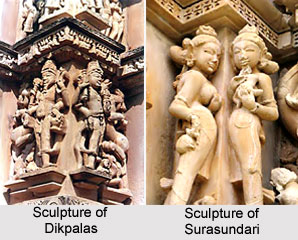
The sculptures in the Khajuraho temples can be classified into eight categories:
The Cult Icons: Installed in the sanctum, these are generally sculpted, in strict accordance with prescribed conventions of the "Shilpashastra" having a halo and a host of attending figures, hierarchically arranged in frames of steles. The best specimen is undoubtedly the 2.75 m. (9 ft.) high image in the "Chaturbhuja temple". This exceptional icon is shown in "tribhanga" (three bends of the body), while the icons in other temples stand erect in "sarnabhanga". The colossal statue of Parvati performing penance, now in the Museum, and those of the Jain Tirthankaras in meditative postures are also interesting cult icons.
The Surrounding Figures: Built either in the ground or on a high relief, these figures are generally seen in the prominent corners of the temples; steal the show .The images of the "Dikpalas", in the eight directions of the temple and those of Shiva and Vishnu on the exterior walls stand with ease in "tribhanga" carrying weapons in their hands in accordance with the scriptures. They look like humans, but are distinguished by the "shrivatsa" (diamond-like mark) on their chests, crowned head-dresses, long strands of hair reaching below the knees, and their "vahanas" at their feet.
Dynamic Figures: The figures of the "demi-gods" such as the "vidyadharas", "gandharvas", "ganas" are generally carved on the top row of the wall, perhaps symbolizing the celestial world. The flying "vidyadharas" surround the divine figures with garlands. The playful "ganas" are found on doorjambs and pedestals of "Shaivite" images. Four armed dwarfs are seen on the pillar brackets of all the temples, and a few even have comical facial expressions.
Generally Themed Sculptures: These are depicting the royal hunt, the king at court, marching armies, domestic scenes, teacher and pupils, dance processions, a dancer conversing with an "Acharya" sculptors at work, traders with camels, and others are shown in relief panels placed on the platform of the "Lakshmana" temple and on the "narathara" row on the plinth of the temples.
Animal Figures: These include the mythical "vyala", a creature with a lion`s body and the head of different creatures such as a parrot, an elephant, a boar and others. The "vyala" is a typical motif of medieval temple art. Elephants are depicted in a row on the basement of the "Lakshmana" temple and as large figures in the round, placed near the entrance of the "Vishvanatha" temple. Nandi, Shiva`s bull, is one of the most magnificent animal representations carved from a single huge stone, and sheltered in a specially built "mandapa" (pavilion), facing the "Vishvanatha" temple.
Apsaras / Surasundaris: Khajuraho temples have various themes related to celestial nymphs` women and they are represented on walls, pillar-brackets and other architectural parts of "Surasundaristhe" temple. Various everyday activities of women are portrayed such as applying make-up, removing a thorn from the foot, tying or untying the waist girdle, rinsing water from wet hair, writing a letter, playing a game of ball, carrying a baby, and dancing. The "apsaras" and "surasundaris" of Khajuraho and other medieval temples are auspicious motifs whose origin can be traced to vegetation spirits (Yakshis) and fertility figures of early Indian art. These celestial women are shown in front, back and side views, engaged in various activities rejuvenating the classical aroma.
Mithunas / Romantic: Couples and erotic groups have provided additional importance to Khajuraho.
Geometric and floral designs are carved on the ceilings, on the borders of panels and walls, on pillars and elsewhere. The lotus is an important motif in ceiling decorations and on pedestals of divinities.
The Khajuraho temples symbolize one expression of several forms of arts that flourished in Rajput kingdoms of India from 8th during 10th century CE. Some of the themes expressed in these literary works are carved as sculpture in Khajuraho temples. Some sculptures at the Khajuraho monuments dedicated to Vishnu include the "Vyalas", which are fusion imaginary animals with lions body, and are found in other Indian temples.