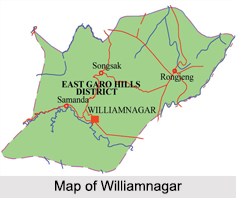
 Formerly known as Simsanggre due to its location on the upper reaches of the Simsang River, the neatly planned township of Williamnagar is the district headquarters of the East Garo Hills in the state of Meghalaya. The township is mainly populated by the members of the Garo tribe and is immersed in their rich tradition and culture.
History of Williamnagar
The township of Williamnagar was named after the founding Chief Minister of Meghalaya, Captain Williamson A. Sangma. Williamnagar used to be the headquarters complex of the East Garo Hills district of the north eastern state of Meghalaya.
The place of Williamnagar has historical significance as on 1837. The Garos showed their last major resistance to the British intrusion into Garo Hills. It was during this rebellion that the legendary Garo leader, Pa Togan Nengminja Sangma was killed by the British forces in battle at Chisobibra, on the outskirts of Williamnagar.
In 1976, after the Garo Hills district was reorganised to carve out a new district called East Garo Hills District, it was during this time that the township was planned. Surrounding the erstwhile village of Simsanggre on the vast plain lands, Williamnagar was supposed to be situated on the banks of the Simsang River.
Demographics of Williamnagar
As per the Census India reports of 2011, the total population of Williamnagar was 18,251 out of which males constituted 52 percent and females were 48 percent of the total population. Children between the ages of 0 to 6 years old constitute 18 percent of the total population. The average literacy of the town is 67 percent, which is higher than the state average of almost 60 percent. The male and female literacy rates are 71 percent and 64 percent respectively.
 Tourism in Williamnagar
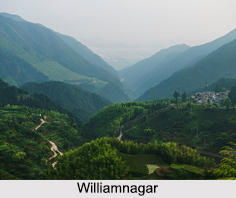
Surrounded by picturesque mountains, flowing rivers and verdant valleys, the town of Williamnagar in Meghalaya is a haven for tourists from all around. Waterfalls like the Chibok Dare Falls, Me Dare Falls, Do be Dare Falls and the Rongbang Falls are popular. These waterfalls are like hidden gems in the valleys of Meghalaya. Some of the other famous tourist spots in Williamnagar are the Naphak Lake, which is a man- made lake that was created after an enormous earthquake in 1897, and the reserve forest of Rongrengiri. Shrouded in sal trees, the forest houses a memorial of the Garo leader, Pa Togan.
Visiting Information on Williamnagar
The nearest railway station is at Guwahati at a distance of 192 km from Williamnagar and the Lokpriya Gopinath Bordoloi International Airport is the closest at a distance of 176 km from the town.