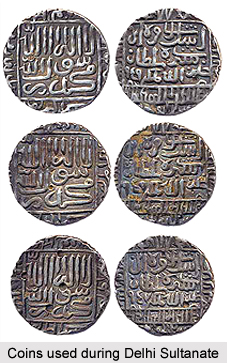
 Turko-Afghan Rule in Bihar was established after the decline of the Gupta Empire in Bihar. After a hundred years long anarchy, the medieval period marked the reign of the Turko-Afghans and other mighty rulers and dynasties. With all of the Gahadwals, the central authority in Magadha collapsed. Later the administration of Bihar went into the hands of the Slave Dynasty. In 1206 Qutub- Ud- Din Aibak became the king of Delhi. His dominion extended from Delhi to Bengal and Lahore to Kannauj and Gujarat. After his death Illtutmish ascended to the throne and conquered Magadha. He established his authority there.
Later in 1354 and 1360 Bihar went in to the hands of the Tughlaq Dynasty. The state was ruled by powerful rulers like Firoz Shah Tughlaq and Ghiyas- ud- din Tughlaq. Bihar was included in the Bengal Viceroyalty of Delhi kings until 1320 A. D. when Ghiyas- ud- din Tughlaq again separated it. In 1397 it united with Sharqui kingdom of Jaunpur District.
Sharqui dynasty continued to rule when Bahlol Lodi established a new dynasty in Delhi. Hussain Shah of Jaunpur extended his authority upto the east. He made a truce with Bahlol Lodi and invaded Tirhut. Later Bahlol was succeeded by Sikandar Lodi who deprived Hussain of Magadha. He annexed Bihar and ordered Ahmad Khan, son of Hussain Sharqui to realize tributes from the chieftains of Tirhut. Dariya Khan Lohani was entrusted with government of Bihar. Sikandar Lodi was succeeded by Ibrahim Lodi. However, within two years of Nasrat Shah`s (1519-1532) accession, Lodi Empire began to decline.
Administration during Turko-Afghan Rule
During the Turko-Afghan period, Bihar formed a part of the Delhi Sultanate. It was placed in charge of the Viceroys who were known as Naib-Sultans. All powers were vested in the Naib Sultan and he was just a miniature of the Delhi Sultan. He was a despot and exercised executive, judicial and legislative power. The exercise of such powers varied according to the strength and weakness of the Naib Sultan, He was subject to the control of central government and received his got pay from the provincial revenue. He used to seed the revenue to the central exchequer. At times he had to render military help to the Sultan and he maintained local militia for the safety of his administration. There were various independent Hindu chiefs who carried their administration on their own lines and the Naib-Sultans did not interfere so long as they peacefully paid the tribute. For efficient administration province was subdivided into smaller units which were placed in charge Muqtas or Amils and still further lower divisions were under Shiqdars. Village autonomy was not disturbed. Administration, central or provincial, could not be successfully carried on due to the intrigues of the nobles and the lack of co-operation. The officers fought amongst themselves and put their selfish interests above the national benefit. It is for this reason that the administration during the Turko-Afghan period failed to establish a firm footing.
Society during Turko-Afghan Rule
The Afghans practiced the slavery system and it was a common feature of their social life. The Muslim Sultana and nobles maintained a host of male and female slaves. The slaves were a source of pecuniary gain especially during the time of wars and famines. They were sold like other commodities. The rules about women were also severe. Loyalty in their conjugal life was regarded as the highest type of morality. They had to depend on their husbands or other male members. They were secluded in their homes and the purdah system became more elaborate. Early marriage was in vogue and the practice of Sati became prevalent among certain classes.