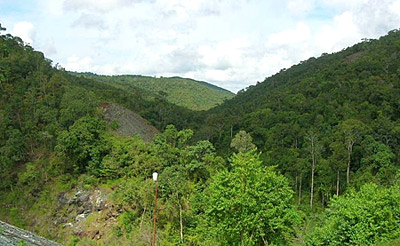
 Tundah Wildlife Sanctuary is located at the intersection of Ravi River and Tundah Nalla, at a distance of nearly 45 kms away from Dalhousie, in Chamba District, Himachal Pradesh. An eastern forest belt connects this wildlife sanctuary to Kugti Sanctuary and it is based at an altitude of about 2074 to 5532 metres above sea level. The natural splendour of this wildlife reserve is indeed breathtaking and possesses numerous types of wild creatures and dense forests comprising several trees. Visitors will catch sight of diversified species of attractive birds in the sanctuary, which has been beautified with an undulating landscape pattern.
Flora of Tundah Wildlife Sanctuary
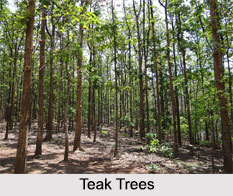
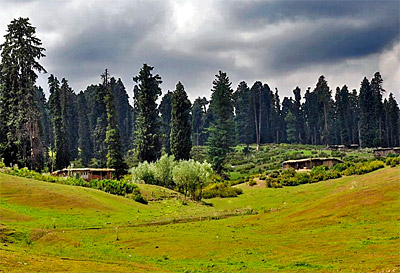
The flora of Tundah Wildlife Sanctuary consists of Western Mixed Coniferous Forests, Alpine Forests, Moist Deodar Forests and Moist Temperate Deciduous Forests. The trees which thrive in this environment are Walnut, Poplar, Fir, Deodar, Sprucem, Robinia and much more.
Fauna of Tundah Wildlife Sanctuary
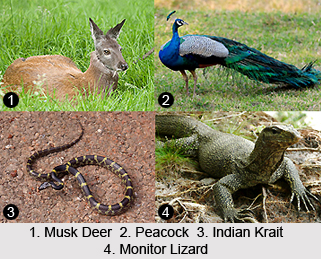
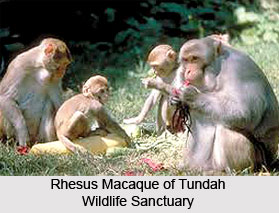
The different wild animals dwelling within the grounds of Tundah Sanctuary comprise Himalayan Tahr, Common Langur, Ibex, Common Giant Flying Squirrel, Leopard, Himalayan Shrew, Rhesus Macaque, Barking Deer, Himalayan Fox, Musk Deer, Jackal, Indian Bush Rate and many others. The sanctuary is also filled with the chirping of a large quantity of beautiful birds which are inclusive of Black-Chinned Babbler, Pheasant, Red-Vented Bulbul, Himalayan Bulbul, Green Bee Eater, Ceylon Small Barbet, Crested Bunting, Indian Blue Robin, Malagasy Bulbul, White-Eyed Buzzard and several other attractive species of birds.
It is said that one must visit Tundah Wildlife Sanctuary between the time from the months of May and June, and again from September and October. However, winter months which commence from December and continue till March are very cold, when the temperature drops to -10 degree Celsius. The climatic conditions during March and April are quite pleasant, though soon after the conclusion of April temperature starts soaring and keep on increasing till the end of the month of July. Visitors will find that the months of October and November are generally dry.
This article is a stub. You can enrich by adding more information to it. Send your Write Up to content@indianetzone.com