
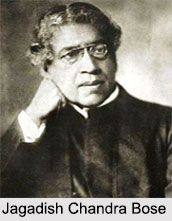
 Jagadish Chandra Bose was a famous biologist, botanist, physicist and archaeologist. He was also a writer of Science Fictions. Jagadish Chandra Bose is considered as the "Father of Radio Science". His major achievement was to demonstrate the similarity of responses to stimulation between the living and the non-living as well as the fundamental similarity of responses in plant and animal tissues. He made significant contributions to microwave and radio optics.
Jagadish Chandra Bose
Jagadish Chandra Bose was an Indian physicist and was the first Indian to get a US patent. Though Jagadish Chandra Bose worked in other fields of science, he is best known for his research into the life of plants.
Introduction
Jagadish Chandra Bose was a famous biologist, botanist, physicist and archaeologist. He was also a writer of Science Fictions. Jagadish Chandra Bose is considered as the "Father of Radio Science". His major achievement was to demonstrate the similarity of responses to stimulation between the living and the non-living as well as the fundamental similarity of responses in plant and animal tissues. He made significant contributions to microwave and radio optics.Early Life of Jagadish Chandra Bose
Early life of Jagadish Chandra Bose was spent in a place in present Bangladesh which was then a part of undivided India. He was born in the district of Munshiganj in Bengal, presently in Bangladesh, on the 30th of November 1858. The father of Jagadish Chandra Bose was a Brahmo and a leader of the Brahmo Samaj and he also worked as a deputy magistrate or assistant commissioner in Faridpur, Bardhaman and several other places. His father`s name was Bhagawan Chandra Bose. Bose` family lived in a village called Rarikhal, Bikrampur, in the present day district of Munshiganj in Bangladesh. The education of Acharya Jagadish Chandra commenced in a vernacular school, since his father had a belief that one needs to know his/her own mother tongue prior to learn English, and an individual should also know and understand his own people.
Jagadish Chandra Bose, after completing his vernacular education in his village, got admission in the Hare School in the year 1869, and afterwards he joined the St. Xavier`s School at Kolkata. In the year 1875, he passed the Entrance Examination, alike to the school graduation, of University of Calcutta and got admitted in the St. Xavier`s College, Kolkata. At St. Xavier`s College, Acharya Jagadish Chandra Bose got in touch with the Jesuit Father Eugene Lafont, who had a major role in the development of interest to natural science in him. In the year 1879, from the University of Calcutta, Bose received a bachelor`s degree.
Bose had a desire to go to England in order to compete for the prestigious Indian Civil Service. However, Bhagawan Chandra Bose, his father, who was himself a civil servant, rejected his plan. Bose`s father desired his son to become a scholar, who would not be under any one`s rule but himself. Thus, Jagadish Chandra Bose left India for England to undertake course in Medicine at the University of London. However, Bose had to leave his Medicine studies due to ill health. It is also said that the foul smell in the dissection exacerbated the illness of Bose and it ultimately forced him to leave his Medicine studies.
After leaving the Medicine study in the University of London, and by the recommendation of his brother-in-law, Anand Mohan, he got admission in Christ`s College, Cambridge and studied Natural Science. Anand Mohan was also famous as the first Indian wrangler. Jagadish Chandra Bose attained the Natural Science Tripos from the University of Cambridge and also a BSc degree from the University of London in the year 1884. Among the teachers of Bose at Cambridge were Lord Rayleigh, Francis Balfour, James Dewar, Michael Foster, Francis Darwin and Sidney Vines. When Bose was studying at Cambridge, Prafulla Chandra Roy was studying at Edinburgh. Both of them met in London and became very close friends. Acharya Jagadish Chandra Bose returned to India in the year 1885, carrying with him a letter from Fawcett, the economist to Lord Rippon. Lord Ripon was the then Viceroy of India. On the request of Lord Ripon, Sir Alfred Croft, the Director of Public Instruction, gave Bose the position of officiating professor of Physics in the Presidency College at Kolkata.
Jagadish Chandra Bose, after completing his vernacular education in his village, got admission in the Hare School in the year 1869, and afterwards he joined the St. Xavier`s School at Kolkata. In the year 1875, he passed the Entrance Examination, alike to the school graduation, of University of Calcutta and got admitted in the St. Xavier`s College, Kolkata. At St. Xavier`s College, Acharya Jagadish Chandra Bose got in touch with the Jesuit Father Eugene Lafont, who had a major role in the development of interest to natural science in him. In the year 1879, from the University of Calcutta, Bose received a bachelor`s degree.
Bose had a desire to go to England in order to compete for the prestigious Indian Civil Service. However, Bhagawan Chandra Bose, his father, who was himself a civil servant, rejected his plan. Bose`s father desired his son to become a scholar, who would not be under any one`s rule but himself. Thus, Jagadish Chandra Bose left India for England to undertake course in Medicine at the University of London. However, Bose had to leave his Medicine studies due to ill health. It is also said that the foul smell in the dissection exacerbated the illness of Bose and it ultimately forced him to leave his Medicine studies.
After leaving the Medicine study in the University of London, and by the recommendation of his brother-in-law, Anand Mohan, he got admission in Christ`s College, Cambridge and studied Natural Science. Anand Mohan was also famous as the first Indian wrangler. Jagadish Chandra Bose attained the Natural Science Tripos from the University of Cambridge and also a BSc degree from the University of London in the year 1884. Among the teachers of Bose at Cambridge were Lord Rayleigh, Francis Balfour, James Dewar, Michael Foster, Francis Darwin and Sidney Vines. When Bose was studying at Cambridge, Prafulla Chandra Roy was studying at Edinburgh. Both of them met in London and became very close friends. Acharya Jagadish Chandra Bose returned to India in the year 1885, carrying with him a letter from Fawcett, the economist to Lord Rippon. Lord Ripon was the then Viceroy of India. On the request of Lord Ripon, Sir Alfred Croft, the Director of Public Instruction, gave Bose the position of officiating professor of Physics in the Presidency College at Kolkata.
Career of Jagadish Chandra Bose
Jagadish Chandra Bose was back in India. He joined as the professor of Physics of the Presidency College, Kolkata. At that time, the Indian teachers in the college were paid one third of what the British teachers were paid. So Jagadish Chandra Bose refused to accept his salary but worked for three years. He could not even get the scientific instruments that were required for research. Ultimately the authorities recognised Bose"s importance and acknowledged him, providing him the full salary.
Researches of Jagadish Chandra Bose
To widen his knowledge and discover new things, Jagadish Chandra Bose wanted to do research. The first remarkable aspect of Jagadish Chandra Bose"s microwave research was that he reduced the waves to the millimetre level for about 5 mm wavelength. He knew that long waves were advantageous because of their great penetrative power but realised their disadvantages for studying the light like-properties of those electric waves.
In November 1894, Jagadish Chandra Bose ignited gunpowder and rang a bell at a distance using microwaves in wavelength in millimetre of range that was held in a public demonstration in the Town Hall of Kolkata, in the presence of Sir William Mackenzie, the Lieutenant Governor. Jagadish Chandra Bose is also considered as the inventor of wireless telegraphy. He was the first in the world to fabricate and demonstrate it in public.
Next contribution of Jagadish Chandra Bose to science was in Plant Physiology. His various experiments showed that plants grow faster in pleasant music and its growth delayed in noise or harsh sound. In May 1895 Bose"s first scientific paper on "Polarisation of electric rays by double-refracting crystals" was communicated to the Asiatic Society of Bengal. In October 1895, his second paper was communicated to the Royal Society of London by Lord Rayleigh. Further, in December 1895, published Jagadish Chandra Bose`s paper on a new "electro-polariscope" by the London journal the Electrician.
Jagadish Chandra Bose also wrote "Niruddesher Kahini" in 1896. It was the first major work in Bengali Science Fiction. In Bengali literature, he became the first science fiction writer.
Jagadish Chandra Bose was not in favour of patenting his invention. Finally upon the persuasion of Swami Vivekananda, Sara Chapman Bull, one of his supporters, filed a patent for "detector for electrical disturbances", in the absence of Bose"s knowledge. Thus Jagadish Chandra Bose was the first to get a US Patent. This move of Swami Vivekananda provided much recognition to the Indian scientist who is considered the "Pioneer of Wireless Communication".
In November 1894, Jagadish Chandra Bose ignited gunpowder and rang a bell at a distance using microwaves in wavelength in millimetre of range that was held in a public demonstration in the Town Hall of Kolkata, in the presence of Sir William Mackenzie, the Lieutenant Governor. Jagadish Chandra Bose is also considered as the inventor of wireless telegraphy. He was the first in the world to fabricate and demonstrate it in public.
Next contribution of Jagadish Chandra Bose to science was in Plant Physiology. His various experiments showed that plants grow faster in pleasant music and its growth delayed in noise or harsh sound. In May 1895 Bose"s first scientific paper on "Polarisation of electric rays by double-refracting crystals" was communicated to the Asiatic Society of Bengal. In October 1895, his second paper was communicated to the Royal Society of London by Lord Rayleigh. Further, in December 1895, published Jagadish Chandra Bose`s paper on a new "electro-polariscope" by the London journal the Electrician.
Jagadish Chandra Bose also wrote "Niruddesher Kahini" in 1896. It was the first major work in Bengali Science Fiction. In Bengali literature, he became the first science fiction writer.
Jagadish Chandra Bose was not in favour of patenting his invention. Finally upon the persuasion of Swami Vivekananda, Sara Chapman Bull, one of his supporters, filed a patent for "detector for electrical disturbances", in the absence of Bose"s knowledge. Thus Jagadish Chandra Bose was the first to get a US Patent. This move of Swami Vivekananda provided much recognition to the Indian scientist who is considered the "Pioneer of Wireless Communication".
Achievements of Jagadish Chandra Bose
Achievements of Jagadish Chandra Bose in the field of science are worth mentioning. He was the person who put India in the world map by his scientific flair and ingenuity. Bose was born in a Hindu Kayastha Bengali family. He was a polymath; a physicist, botanist, biologist, archaeologist and also a reputed writer of science fiction. He championed the investigation of radio and microwave optics, made an important contribution to plant science, and was credited of being the starter of experimental science in the Indian subcontinent.
Acharya Jagadish Chandra Bose returned to India in the year 1885, with a BSc degree from the University of London and Natural Science Tripos from the University of Cambridge. He joined the Presidency College of the University of Calcutta as a Physics Professor. In spite of racial discrimination and a scarcity of equipment and funding, Bose continued with his scientific research and made notable progress in remote wireless signalling research and became the first to use semiconductor junctions for detecting radio signals. Instead of gaining commercially from this invention, Jagadish Chandra Bose made his inventions public, in order to aid others to develop on his research. Bose made substantial discoveries in plant physiology. One of his inventions is the Cresco graph, which he used to measure plant`s response to different stimuli, and thus scientifically proved the parallelism between plant and animal tissues. Even if Bose registered for a patent for one of his inventions as a result of his peer pressure, his unwillingness to any type of patenting of his inventions was known by all. He is being recognized for a number of his contributions in the field of modern science.
In the year 1894, Bose planned to devote himself to pure research. He used a small enclosure close to a bathroom in Presidency College in Kolkata to serve as a laboratory. There, he carried out extensive experiments of diffraction, refraction and polarization. He could rightly be called as the inventor of wireless telegraphy. In the year 1895, prior to a year Guglielmo Marconi patented this invention, Bose had demonstrated the functioning of wireless telegraphy in public. Later, Acharya Jagadish Chandra Bose switched from the study of physics to the study of metals and afterwards to plants. Bose fabricated an extremely sensitive `coherer`, a device which detects radio waves. He observed that the sensitivity of the coherer gets reduced when it was used continuously without any break for a long time and the same regained its lost sensitivity when the device gets some rest. Thus, Bose concluded that metals possess memory and feelings.
Acharya Jagadish Chandra Bose demonstrated with experiments that plants too hold life. An instrument was invented by him to record the plant pulses and connected the device to a plant. The plant, connected to the device, with its roots was picked up carefully and dipped in a vessel having bromide, till its stem. The pulse beat of the plant recorded by the instrument was a steady to-and-fro movement similar to the pendulum of a clock. The steady movement soon became unsteady and soon the spot vibrated in a violent way and then stopped suddenly and it suggested that the plant had died due to poison and hence the pulse beat stopped. Even if Bose did priceless work in Science, his work was acknowledged when the Western world understood its importance. Bose founded the Bose Institute at Kolkata in West Bengal, devoted primarily to the study of plants. Today, this Institute also carries research on various other fields.
During 1894-1900, Bose did research on radio waves and formed waves as short as 5 millimetres. His works predates that of Guglielmo Marconi who is also associated with the development of radio. Unlike Marconi who looked for commercializing his work with radio waves, Bose was solely interested in radio waves in the form of a scientific endeavour. Acharya Jagadish Chandra Bose also developed equipment for transmitting, generating and receiving radio waves and utilized them to demonstrate conclusively the property of the waves like total reflection, refraction, reflection, double refraction and polarization. He also experimented with galena to prepare an early type of semiconductor diode which can be used an electromagnetic waves detector. After 1900, he started pursuing another filed - plant and animal physiology. Bose introduced a number of sensitive and delicate instruments like the Chrestograph, which records plant growth. It has the capacity to magnify a small movement as much as a million times. Bose developed another device which demonstrates the effect of electromagnetic waves on nonliving and living matter.
Acharya Jagadish Chandra Bose retired in the year 1915 and was appointed Emeritus Professor, Presidency College, Kolkata, for a period of five years. In the year 1917, he founded the Bose Research Institute in Kolkata which was also India`s first scientific research institute. In the same year Bose was conferred a knighthood. In the year 1920, he was honoured to be the first scientist of India elected to the prestigious Royal Society of Britain. He travelled frequently to United States and Europe on a number of scientific missions and gave lectures on subjects like electromagnetic waves, the effects of electromagnetic waves on non living and living matter, and plant physiology. Bose always believed in the sharing of scientific knowledge and had a strong opinion that sharing of information with fellow scientists grows knowledge.
In the year 1896, Acharya Jagadish Chandra Bose wrote Niruddesher Kahini. It was the first notable work in Bengali science fiction. Later, Bose included the story in the Obbakto book as `Polatok Tufan.` The credit for being the first science fiction writer in Bengali language also goes to Jagadish Chandra Bose. Some of the books written by Acharya Jagadish Chandra Bose include; Response in the Living and Non-living, Researches on Irritability of Plants, The physiology of photosynthesis, Plant Autographs and Their Revelations, Motor mechanism of plants, Plant response as a means of physiological investigation, Physiology of the Ascent of Sap, The Nervous Mechanisms of Plants, Growth and tropic movements of plants, etc.
The honours which the great Indian scientist received include Companion of the Order of the Indian Empire in 1903, Knighthood in 1917, Member of the Vienna Academy of Sciences in 1928, Member of Finnish Society of Sciences and Letters in 1929, Founding fellow of the National Institute of Sciences of India (now renamed as the Indian National Science Academy), Companion of the Order of the Star of India in 1912, Fellow of the Royal Society in 1920, President of the 14th session of the Indian Science Congress in 1927, Member of the League of Nations` Committee for Intellectual Cooperation, etc.
Acharya Jagadish Chandra Bose returned to India in the year 1885, with a BSc degree from the University of London and Natural Science Tripos from the University of Cambridge. He joined the Presidency College of the University of Calcutta as a Physics Professor. In spite of racial discrimination and a scarcity of equipment and funding, Bose continued with his scientific research and made notable progress in remote wireless signalling research and became the first to use semiconductor junctions for detecting radio signals. Instead of gaining commercially from this invention, Jagadish Chandra Bose made his inventions public, in order to aid others to develop on his research. Bose made substantial discoveries in plant physiology. One of his inventions is the Cresco graph, which he used to measure plant`s response to different stimuli, and thus scientifically proved the parallelism between plant and animal tissues. Even if Bose registered for a patent for one of his inventions as a result of his peer pressure, his unwillingness to any type of patenting of his inventions was known by all. He is being recognized for a number of his contributions in the field of modern science.
In the year 1894, Bose planned to devote himself to pure research. He used a small enclosure close to a bathroom in Presidency College in Kolkata to serve as a laboratory. There, he carried out extensive experiments of diffraction, refraction and polarization. He could rightly be called as the inventor of wireless telegraphy. In the year 1895, prior to a year Guglielmo Marconi patented this invention, Bose had demonstrated the functioning of wireless telegraphy in public. Later, Acharya Jagadish Chandra Bose switched from the study of physics to the study of metals and afterwards to plants. Bose fabricated an extremely sensitive `coherer`, a device which detects radio waves. He observed that the sensitivity of the coherer gets reduced when it was used continuously without any break for a long time and the same regained its lost sensitivity when the device gets some rest. Thus, Bose concluded that metals possess memory and feelings.
Acharya Jagadish Chandra Bose demonstrated with experiments that plants too hold life. An instrument was invented by him to record the plant pulses and connected the device to a plant. The plant, connected to the device, with its roots was picked up carefully and dipped in a vessel having bromide, till its stem. The pulse beat of the plant recorded by the instrument was a steady to-and-fro movement similar to the pendulum of a clock. The steady movement soon became unsteady and soon the spot vibrated in a violent way and then stopped suddenly and it suggested that the plant had died due to poison and hence the pulse beat stopped. Even if Bose did priceless work in Science, his work was acknowledged when the Western world understood its importance. Bose founded the Bose Institute at Kolkata in West Bengal, devoted primarily to the study of plants. Today, this Institute also carries research on various other fields.
During 1894-1900, Bose did research on radio waves and formed waves as short as 5 millimetres. His works predates that of Guglielmo Marconi who is also associated with the development of radio. Unlike Marconi who looked for commercializing his work with radio waves, Bose was solely interested in radio waves in the form of a scientific endeavour. Acharya Jagadish Chandra Bose also developed equipment for transmitting, generating and receiving radio waves and utilized them to demonstrate conclusively the property of the waves like total reflection, refraction, reflection, double refraction and polarization. He also experimented with galena to prepare an early type of semiconductor diode which can be used an electromagnetic waves detector. After 1900, he started pursuing another filed - plant and animal physiology. Bose introduced a number of sensitive and delicate instruments like the Chrestograph, which records plant growth. It has the capacity to magnify a small movement as much as a million times. Bose developed another device which demonstrates the effect of electromagnetic waves on nonliving and living matter.
Acharya Jagadish Chandra Bose retired in the year 1915 and was appointed Emeritus Professor, Presidency College, Kolkata, for a period of five years. In the year 1917, he founded the Bose Research Institute in Kolkata which was also India`s first scientific research institute. In the same year Bose was conferred a knighthood. In the year 1920, he was honoured to be the first scientist of India elected to the prestigious Royal Society of Britain. He travelled frequently to United States and Europe on a number of scientific missions and gave lectures on subjects like electromagnetic waves, the effects of electromagnetic waves on non living and living matter, and plant physiology. Bose always believed in the sharing of scientific knowledge and had a strong opinion that sharing of information with fellow scientists grows knowledge.
In the year 1896, Acharya Jagadish Chandra Bose wrote Niruddesher Kahini. It was the first notable work in Bengali science fiction. Later, Bose included the story in the Obbakto book as `Polatok Tufan.` The credit for being the first science fiction writer in Bengali language also goes to Jagadish Chandra Bose. Some of the books written by Acharya Jagadish Chandra Bose include; Response in the Living and Non-living, Researches on Irritability of Plants, The physiology of photosynthesis, Plant Autographs and Their Revelations, Motor mechanism of plants, Plant response as a means of physiological investigation, Physiology of the Ascent of Sap, The Nervous Mechanisms of Plants, Growth and tropic movements of plants, etc.
The honours which the great Indian scientist received include Companion of the Order of the Indian Empire in 1903, Knighthood in 1917, Member of the Vienna Academy of Sciences in 1928, Member of Finnish Society of Sciences and Letters in 1929, Founding fellow of the National Institute of Sciences of India (now renamed as the Indian National Science Academy), Companion of the Order of the Star of India in 1912, Fellow of the Royal Society in 1920, President of the 14th session of the Indian Science Congress in 1927, Member of the League of Nations` Committee for Intellectual Cooperation, etc.
Personal Life of Jagadish Chandra Bose
In 1887, Jagadish Chandra Bose got married to Abala. She was the daughter of Brahmo reformer Durga Mohan Das. Abala Bose was a social worker well-known for her efforts in the field of women"s education and for her contribution towards the poor condition of widows.
Till the very end of his life, Jagadish Chandra Bose was busy with his numerous researches. He died in November 23, 1937. Jagadish Chandra Bose is considered as forerunner in the field of biophysics. He is now credited with the invention of the first wireless detection device and electromagnetic waves.
Till the very end of his life, Jagadish Chandra Bose was busy with his numerous researches. He died in November 23, 1937. Jagadish Chandra Bose is considered as forerunner in the field of biophysics. He is now credited with the invention of the first wireless detection device and electromagnetic waves.
Recently updated articles in Personalities in India

Governors of Mizoram
The Governor of Mizoram is the constitutional head of the state and is appointed by the President of India. The Governor performs various constitution...
Governors of Jharkhand
Governors of Jharkhand have served as the constitutional heads of the state since its formation on 15 November 2000. Appointed by the President of Ind...
Agnimitra Paul
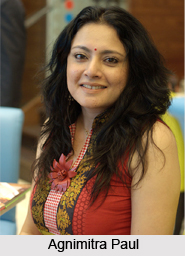
Agnimitra Paul is an Indian fashion designer and politician serving as a Member of the West Bengal Legislative Assembly from Asansol Dakshin. A senior...
Governors of Uttarakhand
Governor of Uttarakhand is the nominal head of the state. The Governor is also the representative of the President of India in the state of Uttarakhan...
Nibaran Chandra Dasgupta
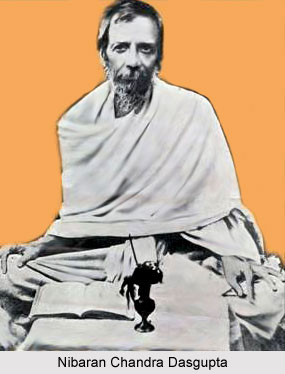
Nibaran Chandra Dasgupta was a distinct personality of Bengal who became famous for the establishment of ‘Shilpashram,’ a rural industry within the ma...
Related articles in Personalities in India

Sanskrit Theatre Personalities
Sanskrit Theatre Personalities was the main elements of Indian theatre with culture, customs and ethnicity.
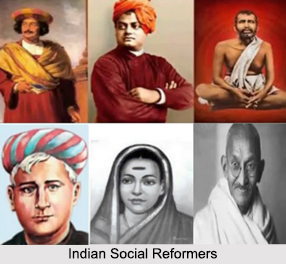
Indian Social Reformers
The Indian Social Reformers are responsible for liberating the nation of several social and religious evils.
Raja Ram Mohan Roy
Raja Ram Mohan Roy is a great Indian social reformer who is celebrated all over the country. He has done many operations for the liberation of women....