
In Indian music, the seven notes of swaras or scale are named as shadja, rishabh, madhyam, gandhar, pancham, dhaivat and nishad. These notes are short listed to Sa, Ri, Ga, MA, PA, Dha and Ni, and they are written as S, R, G, M, P, D, N. These notes are collectively known as sargam (the word is an acronym of the consonants of the first four swarnas). The sargam is a technique, used in India equivalent to solfege, for teaching sight singing. Sargam is actually practiced against a drone. The Sa tone doesn"t associate with any specific pitch.
Notation
A dot below the letter signify a note is sung one octave lower, and a dot above the letter always indicate that a note is sung one octave higher. In case of octave lower, the apostrophe is placed to the left of `S`, and in case of octave high, the apostrophe is placed to the right. The sargam is related to major scale or western Ionian mode (also known as Bilawal Thaat in Hindustani classical music). All relationship among pitches follows from this. In a seven tone mode, which starts with S, R, G, D and N can be natural (Shuddha) or flat (komal) not sharp, and also M can be sharp or natural (tivra) not flat, which makes the twelve notes as in western chromatic scale. In case of normal swara, a line below the letter signifies that it is actually flat (komal), and an acute accent signifies a sharp note. Sa and Pa are immovable (once Sa is selected), that forms a perfect fifth.
In case of some notation system, the differentiation is made with lower case letters and capital letters. While short forms are used, the relatively lower forms of note are generally used in lowercase letters, while the higher pitch uses the uppercase letter.
Meaning of Sargam or Swara
Each of the swara shuddha (Sa Re Ga MA PA Dha and Ni) is conventionally said to have originated in the sound of various animal, and some have their own meanings. Each sargam is associated with one of the seven chakras of the body as well. As soon as the swaras move up through the saptak, they are mapped onto the chakras in the body in ascending order. The Komal notes are attached with the left side of each chakra, the left channel, Ida Nadi, is the side of intuition and emotion. Tivra and Shuddha notes are actually associated with the right side, right channel, Pingali Nadi, is the side logic. Therefore, the Ragas have an effect on the chakra depending on the notes they contain. When qawwali and Indian Classical Music is sung, the different syllables may be used in a particular sequence to make the entire note easy to pronounce.
Special form of Sargam or Swara
In light of Indian Classical Music, some specific forms of swara-s fulfil the art of playing a particular note. Such ornamentation or alankara is important in Indian Classical Music for creating the perfect rendition of the raga. Some of the notes are linked with succeeding and preceding notes which are known as grace notes or kan-swars. The kan-swars are also known as sparch or touch notes. These grace notes are sometimes referred to as sparsh-swars. The sparsh-swars and kan-swars can be executed on musical instruments or vocally in three ways;
•By using a short and swift glide (meend or ghaseet)
•As a sparsh (a technique of playing a note on a fretted instrument where the movement of the notes is ascending)
•As a Krintan (the opposite of sparsh, the movement of notes are descending)
Another form of Swaras, named Andolit Swars, exists as raga specific and does not apply to any particular raga. The Andolit Swars are notes which oscillated within the andolan alankar.
Sargam in Indian Music
Sargam or swara is a technique used for teaching sight singing.
Recently updated articles in Music in India
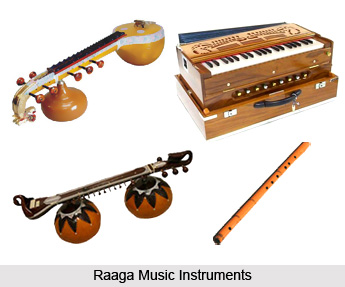
Classification of Raagas in Carnatic Music
Classification of Raagas in Carnatic music is based on scale type, devised as a system for raagas that existed as well as those that were in the proce...
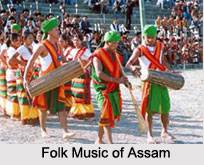
Folk Music of Assam
Folk Music of Assam reflects the outdoor and indoor life of the folk people and it does not follow any strict rule of composition and performance. Fol...
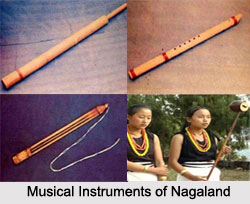
Musical Instruments of Nagaland
Musical Instruments of Nagaland reflect its rich tribal heritage and deep cultural roots. Crafted from natural materials like bamboo, wood, and animal...

Rasa, Hindustani Music
Rasa is an important part of Hindustani Music. Here the creative experience of the artist i.e. musician and the aesthetic response of the connoisseurs...
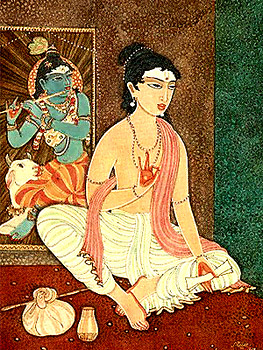
Kshetrajna, Telugu Poet and Composer
Kshetrajna (1600 - 1680) was a creative Telugu poet and composer of Carnatic music. He composed several padams and keertanas.
Related articles in Music in India
Kriti Carnatic Music
Kriti refers to one of the most widely used genres of Carnatic music. It originated from the kirtanas of the bhaktas, i.e., musicians who expressed th...
Indian Folk Music
Indian Folk Music is full of rustic charm. The appeal of Indian folk music lies in the simplicity of its style and lyrics. Most of the folk songs are...
Haryanvi Music
Haryanvi music is the folk music of the state of Haryana and is sung in western Uttar Pradesh along with the neighbouring districts of Rajasthan and P...
Carnatic Music
Carnatic music, also known as `Karnataka Sangitam`, is one of the two styles of Indian classical music.