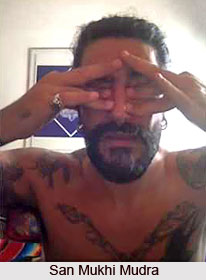
 San Mukhi Mudra, also known as Yoni Mudra is a posture that brings the mind under control. The word `San Mukhi` or `Shanmukhi` is composed of two Sanskrit words - `shat` (six) and `mukhi` (mouths or gates). And `mudra` is a form of expression by the use of fingers of both the hands of a human being.
It is one of the important Yogic postures. The San Mukhi Mudra refers to the "six openings" - the eyes, ears and nostrils. In this mudra, the six openings are closed with the fingers. By sealing the openings of the sense organs, it helps to direct awareness to the mind and eventually allows the practitioner to perceive a subtle, internal sound called nada.
Practice of San Mukhi Mudra
San Mukhi Mudra is a complex mudra but with regular practice under the guidance of yoga teacher one can perform it perfectly and comfortably. It can be done in the following manner:
•Sit in a comfortable cross-legged position. Bring the hands to the face, with the elbows pointing out. Close the ears with thumbs and eyelids with the index fingers. Place the middle fingers alongside nostrils and the ring fingers and little fingers near the closed lips.
•Inhale slowly through the nostrils. Then close nostrils with the middle fingers and hold breath. Listen for any internal sounds. When the practitioner feels the need to exhale, release the middle fingers from nostrils and breathe out slowly.
•Continue to breathe in this way. Keep the awareness on whatever internal sounds the individual hears. Try to listen for more and more subtle sounds.
Benefits of San Mukhi Mudra
Practicing San Mukhi Mudra ensures innumerable health and mental benefits.
•San Mukhi Mudra calms the nervous system and brings in a mental state of calm and peace.
•This mudra improves meditation.
•It is helpful in conditions of mental tension, high blood pressure, anxiety and heart-related problems.
•Regular practice of this mudra alleviates anxiety and tension.
San Mukhi Mudra can be practiced by anyone but it is advisable to seek the help of an expert before beginning. It is quite flexible and can be performed any where at any time.