 Samdruptse Hill is situated near Namchi in South Sikkim at a distance of 75 kms from Gangtok, capital of Sikkim. It is a renowned pilgrimage centre deeply revered by the Buddhist lamas. The word Samdruptse literally means "wish fulfilling hill" in the Bhutia language. It is the place where ones wishes can be fulfilled. The hill offers the vista of the magnificent Mt. Kangchenjunga. It is believed that the hill is a dormant volcano and only prayers can hold it from erupting. The place has been established with a view to spread the message of love, compassion, peace and harmony around the world.
Statue of Guru Padmasambhava
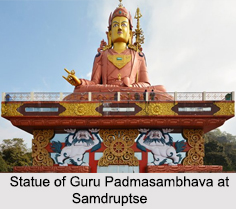
Samdruptse is a pilgrimage centre which houses a splendid and huge 135 feet high statue of Guru Padmasambhava. It is the highest statue of Guru Padmasambhava in the world. Sikkim had been blessed by Guru Padmasambhava also known as Guru Rimpoche more than 1200 years ago. The statue has been built in his honour and is a tribute to the great saint. There is a monastery under the statue with a beautiful interior and a very tranquil atmosphere. A grand copper prayer wheel adorns the entrance of the monastery. Inside there is a huge prayer hall where monks chant hymns during prayer time. It also has various paintings, historic sculptures, artefacts and statues.
The foundation stone for the statue was laid by Dalai Lama in the year 1997. It took nearly 7 years to complete the statue. The statue had been funded by the State Government and was constructed and installed by His Eminence Dodrupchen Rimpoche and members of his Chorten trust. The entire project of installing the statue of Guru Padmasambhava was conceptualized by Shri Pawan Chamling, the Chief Minister of Sikkim. It was under his instructions and directions the entire project was accomplished.
Tourist Attractions at Samdruptse Hill
There are many tourist attractions around the Samdruptse hill like the very popular Shiva Mandir that has a huge statue of Lord Shiva. It is an essential part of the Solophok Chardham. There are many beautiful monasteries such as Ralang Monastery, Doling Gompa, Ngadak Monastery and Serdup Choling Monastery.
Visiting Information of Samdruptse Hill
Samdruptse Hill is just 7 km from Namchi. Regular buses and shared taxis are available from major cities of Sikkim to reach Namchi from where one can hire a cab or get onto a bus to reach there. The nearest airport is Bagdogra (102 kms) and the nearest railway station is New Jalpaiguri Station (96 kms). The best time to visit this place is during the month from February to May and September to mid December, when the weather is pleasing and the views are soul fulfilling.