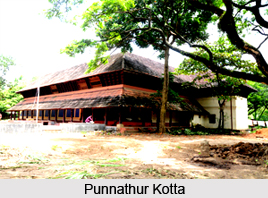
 Punnathurkotta is a fort and it is a palace located in Kottapadi.
Location of Punnathurkotta
Punnathurkotta is about 2 km from the Guruvayoor Sree Krishna Temple, in Thrissur District of Kerala State.
Elephant Sanctuary of Punnathurkotta
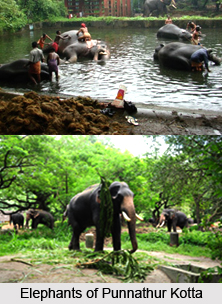
Punnathurkotta was once the palace of a local ruler, but the palace grounds are now used to house the elephants belonging to the Guruvayoor temple, and has been renamed Anakkotta which means Elephant Fort. There were 86 elephants housed there, but currently there are about 59 elephants. The elephants are ritual offerings made by the devotees of Lord Guruvayurappa. This facility is also used to train the elephants to serve Lord Krishna as well as to participate in many festivals that occur throughout the year. The oldest elephant is around 82 years of age and is called `Ramachandran`. The rituals of Worshipping Elephants and Anayoottu or the feeding Elephants are observed here, as an offering to Lord Ganesha. The legendary elephant "Guruvayur Keshavan" was housed here. The compound also has a Naalu Kettu, a traditional rectangular home with a central courtyard, which belonged to the Punnathur Raja. It is poorly maintained and presently houses a training school for Papans (Mahout).
 Complex of Punnathurkotta
Punnathurkotta complex also contains a temple dedicated to Lord Shiva or Mahadeva and Bhagavathy. The Elephant Camp is located in Punnathur Kotta, at a distance of 3 km from the Guruvayur Temple. This Elephant Camp houses 58 elephants in 11.5 acres of land and is famous for housing the largest numbers of elephants in the smallest acreage of land. There are eight sheds for the 50 odd elephants housed here. Thus most of them are exposed completely to the elements all year round, standing in their own faeces, urine and food waste. The other glaring violation is the lack of running water in the facility, with just 3 algae filled tanks and drinking water provided from water hoses. The `fascinating` feature is that all the elephants are `offerings` that are made (donated) by the devotees, (degrading them to the level of commodities), to the temple, ignoring the fact that these animals are sentient beings. The camp also acts as a training school for the elephants. All the bull (male) elephants here are trained to participate in major processions and daily temple rituals. This camp is visited by several tourists every year. There are many instances of elephants running amok, getting beaten by the mahouts, suffering grievous injuries and becoming handicapped at this facility. All the elephants, barring a few, earn sizable revenue for the temple since they are hired out and forced to participate in temple festivals from October to April every year.