
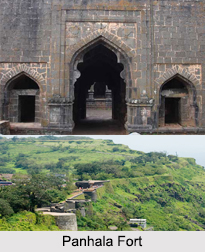
 Panhala is a popular hill station in the West Indian state of Maharashtra. It is now a weekend destination from Mumbai and Pune. Panhala is located in Kolhapur District of Maharashtra.
Panhala
Panhala is a hill station in Kolhapur District of Maharashtra. This hilly destination allures the tourists for the presence of Panhala Fort.
Introduction
Panhala is a popular hill station in the West Indian state of Maharashtra. It is now a weekend destination from Mumbai and Pune. Panhala is located in Kolhapur District of Maharashtra.History of Panhala
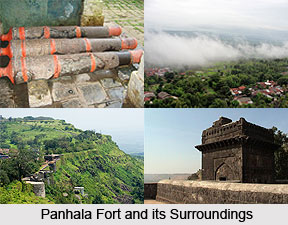 History of Panhala is closely associated with the history of the glorious Maratha Empire. The Maratha Empire and its founder Shivaji played an important role in giving a secured position.
Panhala is the only medieval fort where Shivaji spent more than 500 days, other than his childhood homes. It was State Capital of Maratha until 1782 and in the year 1827 it became part of the British Empire in India.
This imposing fort of medieval Maharashtra, Panhala Fort is just 20 km northwest of Kolhapur, built on an outlying spur of the Sahyadri Mountain Range, rising more than 400 metres above plain, and is the largest of all the Deccan forts.
The strategic importance of Panhala Fort is guarding one of the principal routes through the Western Ghats Mountain Range in India. It can be judged from its long and varied history.
Panhala Fort was built between 1178 and 1209. Panhala Fort first served as the headquarters of the Shilahara ruler Bhoja II, and subsequently passed into hands of the Yadavas.
It was a favourite outpost of the Bahamanis of Bidar; Mahmud Gawan, the powerful Prime Minister of Shivaji times, encamped here during the rainy season of 1469. By the beginning of the 16th century, Panhala was absorbed into the kingdom of Bijapur or Bijapur Sultanate.
The Adil Shahis were responsible for strengthening and rebuilding the ramparts and gateways. Panhala Fort was raided by Shivaji in 1659, but it was not until 1673 that he was able to occupy it permanently.
After the death of Shambaji in 1689, Panhala Fort was captured by Aurangzeb, the last ruler of Mughal Dynasty. However, it was re-captured in 1692 by Kashi Ranganath Sarpotdar under the guidance of Parshuram Pant Pratinidhi. In the year 1701, Panhala was finally surrendered to Aurangzeb, and it was here that the Mughal Emperor received the English Ambassador, Sir William Norris. Within a few months Panhala Fort was retaken by the Maratha forces under Pant Amatya Ramachandra.
Tarabai asserted her autonomy by founding an independent dynasty. In the year 1782, the rulers shifted their headquarters to Kolhapur. After a local rebellion in 1844, Panhala was taken by the British East India Company. More than 7 kilometres of fortifications define the approximately triangular zone of Panhala fort. The walls of Panhala Fort are protected for long sections by steep escarpments, reinforced by a parapet with slit holes. The remaining sections have 5 to 9 metres high ramparts, strengthened by round bastions. Unfortunately, the East Gate called Char Darawaja, through which the road passes on arrival at fort, was demolished by the British East India Company.
Panhala fort has another satellite fort visible. It is said that there were wells full with Ghee to cure the soldiers. The well-known poet Kavi Moropant stayed here for some times. There are the nearby tourist spots which are of worth importance like Sambhaji temple, Someshwar temple, Teen Darwaza, and Raj Dindi. Sajja Kothi. Ambabai Temple is the temple where Shivaji used to seek blessings before venturing on expeditions. Pavankhind is the place where Baji Prabhu Deshpande laid down his life to cover escape of Shivaji from Mughal tyranny.
Geography of Panhala
Panhala is located with a latitudinal and longitudinal limits 16 degree 49 minutes 12 seconds north to 74 degree 7 minutes 12 seconds east. The average elevation of this hill station is about 754 meters.
Demography of Panhala
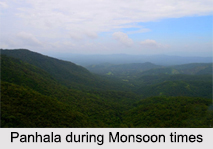 According to the Population Census in the year 2011, Panhala had a population of 3450. The males constitute 57 percent and the females constitute 43 percent.
Tourism in Panhala
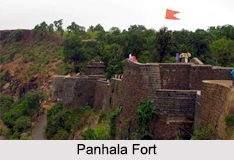 Tourism in Panhala is not only a mix of tourism destination - Panhala Fort, but also it hosts a number of religious festivals.
Panhala is a fortified hill station in Kolhapur District of Indian state of Maharashtra. Panhala was established before the establishment of Kolhapur as a seat of administrative power of Peshwas, but today this fort city is a tourism attraction. Here, the cuisine, festivals and arts and culture have now bubbled over to Panhala.
Panhala Fort : Panhala fort is located at about 20 kilometers northwest of Kolhapur. One can see the distant view of Sahyadri mountain range.
Andharbav : Andharbav was built during the 17th century. The compound of Andharbav had encompassed a three-storey building. It was used as a hideaway to entangle enemy soldiers.
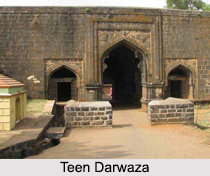
Teen Darwaza : Facing Andharbav, to the right, is Teen Darwaza. This architecture is known as `Konkani Darwaza`. With three enormous doors and five arches of black basalt, the gateway of Konkani Darwaza could only be approached at a clumsy angle, which made it unfeasible for the enemy to absorb in a full-scale charge. Most enemies, thus, preferred to lay siege and bomb the fort from a distance, as it had occurred in 1660 when Sidi Jauhar had cornered Maratha Emperor Shivaji.
Each gate of the Teen Darwaza is discerned by symbols and motifs of Mughal art. On the third gate, the thumb-sized sculpture of Lord Hanuman and a lotus roof is worth a second look. The second gate was constructed by Raja Bhoj II (1175-1215), has a Lord Ganesha, while the first gate has a seal of Adil Shahi Dynasty scripted in Urdu language, admonishing the enemies that if they broke down the gate, they would have to face terrible consequences.
Vishnu-Tirth Well : Vishnu-Tirth well is located inside Panhala Fort. It is said that Shivaji used to send the secret messages. The paper containing a message would be folded and enclosed within a lemon. The lemon was then strongly tied with a string and dropped into the well. The water from the well flowed directly to Ranakala Lake in Kolhapur, (20 km away), from where it was then reclaimed.
 Sajja Kothi : Sajja Kothi or Sadar-e-Mahal is the best specimen of Maratha architecture in Panhala Fort. It is a two-storey building, built on the periphery of the cliff, that Shivaji use to hold his military and administrative meets. It was from here that he turned tail to Vishalgad.
Ambar Khana : Ambar Khana includes three buildings constructed by Raja Bhoj II. It was a granary that could store up to 25,000 khandis of grain (approximately 50,000 maunds).
Shiva Temple : Shiva Temple is a small Hindu temple in Panhala. During the Panhalgad siege, Shivaji performed a prayer ceremony to Mahadeva in which he had shed a few drops of his own blood.
Kali Masjid : Kali Masjid is an example of architecture of Adil Shah Dynasty. It was constructed by Ali Adil Shah II.
Dutondi Buruj
Dutondi Buruj is a two-mouthed citadel that faces north and provides a favourable position to observe the entire Panhala.
Recently updated articles in Hill Stations in India

History of Male Mahadeshwara Hills
The history of the Male Mahadeshwara Hills is deeply rooted in legend and devotion, tracing back nearly six centuries. Associated with Saint Mahadeshw...
Kullu - Himachal Pradesh
Kullu is located in Kullu District of Himachal Pradesh. Kullu is one of the most beautiful hill stations of the country. Kullu is popularly known as t...
Lalit Grand Palace
Lalit Grand Palace is 5 Star Hotel, which was earlier the summer residence of Maharaja Pratap Singh of Dogra Dynasty.
Drangyari
Drangyari is hill station in Kashmir Valley of Jammu and Kashmir which attracts tourists for the natural beauty.
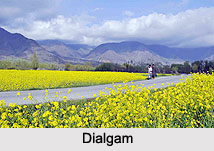
Dialgam
Dialgam is a hill station in Jammu and Kashmir. For its location, this hill station is noted to the tourists as the spot of refreshment.
Related articles in Hill Stations in India
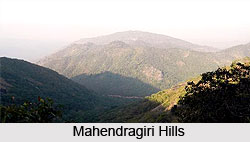
Mahendragiri Hill
Mahendragiri is a place of great scenic beauty. The place is surrounded on three sides by hills and thick growth of wild trees.
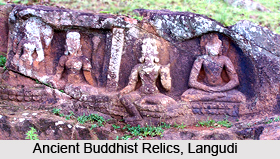
Langudi Hill
Langudi Hill, Odisha is a significant Buddhist archaeological site containing ruins of Pushpagiri University, rock-cut caves, Buddhist stupas and nume...
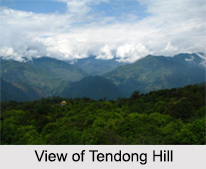
Tendong Hill
Tendong Hill in South Sikkim is located at an altitude of 8530 ft. The hill is deeply revered by the local villagers.
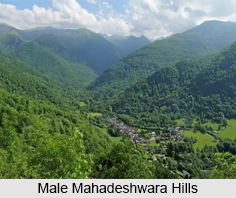
Male Mahadeshwara Hills
The Male Mahadeshwara Hills is one of the popular sites of tourism in the state of Karnataka and is known for the sacred Male Mahadeshwara Hills Templ...
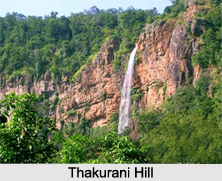
Thakurani Hill
Thakurani Hill is a residual sedimentary hill in Odisha and it is the place of attraction in Keonjhar District.