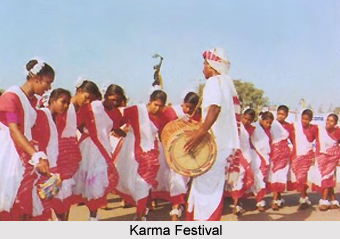
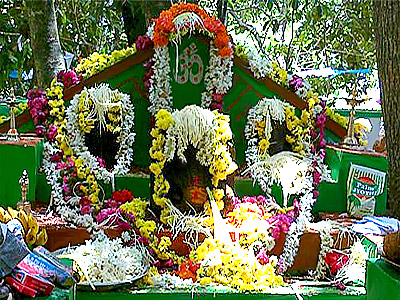
 Nagaradhane, form of snake worship, is one amongst the exclusive ancient traditions prevailing in coastal districts of Udupi, Dakshina Kannada, in Karnataka. The custom is performed along with the rituals of Bhuta Kola, by the Tulu-speaking community. The custom of Nagaradhane is also followed in Kasaragod, which is also known as Tulu Nadu. The ritual consist of two parts, Aashleshabali and Nagamandala, wich are conducted during the Nagaradhane. The snake gods are devoted with shrines known as Nagabana, which are considered scared.
Origin of Nagaradhane
Snakes are often related with gods, like Shiva and Vishnu, and there is extensive mention of serpents in Hindu religious epics such as Vishnu Purana, Mahabharata etc. The origins of Nagaradhane are not clear and are shrouded in ambiguity. But it is often suggested that as the Bunts of Tulu Nadu are supposedly Kshatriyas of Nagavanshi descent, they have initiated the trend of venerating the Snake as a god during the early era. The rituals of snake worship practiced in Tulu Nadu are rather exclusive and unique as compared to other rituals. Special shrines are devoted to the snakes, in a sacred grove, which is known as Nagabana. The shrines contain images of cobras, engraved on rocks. The forest encircling the Nagabana is protected by the locals and cutting of trees is strictly forbidden. Moreover, stringent laws are maintained, so that no one harms the snakes. If anyone kills a snake, then the individual has to perform a cleansing ritual or else is believed to be cursed for eternity.
Ritual of Nagaradhane
Nagaradhane, the worship of snake, comprises of 2 distinctive rituals, Nagamandala and Aashleshabali, which are performed during the ancient customs. The ritual of Nagamandala is comparatively more vibrant and extended in duration, which represents the divine union of female and male snakes.
Nagamandala is conducted by 2 priests, the 1st priest is known as Patri and the 2nd is known as Nagakannika. Patri, presumably, inhales the areca flower and converts into the male snake; where as the Nagakannika or the female snake, sings and dances around in an intricate serpent design, illustrated with natural colours on the sanctified ground. The illustration on the sacred ground is made in 5 separate colours, namely, Yellow, made form Turmeric powder; White, made from white mud; Green, made from green leaves powder; Black, made from roasted and powdered Paddy Husk and Red, made from mix of Lime powder and Turmeric powder. The ritual of Nagaradhane is enhanced by the playing of Dakke, an hour glass shaped instrument.
The customs of Aashleshabali is equivalent in nature to the funeral rituals that are performed upon the death of an individual, in accordance with the typical Hindu customs. The custom is carried on till early morning, around the design of the serpent. The customs and rituals of Sarpam Kali and Sarpam Thullal of Kerala are similar to the traditions of Nagaradhane. Generally all of the communities in Tulu Nadu worship snakes and serpents.
Decline of the Nagabanas
The Snake God, supposedly, resides and takes rest in the sacred groves of the Nagabanas. The Nagabanas were a blissful place and unharmed earlier. Although cutting the trees is forbidden and considered as sacrilege, but lately, with unplanned and rapid urbanization, most of the Nagabanas have been ruined. The precious trees and medicinal plants that were once preserved in the Nagabanas in Tulu Nadu were cleared off and replaced to make space for the temples of serpent god.