
Lizard chirping, according to the Hindus, is considered holy and auspicious. This creature, by its chirping and hooting, is supposed to foretell what is going to befall to certain individuals or on their homes. This belief has been so firm-rooted and strong among people from time immemorial that there are separate books on lizard chirping and owl hooting. Not only the chirping but also the falling of a lizard on particular portion of the body of an individual portends good or evil to them.
Lizard Chirping - Indian Belief
In Hinduism, lizard chirping is often regarded as a sign of divine communication and is considered auspicious in many traditions. The sound, such as hooting and chirping, is believed to carry spiritual significance, sometimes foretelling future events. Depending on timing and context, it may symbolize prosperity, blessings, or serve as a subtle cosmic message.
Introduction
Spiritual Significance of Lizards in Hinduism
For most people, the sudden appearance of a lizard inside the house brings discomfort or the immediate urge to chase it away. Yet, in many traditions, lizards are more than just household intruders, they are seen as bearers of spiritual meaning. Hinduism, in particular, ascribes symbolic and mystical significance to their presence, weaving them into age-old beliefs and customs.
Across Hindu myths and legends, animals often play important roles, frequently serving as the sacred vehicles (vahanas) of Gods and Goddesses. Lizards too, though small and often overlooked, are linked with divine symbolism. In several Hindu households, the sound of a lizard’s chirp is considered auspicious, believed to signal good fortune and holy vibrations.
The spiritual interpretations extend further. Ancient Hindu texts and folklore describe the phenomenon of lizards falling on the human body, known as ‘Palli Vizhum Palan’ in Tamil tradition, as carrying specific meanings. These beliefs emphasize the idea that even the smallest creatures can act as messengers of destiny.
In certain regions, the entry of a lizard into the home is
also connected to the blessings of Goddess Lakshmi, the
deity of wealth and prosperity. Such associations transform the reptile from a
simple creature of the walls into a spiritual symbol tied to divine presence
and fortune.
Chirping of the Lizard
Regarding the chirping of the lizard and what it portends,
it is said that the direction from which the chirping is heard on particular
days of the week have to be taken into consideration. The following table has
been arranged to indicate what the chirping portends on particular days in
particular directions.
On Sundays, there are different points that can be understood which depends on
the chirping of a lizards. The directions and the emotions can be mentioned as
follows.
East-- fear,
South-east-- evil,
South-- good,
South-west-- opportunity to see relatives,
West-- quarrel,
Northwest-- gain of new cloth,
North-- gain of gems,
North-east-- general gain,
Above-- success
Ground -- failure in attempts.
On Mondays, the chirping is said to prophesy as noted below.
East-- gain of wealth
South-east--rebellion
South--enmity
South-west--quarrel
West-- reception from king
North-west--calamity
North-- gain of new cloth
Northeast--marriage
Sky--evil and
Floor-- prosperity.
On Tuesdays, the good or evil indicated by the chirping can be explained as
below.
East--prosperity,
South-east-- gain of relatives,
South--sorrow,
South-west--enmity,
West--success,
North-west-- news from distant parts,
North-- fear from enemies,
North-east-- gain of vehicles,
Sky-journeys, and
Ground-- great gain.
On Wednesdays, there are different directions and also different emotion
attached to it that is connected with the chirping of the lizard.
East-- joy,
South-east-- gain of wealth,
South-- bodily sickness,
South-west-- loss of relatives,
West-- fear,
North-west-- loss of wealth,
North-- happiness,
North-east-- want of success,
Above-- good news,
Below-- prosperity.
On Thursdays, the good or evil indicated and the entire factor depends upon the
chirping of the lizards as well. The following can be mentioned.
East-calamity,
South-east-- good reception from relatives,
South-- gain of wealth,
South-west-- success in all the undertakings,
West-- loss,
North-west-- good news,
North-- failure,
North-east-- good meals, and above or below-rebellion.
On Fridays, the following particulars can be mentioned.
East-- good news,
South-east-- decoration,
South-- visit of relatives,
South-west-- good news,
West-- joy,
North-west-- quarrel and rebellion in the house,
North-- quarrelsome and rebellious words,
North-east-- victory over the enemy,
Above-- gain of things,
Below-- freedom from pollution.
On Saturdays also there are particularities which can be mentioned as.
East-- good words,
South-east-- gain of wealth and sandal paste,
South-- audience with the king,
South-west-- sickness,
West-- gain of new cloth,
South-west-- relationship with a new woman,
North-- pleasing or agreeable news,
North-east-- fear from thieves,
Above-- failure in attempts, and
Below-- success in everything.
Lizards in Tamil Sangam Literature
During the Sangam era, even the smallest creatures found their way into human imagination, and lizards were no exception. Far from being mere reptiles, their distinctive chirping sounds were believed to carry hidden meanings, serving as omens that guided people’s thoughts and actions.
The Sangam poet Kavan Mullai Putanar captures this belief vividly. In Akam 151, he describes a lizard perched on a Kalli tree, its sharp “tick-tick” sound taken as a sign by weary travellers about what awaited them on their journey. Another poet, in Akam 387, notes how wayfarers often paused in their tracks, attentive to the subtle clues hidden in the lizard’s call. The belief extended beyond human beings. Akam 186 narrates the curious case of a boar that turned away from a millet field simply after hearing the sound of a lizard. Such accounts reveal the deep symbolic weight that these creatures held in everyday life.
Interpretations of the lizard’s chirping were not straightforward. Much depended on the number of calls, the direction from which the sound arose, and even the day of the week. With multiple lizards often calling at once from different directions, decoding these signals became a complex task. For example, two chirps from the southeast on a Monday were believed to foretell rebellion, while the same sound on a Friday suggested the promise of honor or decoration. On Tuesdays, the call warned of enmity, but on Saturdays, it hinted at the possibility of a new romantic connection.
Through such layered meanings, Sangam
literature reveals how closely the ancient Tamils observed the natural
world, weaving it into their system of signs and omens.
Recently updated articles in Indian Festivals

Festivals of Daman and Diu
Festivals of Daman and Diu reflect the traditional culture of this region through its manifold festive occasions which include Folk Dance Fesrival, Ga...

Festivals of Dadra and Nagar Haveli
Festivals of Dadra and Nagar Haveli reflect the vibrant tribal culture and traditions of the region. Celebrations such as Tarna Festival and Divasol F...

Teething Ceremony in Indian Customs
In India, teething is observed with deep cultural significance, blending health and tradition. Families often use age-old remedies like rubbing honey,...

Lizard Chirping - Indian Belief
In Hinduism, lizard chirping is often regarded as a sign of divine communication and is considered auspicious in many traditions. The sound, such as h...

Festivals of Haryana
The festivals of Haryana reflect the state's rich cultural heritage and religious fervor. Celebrations like Gugga Naumi, Teej and Gangore are marked b...
Related articles in Indian Festivals

Hareli Festival
Hareli Festival is a popular festival of Chhattisgarh. It is celebrated in the month of Shravan by the farmers who worship cows and other equipments u...
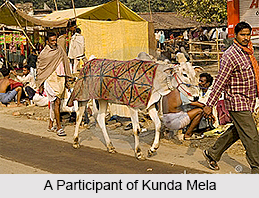
Kunda Mela
Kunda Mela is one of the famous and largest festivals of Jharkhand. The biggest attraction of this fair is the cattle trade.

Bihula Festival
Bihula Festival is one of the popular festivals in Bhagalpur, Bihar.
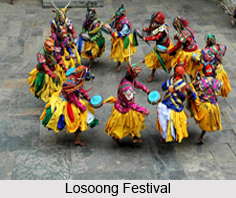
Losoong Festival
Losoong Festival is the Sikkimese New Year, of the Bhutia tribe, celebrated every year in the month of December. This festival is very famous in easte...

Karma Festival
Karma Festival is a tribal festival celebrated in Madhya Pradesh, Bihar, Jharkhand and Chhattisgarh.