
Rajasthani Literature is vast and varied. Its treasures are mostly in manuscript form, cherished and preserved by individuals and institutions scattered not only in Rajasthan but in other states as well. Human emotions have been wonderfully depicted by various literary items of Rajasthani Literature. The literature of the state is equally varied in terms of poems and prose. The prose section of Rajasthani Literature was widely varied in the modern period. It included novels and stories.
Rajasthani Novels
The novels of the modern era generally deal with existing social evils of that time. They also reflect the existing scenario of the society and also showed how people reacted at different situations during that time.
Sivcandra Bhartiya (1853-1918) was the pioneer novelist in Rajasthan. His "Kanak Sundar" (1903) is the first novel in Rajasthani, for which he had used the popular Gujarati term `Nawal Katha`. This deals with social evils through a tale of two families, headed by two brothers, Hazarimal and Muralidhar. The family of Muralidhar is reformist and that of Hazarimal orthodox. The writer upholds the ways of Muralidhar`s family.
On the other hand "Campa", a novel by Srinarayan Agrawal deals with the problem of marriage in old age. Both the novels in fact are idealistic in nature.
In Annaram Sudama`s "Maikati Kaya Mulakati Dharati" (1966), an old woman, Sugani (Suthari Nani) narrates her tragic story. She was forsaken by her husband, at the incitement of her widowed sister-in-law (nanad). Sugani did not lose faith in life and bore all hardships with a smile. The writer has drawn a realistic picture of life and emphasized the love of one`s land.
Another novel by Sudama was, "Andhi ar Astha". The novel depicts the village life of Rajasthan. It is the story of a poor Brahmin family which holds its own in spite of social oppression and evil fate, Sudama has a style of his own, punctuated by idioms and proverbs. It portrays the changing faces of the politicians during that time, describes forcible vasectomy, and the arrogance of the so-called `youth leaders`. However, the focus of the novel is on the pivotal position that moneylenders occupy in the village life. It paints realistically the helpless dependence of the village folk on the moneylenders and their pathetic need to be on their right side. Sudama`s style and language reached a new peak in this work.
In the novel by Chatrapatisiriha named, "Tirasahku" romance is more prominent than the message of revolution.
Rajasthani Short Stories
Rajasthani Literature is rich in stories called `vat`. But the modern short story is the gift of the West. Sivcandra Bhartiya is pioneer in this field also. They deal with social problems in a realistic way and end on a reformist note.
Around the year 1950 a number of good stories were written, the sphere had widened and subjects had become more varied with changes in values and viewpoints. In mid-seventies the realistic and individualistic note in stories became sharp and explicit. Social stories form a major portion of Rajasthani fiction.
Reformatory and idealistic stories suggest a solution of a particular social problem or give a realistic description of the problem urging for a solution. Among the writers of such stories are Muralidhar Vyas (Varas Ganth, 1956), Manohar Sharma (Kanyadan, 1971), Nanuram Sanskarta (Das Dokh, 1966, Gyoyi, 1957, and Ghar ki Gay, 1970), Nrsinha Rajpurohit (Rat Vaso, 1961, Amar Cunadi, 1969), Annaram Sudama (Ahdhai nai Ankhyan, 1971), and Baijnath Panwar (Lddesar,1970).
Stories depicting social life and changes in ideology have been written by Srilal Nathmal Josi (Paranyodi Kanwari, 1974), Nrsiriha Rajpurohit, Baijnath Panwar (Nainan Khutyo Nir, 1977), Nanuram Sanskarta, Mulcand `Pranes` (Ukalata Antara Sila Sans, 1973, and Parades ri Goradi, 1965), etc. Some writers have portrayed in a realistic way the changes in various aspects of social structure, family and individual life.
Hence the prose which had emerged in Rajasthani Literature during the modern era very closely reflected the social and family life of people of that age. It represented human emotions and sentiments in a very apt manner and the style which was followed by the stories and the novels were subtle in nature and they reflected the social reality more subtly and indirectly. But at the same time the approach remained sharp.
Modern Rajasthani Prose
Modern Rajasthani Prose mainly included several novels and stories. This piece of Rajasthani literature was very instrumental in reflecting the social reality more closely.
Recently updated articles in Indian Literature
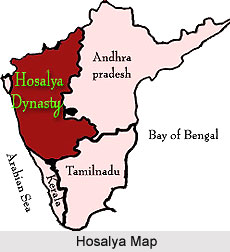
Gadyakarnamrita
Gadyakarnamrita is a 13th-century Sanskrit literary work written mainly in prose. It describes the ninety-day battle at Srirangam between the Hoysala...
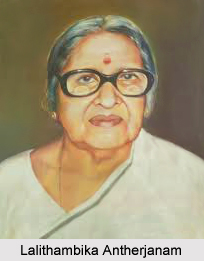
Women Writers in Malayalam Literature
Women writers in Malayalam literature have worked incessantly to make a place for their literary works. In the earlier periods, they were completely o...
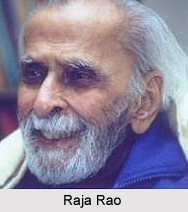
Comrade Kirillov, Novel by Raja Rao
Comrade Kirillov, a distinctive creation of Raja Rao, is presented as a brief yet incisive novelette that offers an ironic portrayal of the self-contr...
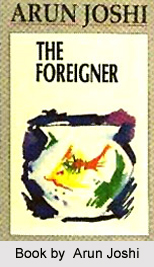
The Foreigner, Novel by Arun Joshi
“The Foreigner” is a book authored by Arun Joshi and published by Vision. It is an illustrious creation in the entire career of Arun Joshi, the famous...
Short Story in Telugu Literature
Short Story in twentieth century Telugu Literature was extremely popular and growing in and developing in a major way. Their popularity was greatly fa...
Related articles in Indian Literature
Mythological Themes in Indian Literature
Mythological themes in Indian literature have been integral to every ancient and contemporary writer and their path to f
Literature During Gupta Age
It is during the Gupta Age literature in the form of poetry, epos and drama gained a colossal importance.
Literature of Aravidu Dynasty
Sanskrit and Telugu were the popular literary medium of communication during Aravidu dynasty.
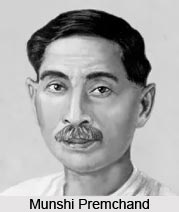
Munshi Premchand
Munshi Premchand was a legendary Indian writer notable for his modern Hindustani literature. A writer of a very high caliber, Premchand`s writings hav...
Sanskrit Poets
The names of some of the Sanskrit Poets are Bharavi, Devarshi Ramanath Shastri, Jayadeva and Srinivas Rath.