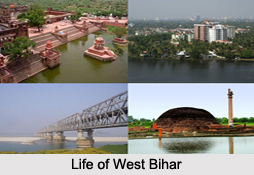
 Modern History of Gaya describes the 18th century administrative traits. This place is known as the sacred place for Hindus and the Jains and the Buddhists.
Construction of Gaya
The modern town of Gaya is constructed at about 1810 AD. It consisted of two parts, one the residence of the priests, which properly was called Gaya; and the other the residence of lawyers and tradesmen, which was originally called Elahabad, but later on, as developed by a renowned collector Mr. Thomas Law, it was called Sahebgunj.
Gaya in 18th Century
Gaya is the birthplace of eminent nationalist Dr Anugrah Narain Sinha; Bihar`s first deputy Chief Minister cum Finance Minister. The last great ruler of Magadha was Maharaja of Tekari. The leader of Kisan Andolan, Swami Sahajanand Saraswati established an ashram at Neyamatpur, Gaya which later became the centre of freedom struggle in Bihar. All the prominent leaders of Indian National Congress visited there frequently to meet Yadunandan Sharma, the leader of Kisan Andolan who resided in the ashram set up by Swamiji. Yadunandan Sharma became the undisputed leader of peasants in the Gaya district and second in command to the legendary freedom fighter and peasant leader Swami Sahajanand Saraswati.
Contribution of Gaya in Indian Freedom Struggle
Gaya has also immensely contributed in the Indian Independence Movement. During the independence movement, the All India session of the Congress was held under the presidency of Chittaranjan Das in 1922, which was attended by great luminaries and prominent leaders of the Indian Independence Movement, such as Mohandas Karam Chand Gandhi, Dr. Rajendra Prasad, Dr Anugrah Narayan Sinha, Sardar Patel, Maulana Azad, Jawaharlal Nehru and Sri Krishna Sinha.
Gaya after Independence
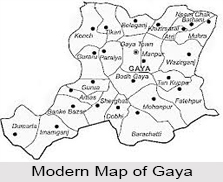
Gaya was established in the year 1865. Earlier Gaya was a part of the district of erstwhile Behar of Ramgarh which is now in Jharkhand till 1864. It was given the status of independent district on 3rd October 1865. Subsequently, in May 1981, Magadha division was created by the Bihar State Government with the districts of Gaya district, Nawada district, Aurangabad district and Jehanabad district. These entire districts were at the level of sub-division, when the Gaya district was created. Gaya has seen three district partitioned off from its territory, Aurangabad district and Nawada district in 1976; and Jehanabad district in 1988. Now, Gaya district occupies an area of 4,976 square kilometres.