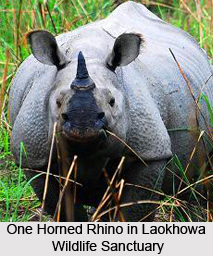
 Situated in the Nagaon district of Assam, the Laokhowa Wildlife Sanctuary was established in the year 1972 and spreads over an area of about 70.13 sq. km. The sanctuary lies on the banks of the Brahmaputra River and is a part of the Laokhowa-Burachapori eco-system. The sanctuary is an ideal habitat for Asiatic water buffaloes and the one-horned rhinoceros. This wildlife sanctuary has the Kaziranga National Park about 40 km downstream from the Brahmaputra river basin along-with the Orang National Park located about 30 km northwest on the other side of the Brahmaputra River.
Climate of Laokhowa Wildlife Sanctuary
The Laokhowa Wildlife Sanctuary receives high levels of precipitation of about 1300 mm and receives the highest amount of rainfall during the summer season. The sanctuary experiences a moist tropical type of climate and remains extremely humid for most of the year. The temperature varies between a maximum of 35° C and a minimum of 8° C with a relative humidity of about 80% . During the months of November to April, this wildlife sanctuary experiences a pleasant, comfortable and eco-friendly climatic condition.
Flora and Fauna of Laokhowa Wildlife Sanctuary
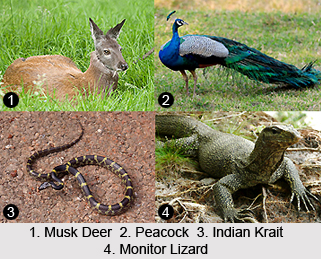
The Laokhowa Wildlife Sanctuary is rich in biodiversity and has many species of rare animals. It is a habitat to a number of species including mammals like barking deer, wild buffalo, elephant, Indian Royal Bengal Tiger, civet cat, leopard, etc. There are also numerous species of migratory birds, mainly about 225 species of birds. Some of the birds spotted here are the spot-billed pelican, little and large cormorant, egret, open-billed stork, brahminy kite, pond heron, etc. The endangered Bengal Florican is undoubtedly the most notable bird species found in the sanctuary. There are about 14 species of reptiles found in this sanctuary including the monitor lizard, python and cobra along-with 9 species of amphibians.
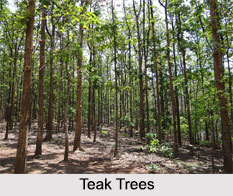
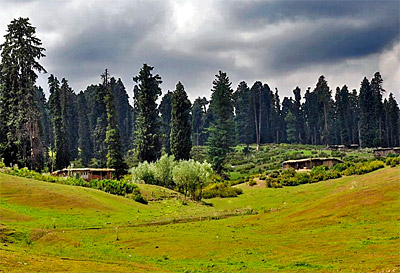
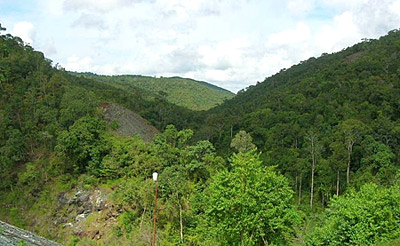
The Laokhowa Wildlife Sanctuary has both grasslands and deciduous forest. The vegetation composition of Laokhowa can be broadly categorized into alluvial grassland, alluvial forest, moist - deciduous forest and tropical semi evergreen forest.
Visiting Information on Laokhowa Wildlife Sanctuary
The Laokhowa Wildlife Sanctuary is a very popular tourist destination and has easy accessibility. The Lokpriya Gopinath Bordoloi International Airport at Guwahati is at a distance of about 162 km from the sanctuary. The Nagaon railway station is at a fair distance of 19 km from this wildlife sanctuary. By roadways, the Laokhowa Wildlife Sanctuary is connected from Nagaon at a distance of 25 km and from Guwahati is about 148 km.