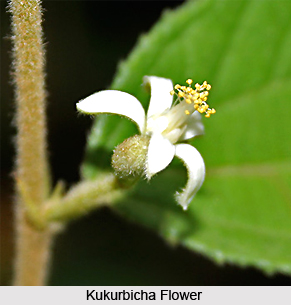
 Kukurbicha is a small, straggling shrub of thirty to ninety centimetres tall with several branches arising from the base. The botanical name of this plant is Grewia hirsuta Vahl. It is called Chimachipuru and Jibilike in Telugu and in Sanskrit language it is known as Gudasarkara and Nagabala. This plant is also known as Kakarundehrumi in Urdu language.
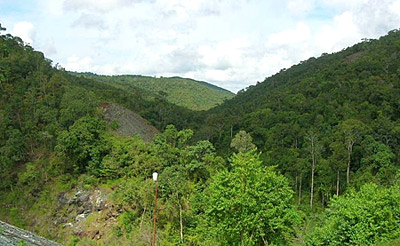
The branchlets of the Kukurbicha plant are softly and densely stellate-hirsute. The leaves of this plant are five to ten centimetres long and 2.5 to 3.8 centimetres wide, oblong to linear-lanceolate, apex acute, base is three nerved, more or less oblique and rounded to acute, margins bluntly serrate, teeth is irregular in size, glabrescent above and velvety beneath. Petioles are 2.5 to 5 millimetres long, hirsute; stipules are subulate, to eight millimetres long, lanceolate, persistent, densely hirsute to velvety on both surfaces. Flowers of this plant are white when young, turn yellow, borne in axillary of two to four flowered cymes. Peduncles axillary, solitary or paired, 0.5 to 2.5 centimetres long and slender and pedicels of 0.4 to 1 centimetre long with sepals five millimetres long, oblong; petals are three millimetres long, oblong and claw is distinct. Fruits are fleshy, 7.5 to 10 millimetres in diameter, more or less two to four lobed, shining orange to brown when ripe with scattered hairs, four seeded and pulp sweet. Flowering occurs in this plant between the months of July and September and fruiting from the months of November to January in central India. It is a common forest under storey plant in India and is found in sub-Himalayan tract up to one thousand and four hundred meters and in peninsular India from Bihar towards the south, it is found along the roadsides and other open, disturbed habitats.
There are several medicinal uses of Kukurbicha. The leaves of this plant may be either bitter or tasteless. The bitter leaves are used in Unani medicine in India to lessen inflammations, as an anthelmintic, and to treat nose and eye diseases. The roots are reportedly used in Unani practice to treat cholera, hydrophobia, piles and kidney pain. The leaves and fruit of the second variety, which possesses tasteless leaves, are used to treat splenic enlargement, piles, eye troubles, rheumatism, pain in the breasts and joints. The roots and fruits are used to treat acute diarrhoea and dysentery among the Santhalis. Among the tribal inhabitants of eastern Bihar, the leaf paste and that of the root, pounded in water, are used externally to promote healing of boils.