
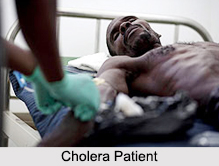
 Cholera is one of the most severe stomach diseases, mainly of the intestines, which affects the lower part of the small bowels especially during the monsoons, since it is water borne disease. The disease strikes suddenly and fills the intestinal canal with bacilli, which die rapidly and leave the person quickly either alive or dead, thus the mortality rate of this disease is much higher.
Cholera
Cholera is an infectious disease that causes severe watery diarrhoea, which can lead to dehydration and even death if untreated.
Introduction
Cholera is one of the most severe stomach diseases, mainly of the intestines, which affects the lower part of the small bowels especially during the monsoons, since it is water borne disease. The disease strikes suddenly and fills the intestinal canal with bacilli, which die rapidly and leave the person quickly either alive or dead, thus the mortality rate of this disease is much higher.History of Cholera
Cholera likely has its origins in the Indian Subcontinent; it has been prevalent in the Ganges delta since ancient times. It is believed that the first origins of Choleras have occurred due to the result of poor living conditions as well as the presence of pools of still water.
Causes of Cholera
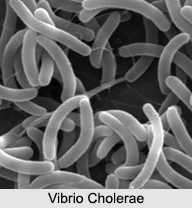 Cholera is caused by a short, curved, rod-shaped germ known as Vibrio Cholerae. This germ produces a powerful poison which is spread by flies and water contaminated by the germs. The real cause of the disease, however, is the toxic and devitalized condition of the system brought about by incorrect feeding habits and faulty style of living. This condition facilitates the breeding of the cholera germs.
Symptoms of Cholera
Symptoms may range from none, to mild, to severe. The symptoms of cholera are clearly visible in three stages.
First Stage :
• The patient suffers from mild diarrhoea and vomiting, which worsens rapidly.
• The motions become watery, containing no faecal matter.
•The patient experiences severe cramps in the abdominal muscles and limbs, resulting due to lack of salts.
•The temperature of the body rises but the skin is generally cold and blue and the pulse gets weak.
Second Stage:
• Here, the body becomes colder, the skin dry, wrinkled and purple.
• Voice becomes weak and husky.
• The urine looks dark and formation is less, or altogether absent.
• It is in this `algid` stage that the patient may die, as early as 24 hours after the onset of the symptoms.
Third Stage:
• In this stage, a gradual recovery follows in favourable cases. All the changes seem to reverse themselves.
• The fluid loss decreases and there is improvement in the general condition.
•Even at this stage, a relapse may occur or the patient may sink into a condition resembling typhoid fever.
•The condition may deteriorate over a period of 2 or 3 weeks. During this stage of reaction, the temperature may rise, and the patient may be in danger of pneumonia.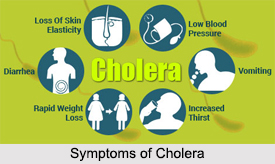
First Stage :
• The patient suffers from mild diarrhoea and vomiting, which worsens rapidly.
• The motions become watery, containing no faecal matter.
•The patient experiences severe cramps in the abdominal muscles and limbs, resulting due to lack of salts.
•The temperature of the body rises but the skin is generally cold and blue and the pulse gets weak.
Second Stage:
• Here, the body becomes colder, the skin dry, wrinkled and purple.
• Voice becomes weak and husky.
• The urine looks dark and formation is less, or altogether absent.
• It is in this `algid` stage that the patient may die, as early as 24 hours after the onset of the symptoms.
Third Stage:
• In this stage, a gradual recovery follows in favourable cases. All the changes seem to reverse themselves.
• The fluid loss decreases and there is improvement in the general condition.
•Even at this stage, a relapse may occur or the patient may sink into a condition resembling typhoid fever.
•The condition may deteriorate over a period of 2 or 3 weeks. During this stage of reaction, the temperature may rise, and the patient may be in danger of pneumonia.
Treatment of Cholera
The treatment should begin with the aim of combating the loss of fluids and salts from the body.
• To allay thirst, water, soda water or tender coconut water should be given in small quantities repeatedly for sipping.
• Ice may be given for sucking as it will reduce internal temperature and restrict the tendency to vomit.
• Intravenous infusions of saline solution, maybe 5 litres or more, should be given as a compensation for the loss of fluids and salts from the body.
• Rectal saline normally, half a litre of saline, with 30 grams of glucose, should be given per rectum every 4 hours until urine is passed freely. This treatment may sometimes prove useful for adults.
After the acute stage of cholera is over, the patient may be given tender coconut water and barley water in very thin form. When the stools begin to form, he should be given buttermilk. As he progresses towards recovery, rice softened to semi-solid form mixed with curd, may be given. However, the patient should not be given solid food till he has fully recovered. Liquid and bland foods are the ones, which the patient can ingest without endangering a reoccurrence of the disease. Lemon, onion, green chillies, vinegar and mint should be included in the daily diet during an epidemic of cholera.
• To allay thirst, water, soda water or tender coconut water should be given in small quantities repeatedly for sipping.
• Ice may be given for sucking as it will reduce internal temperature and restrict the tendency to vomit.
• Intravenous infusions of saline solution, maybe 5 litres or more, should be given as a compensation for the loss of fluids and salts from the body.
• Rectal saline normally, half a litre of saline, with 30 grams of glucose, should be given per rectum every 4 hours until urine is passed freely. This treatment may sometimes prove useful for adults.
After the acute stage of cholera is over, the patient may be given tender coconut water and barley water in very thin form. When the stools begin to form, he should be given buttermilk. As he progresses towards recovery, rice softened to semi-solid form mixed with curd, may be given. However, the patient should not be given solid food till he has fully recovered. Liquid and bland foods are the ones, which the patient can ingest without endangering a reoccurrence of the disease. Lemon, onion, green chillies, vinegar and mint should be included in the daily diet during an epidemic of cholera.
Natural Remedy for Cholera
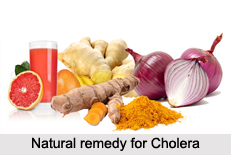 Natural remedy for Cholera should in the beginning aim at fighting the loss of fluids and salts from the body. Cholera is an infectious disease caused by water borne bacteria. This bacterium causes acute diarrhoea and an intestinal infection through the ingestion of contaminated food or water. Cholera is most common in children below 5 years but is not limited to this age group only. In endemic areas, cholera can affect all age groups and can even lead to death.
Liquid Diet Therapy for Cholera : To relieve thirst, water, soda water or green coconut water should be given for sipping although this may be thrown out by vomiting. As a result, only small quantities of water should be given over and over again, as these may remain for sometime within the stomach and stay of every one minute means some absorption. This will moderate internal temperature and check the propensity to vomit. Intravenous infusions of saline solution should be given to reimburse for the loss of fluids and salts from the body. The patient may require 5 litres or more a day. Care should, however, be taken to avoid water logging the patient. Potassium may be added to the infused fluid. Rectal saline may sometimes prove functional for adults. Normally, half a litre of saline, with 30 grams of glucose, should be given per rectum every 5 hours until urine is passed freely.
After the acute stage of cholera is over, the patient may be given green coconut water and barley water in very thin form. When the stools begin to form, he should be given buttermilk. As he progresses towards recuperation, rice softened to semi-solid form mixed with curd, may be given. The patient should not be given solid food till he has completely recovered. Liquid and plain foods, which the patient can consume without endangering a reoccurrence of the malady, are best. Lemon, onion, green chillies, vinegar and mint should be included in the daily diet during an epidemic of cholera.
Home Remedies for Cholera : Certain home remedies have been found advantageous in the cure of cholera.
1. The foremost among these is the use of lemon. The juice of this fruit can kill cholera bacilli within a short time. It is also a very efficient and dependable preventive food item against cholera during the epidemic. It can be taken in the form of sweetened or salted beverages for this purpose. Taking of lemon with food as daily routine can also thwart cholera.
2. The root bark of guava is another valuable remedy. It is rich in tannins and can be effectively employed in the form of concentrated decoction in cholera. It will arrest vomiting and symptoms of Diarrhoea.
3. Onion is very helpful in cholera. About 30 grams of this vegetable and 7 black pepper should be delicately pounded in a pestle and given to the patient. It allays thirst and restlessness and the patient feels better.
4. The fresh juice of bitter gourd or Karela is one more effective medicine in the early stages of cholera. 2 teaspoons of this juice, mixed with an equal quantity of white onion juice and a teaspoon of lime juice, should be given
Cautions for Cholera
• Cholera can be controlled only by rigid purification of water supplies and proper disposal of human wastes.
• In case of the slightest uncertainty about the contamination of the water, it must be boiled before use, for drinking and cooking purposes.
• All foodstuffs must be kept covered and vegetables and fruits washed with a solution of potassium permanganate before consumption.
• Other precautions against this disease comprise avoiding all uncooked vegetables, thorough washing of hands by all those who handle food, and elimination of all contacts with the disease.
Prevention from Cholera
Though cholera can be treated, it should be prevented first in order to escape the pain of this horrible disease. Cholera can be controlled only by rigid purification of water supply and proper disposal of human wastes. In case of slightest doubt about the contamination of water, it must be boiled before use, for drinking and cooking purposes. Foodstuffs must be kept covered and vegetables and fruits washed with a solution of potassium permanganate before consumption.
Other precautions against this disease include avoiding all uncooked vegetables, thorough washing of hands by all those who handle food, and elimination of all contacts with the disease.
Other precautions against this disease include avoiding all uncooked vegetables, thorough washing of hands by all those who handle food, and elimination of all contacts with the disease.
Cholera Research in British India
 Cholera research in British India started up as an emergency duty, with patient deaths increasing by the day. Experiments were conducted to identify the root cause of the intensely infectious disease. The case was even deadly and widespread in the rural areas. Money was being put in for through research in cholera, with British scientists examining the disease carriers and patients the mortality rate. Success soon came their way.
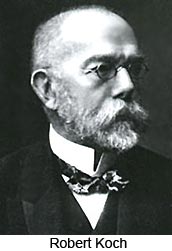
Within the period of 1883-84, the German bacteriologist Robert Koch (1843-1910) discovered the specific cause of cholera in the comma bacillus while working in Egypt as a member of the German Cholera Commission. In February 1884, the German Commission proceeded to Calcutta where it confirmed the comma bacillus as the cause of cholera when it was found in a water tank in Calcutta.
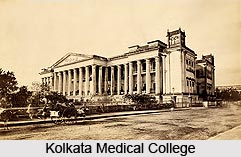
In December 1884, the Government of India directed the establishment of India`s first medical laboratory at the Calcutta Medical College. Dr. David Douglas Cunningham (1843-1914) was appointed as its first director and granted 15,000 rupees to study cholera. A headway was smoothly achieved towards scientific researches under British India with the said establishment amongst common man.
 In 1888, following the work of Koch, the English Cholera Commission was established under the leadership of British bacteriologists, Dr. Edward Kllen and Dr. Heneage Gibbs. Their findings appeared to weaken and cloud Koch`s thesis. However, from 1890 onwards, a better understanding of the aetiology of cholera allowed the medical profession in India to accept the comma bacillus as water-borne. This understanding renewed greater interest in the provision of clean water.
Within the months of April 1893 to July 1895, Waldemar M. W. Haffkine (1860-1930) traversed India testing an anti-cholera vaccine on 294 British officers, 3206 British soldiers, 6629 Indian soldiers, 869 European civilians and 31,056 Indians with mixed results. A second experimental phase acquired considerable success. It becomes sufficiently clear that cholera was taken up a deadly disease, running the risk of mortality. Indians were more prone to it owing to lack of knowledge; as such, scientific researches by British medical men helped a lot to accentuate recovery.
Within the years of 1906-15, Leonard Rogers (1868-1962) investigated various treatments for cholera patients at the Calcutta Medical College Hospital. He effected the reduction of cholera death rates from 80 percent to 14 percent through the use of hypertonic saline and permanganates. He established at Bombay a laboratory for the production of vaccine against cholera.
Recently updated articles in Naturopathy in India

Effect of Magnets on Human Body
Magnets have a stimulating effect on various body systems such as digestive, urinary, respiratory. Magnet has its affect on blood and hence it influen...
Cancer, Disease
Cancer is a malignant in which a group of cells display uncontrolled growth.

Principles of Massage
Principles of Massage are consisted of proper intricacies and sequence.

Foot Massage
Foot Massage is an extremely healing and effective therapy in Ayurveda, which can eliminate several problems in the entire body.

Eye Massage
Eye Massage helps to make the eyes cool and calm making the muscles stronger.
Related articles in Naturopathy in India

Nature Cure Treatments
Nature Cure Treatments comprise the use of natural elements and healthy lifestyle for healing various ailments and staying fit.

Water Therapy
Water therapy is an alternative therapeutic method that cures many diseases.
Magnetized Oils
Magnetized Oils are prepared either on the North Pole or the South Pole.