
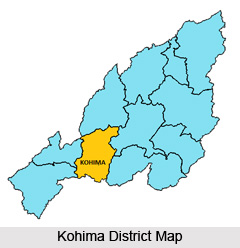
 Kohima District, one of the 11 administrative districts of Nagaland, is situated in the southern part of the state. It has an altitude of 1444 metres above the sea level. Kohima is the district headquarters of this administrative district. The total area of Kohima District is 1041 sq kms including Dimapur, as territories are yet to be clearly demarcated. Kohima District has the advantage of being centrally located. It is bounded by Assam on the west, Wokha District on the north, Zunheboto and Phek districts on the east and Manipur on the south. Kohima District has a pleasant and moderate climate, not too cold in winters and pleasant summers. December and January are the coldest months. Heavy rainfall occurs during summer and Kohima receives an average annual rainfall of 2000 mm. As per 2001 Census, literacy rate of Kohima District is 67.11 percent.
Kohima District
Kohima District is an administrative district of Nagaland with its headquarters at Kohima. Kohima District is popular for the diverse Naga Handloom and Handicraft items.
Introduction
Kohima District, one of the 11 administrative districts of Nagaland, is situated in the southern part of the state. It has an altitude of 1444 metres above the sea level. Kohima is the district headquarters of this administrative district. The total area of Kohima District is 1041 sq kms including Dimapur, as territories are yet to be clearly demarcated. Kohima District has the advantage of being centrally located. It is bounded by Assam on the west, Wokha District on the north, Zunheboto and Phek districts on the east and Manipur on the south. Kohima District has a pleasant and moderate climate, not too cold in winters and pleasant summers. December and January are the coldest months. Heavy rainfall occurs during summer and Kohima receives an average annual rainfall of 2000 mm. As per 2001 Census, literacy rate of Kohima District is 67.11 percent.Demography of Kohima District
The major inhabitants of Kohima District are Angami, Rengma and Zeliangrong communities. The total population of the district is 314,366 according to 2001 census. The sex ratio stands at 944 females per 1000 male. The important festivals celebrated in Kohima District are the Angami Festivl Sekrenyi (celebrated on the 25th February), the Rengma Festival Ngada (celebrated in the last week of November) and the Zeliang festivals Hega and Chega Gadi (celebrated during February and October). 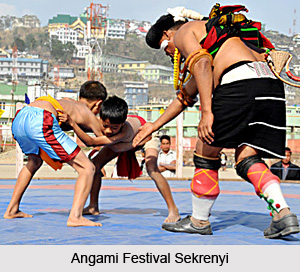 The hornbill festival of Nagaland which is a yearly feature in the first week of December is a cultural extravaganza showcases Nagaland`s traditional and cultural heritage. The Hornbill Festival is a cultural festival to revive, protect and preserve the richness and uniqueness of the Naga heritage.
The hornbill festival of Nagaland which is a yearly feature in the first week of December is a cultural extravaganza showcases Nagaland`s traditional and cultural heritage. The Hornbill Festival is a cultural festival to revive, protect and preserve the richness and uniqueness of the Naga heritage.Administration of Kohima District
Deputy Commissioner heads the administration of Kohima District. He is in charge of the proper functioning of the administration of this district. Deputy Commissioner is assisted by Additional Deputy Commissioner, Sub-Divisional Officer and Extra Assistant Commissioner. Headquarters of Additional Deputy Commissioner`s are at Peren and Tseminyu, of Sub-Divisional Officer at Chiephobozou, Jakhama, Tenning and Jalukie and of Extra Assistant Commissioner at SechÂ, Kezocha, Nsong, Athibung and Pedi.
Festivals of Kohima District
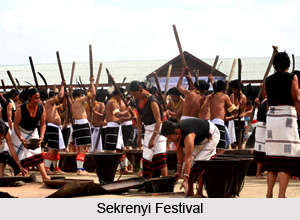 Festivals of Kohima district include festive occasions like `Sekrenyi` and `Ngada`, which are conducted by the indigenous tribes of this region. An elaborate series of rituals and traditions are followed in all these regional festivals of this Indian district. Sekrenyi festival is celebrated by the `Angami ` tribals of Kohima on the 25th day of the `Kezei` month. This 10-day festival is also referred to as `Phousanyi`.
Sekrenyi Festival : During Sekrenyi, some drops of rice are poured from the top of a jug which is known as `Kezie`, into a few leaves. This is kept at three significant positions in the house by the head lady of the particular Angami household. Therefore, on the very first day of this festival, all the men, including elderly men and youth perform the activity of bathing in the village well. The next morning at dawn, the youth of the village go to take their ritual bath. Just after the bathing, the young men don two new shawls on their bodies and spray water on their right arm, knees and chest in order to eliminate their sins and ill fates with the pure water. While returning after this washing, they sacrifice a cock. From the fourth day onwards, constant merrymaking in the form of feasting and singing is organized for three continuous days. Traditional songs are sung and enjoyed by the local youth of the village. The youngsters of this village go for hunting on the seventh day of Sekrenyi festival. The custom of `gate pulling` is performed on the eight day of this festival, when inhabitants of different villages of Kohima district visit the villages of each other. Throughout this festival, nobody is permitted to visit the fields and all the chores related to field work is stopped when this festival is celebrated.
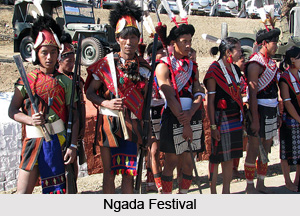 Ngada Festival : The `Rengma tribes` arrange the `Ngada` festival which continues till eight days towards the end of the month of November. Ngada is celebrated immediately after the harvest, as a sign of rejoicing and signifies the conclusion of the agricultural year. The members of every Kohima household prepare rice beer and collect banana leaves on the second day of this regional festival. The womenfolk of the village offer rice beer, wrapped in neat banana leaves to the graves of their loved ones and relatives on the third day of Ngada.
The men folk of the village consume rice beer in the morning on the fourth day of this local festival and during noon, they put on their finest garments and walk around the village, accompanied by the women, who carry rice beer. On the fifth day, the male members of the village sing songs and visit every house of the village. Similarly, on the sixth day, all the residents of the village visit the homes of one another and celebrate the festival with delicious food and drinks. The local villagers pay a visit to the forest for the purpose of collecting firewood, vegetables and banana leaves to make arrangements for the great Ngada feast which is held on the eight day of this festival. Three important rituals are done on this day.
The first rite is a peace agreement with fire, which is said to avert accidents involved with fire, as the villagers proceed with the festivities in the village. The second agreement is that with the rats, performed with a view to avoid the destruction of crops by these creatures. The Rengmas also perform another kind of rite wherein evil spirits are evicted from the village.
Tourism in Kohima District
Tourism in Kohima district comprises of cherishing the natural beauty and exploring the cultural heritage of the district. Lush greenery, beautiful streams and spectacular hills adorn the district in a picturesque way. Grand celebrations of tribal as well as local festivals also serve as tourist attractions. Trekking and mountaineering are also greatly cherished by the tourists in Kohima district.
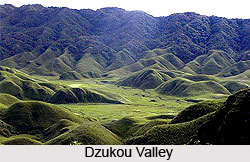 Dzukou Valley : Dzukou Valley, situated at an altitude of 2,438.4 metres, is known for its splendid natural beauty. Hills covered in lush greenery along with gently flowing streams create a magnificent view. It is an ideal site for trekking and houses a great biodiversity with a dominance of bamboo brush. The view of the valley from a distance resembles a freshly mowed lawn.
Tuophema Tourist Village : Tuophema Tourist Village is another famous tourist spot which especially promotes the celebration of Angami Sekrenyi festival. The festival is celebrated in the month of February and focuses on purification. The rituals centre on the cleansing of the village. It is based on the belief that all the diseases and misfortunes are washed away by purified water. It is also accompanied by feasting, singing and dancing.
World War II Cemetery : World War II Cemetery lies at the heart of the city, right at the place where the gruesome battle between the Japanese and the allied forces took place. The cemetery was built for honouring the Indian and British soldiers.
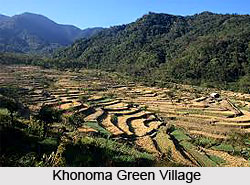 Khonoma Green Village : Khonoma Green Village is another tourist site possessing spellbinding natural beauty. On the hill slopes, beautiful terraces have been carved out which surround the whole village. 40 varieties of paddy are grown in these slopes at different altitudes. Khonoma is famous for fighting a number of battles with British intruders. They finally made peace with the British in the year 1879.
Kisama Heritage Village : Kisama Heritage Village is famous for hosting the Hornbill Festival. It is organized every year in the month of December and showcases the rich and vibrant heritage of the unique Naga tribe.
Dzulekie : Dzulekie is a hilly land, scattered with fields where animals like Bison can be seen grazing peacefully. Numerous streams flow through the terrain where a number of Rainbow Trout dwells.
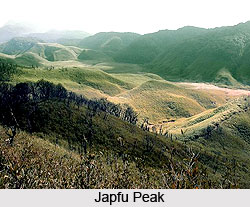 Japfu Peak : Japfu Peak is the second highest peak of the state, situated 3048 metres above sea level. November to March is considered as ideal time to visit this place for trekking or mountaineering. The peak also houses the tallest Rhododendron tree which has its mention in the Guinness Book of World Records.
Tseminyu : Tseminyu is a town and an ancient route of migration for Naga tribes who migrated towards north in search of new settlements. The town houses sites of abandoned villages with ruins of gravestones, graveyards, pottery etc which narrates the tales of the inhabitants of this village. The place offers a wide scope of archaeological tourism but terrace cultivation in this area is gradually eliminating the remains of ancient heritage in Tseminyu.
Dzukou Valley : Dzukou Valley, situated at an altitude of 2,438.4 metres, is known for its splendid natural beauty. Hills covered in lush greenery along with gently flowing streams create a magnificent view. It is an ideal site for trekking and houses a great biodiversity with a dominance of bamboo brush. The view of the valley from a distance resembles a freshly mowed lawn.
Tuophema Tourist Village : Tuophema Tourist Village is another famous tourist spot which especially promotes the celebration of Angami Sekrenyi festival. The festival is celebrated in the month of February and focuses on purification. The rituals centre on the cleansing of the village. It is based on the belief that all the diseases and misfortunes are washed away by purified water. It is also accompanied by feasting, singing and dancing.
World War II Cemetery : World War II Cemetery lies at the heart of the city, right at the place where the gruesome battle between the Japanese and the allied forces took place. The cemetery was built for honouring the Indian and British soldiers.
Khonoma Green Village : Khonoma Green Village is another tourist site possessing spellbinding natural beauty. On the hill slopes, beautiful terraces have been carved out which surround the whole village. 40 varieties of paddy are grown in these slopes at different altitudes. Khonoma is famous for fighting a number of battles with British intruders. They finally made peace with the British in the year 1879.
Kisama Heritage Village : Kisama Heritage Village is famous for hosting the Hornbill Festival. It is organized every year in the month of December and showcases the rich and vibrant heritage of the unique Naga tribe.
Dzulekie : Dzulekie is a hilly land, scattered with fields where animals like Bison can be seen grazing peacefully. Numerous streams flow through the terrain where a number of Rainbow Trout dwells.
Japfu Peak : Japfu Peak is the second highest peak of the state, situated 3048 metres above sea level. November to March is considered as ideal time to visit this place for trekking or mountaineering. The peak also houses the tallest Rhododendron tree which has its mention in the Guinness Book of World Records.
Tseminyu : Tseminyu is a town and an ancient route of migration for Naga tribes who migrated towards north in search of new settlements. The town houses sites of abandoned villages with ruins of gravestones, graveyards, pottery etc which narrates the tales of the inhabitants of this village. The place offers a wide scope of archaeological tourism but terrace cultivation in this area is gradually eliminating the remains of ancient heritage in Tseminyu.
Recently updated articles in States of India
Bandare Waterfalls, Meghalaya
Bandare Waterfalls in South Garo Hills, Meghalaya, is a secluded natural attraction surrounded by dense subtropical forests and rugged mountain terrai...
History of Thissur District
Early History of Thissur District explains flourishing of the port cities. Now these port cities are transformed into archaeological sites.
Tippi Orchid Research Centre, Arunachal Pradesh
Tippi Orchid Research Centre in Arunachal Pradesh is renowned for its rich collection of exotic and endangered orchids. Surrounded by lush rainforest...
Tourism in Nashik District
Pilgrimage tourism in Nashik district involves visiting the various places of Hindu and Jain worship located here. Some of the holiest sites for Hind...
Mangadu, Kerala
Mangadu in Kerala’s Kollam district is a significant megalithic site known for its urn burials, cist burials, menhirs, and stone circles. Excavations...
Related articles in States of India
East Indian States
East Indian States comprises of Bihar, Jharkhand, West Bengal, Odisha and also the Union Territory of Andaman and Nicobar Islands. It defines the cult...
Purnia District in Bihar
Purnia District is located in Bihar and extends from River Ganga to Nepal. The district has a rich Hindu history and glorious past.
Hooghly district
Hooghly District along the bank of the river Hooghly is one of the principal trading ports of West Bengal.
Geography Of Chittoor District
Geography of Chittoor district is spread along the topography of the land which is divided into two natural divisions; Chittoor has a dry and healthy...
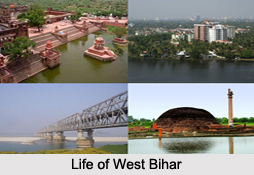
Districts of West Bihar
Districts of West Bihar is comprised of medieval monuments that were built by the different governors of Mughal era.