
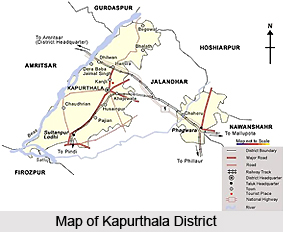
 Kapurthala District is one of the smallest administrative districts of Punjab with its headquarters located at Kapurthala city. Kapurthala District is in many ways a unique and harmonious blend of the glorious past, pulsating present and a promising future. Guru Nanak sahib spent 14 years of his life in this town, meditated under the Ber tree (which still exists) and journeyed from here to various parts of the world spreading the message of oneness. As per 2001 Census, total population of the district is 754,521, out of which rural population is 507994 and urban population is 246527. Total area occupied by Kapurthala District is 1633 sq kms (rural area is 1554 sq kms and urban area is 79 sq kms.
Kapurthala District
Kapurthala District in Punjab is a small administrative district in terms of population as well as area. Economy of Kapurthala District is mainly agrarian in character.
Introduction
Kapurthala District is one of the smallest administrative districts of Punjab with its headquarters located at Kapurthala city. Kapurthala District is in many ways a unique and harmonious blend of the glorious past, pulsating present and a promising future. Guru Nanak sahib spent 14 years of his life in this town, meditated under the Ber tree (which still exists) and journeyed from here to various parts of the world spreading the message of oneness. As per 2001 Census, total population of the district is 754,521, out of which rural population is 507994 and urban population is 246527. Total area occupied by Kapurthala District is 1633 sq kms (rural area is 1554 sq kms and urban area is 79 sq kms.History of Kapurthala District
What is probably the single most significant historical event of this region is the enlightenment of Guru Nanak in the year 1499, while bathing in the Bein rivulet, in the little town of Sultanpur Lodhi. It is after receiving this grace that he sowed the seeds of Sikh faith from here. The vestiges of the royalty that ruled the region still gloriously mark the present day city of Kapurthala. It was one of the first cities in Punjab to get modern amenities like sewerage, drinking water and communication systems, which still work.
Monuments in Kapurthala
 Kapurthala is one of the popular cities of the state of Punjab and is also the administrative and secretarial headquarters of Kapurthala district. The capital of a former Sikh state, Kapurthala is located 19 km from Jalandhar, another famous city of Punjab. It has been the chief town of the Ahluwalia family since the conquest and consolidation of various scattered possessions. In spite of an early alliance with the British in the year 1809, Kapurthala troops fought bravely against the British at Aliwal during the First Sikh War. Later on, the subsequent ruler turned Kapurthala into a model city-state. In this city, there are several splendid monuments including its prominent buildings that reflect French and Indo-Saracenic style of architecture and self narrate the secular and aesthetic combination of the city`s rich princely past.
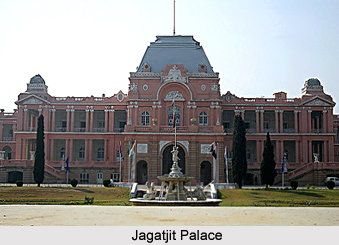
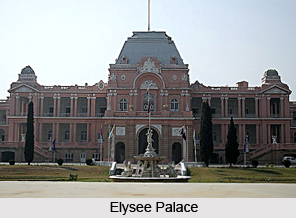
The most magnificent monuments date from the time of Jagatjit Singh, who ascended the throne in the year 1890. He was an enthusiastic Francophile and on his accession turned the city into "a scrap of Paris laid at the foot of the Himalayas". The `Sainik School` of Kapurthala is one of its most popular monuments and it was formerly known as Jagatjit Palace. The credit of designing the magnificent architecture of this palace goes to renowned French architect M. Marcel. Its construction started in the year 1900 and was completed in the year 1908. In the year 1862 Kanwar Bikrama Singh built the Elysee Palace or Jalaukhana. It has been changed into a boy`s school now. This magnificent building with its imposing and elegant facade has now been converted into MGN School of Kapurthala. The palace comprises a central bay, cribbed from Fontainebleau, with a high pavilion roof and windows that are flanked by two symmetrical wings with blind arcades terminated by secondary pavilions. The interior is treated lavishly in the same opulent French manner, with Louis XIV furniture, enriched plasterwork, fine marble chimney pieces and Aubusson carpets specially woven for the rooms. The gardens are embellished with fountains and statuary in complete French manner and the entire area is designed is such a way that it resemble a French estate. The surrounding buildings are designed in other European styles.
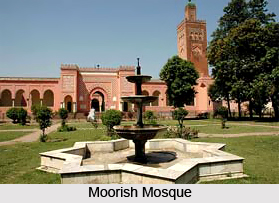
Moorish Mosque is another most spectacular monument of Kapurthala. It is popularly called as the replica of Morocco`s Grand Mosque of Marakesh. It was also designed by a French architect Monsieur M. Manteaux. It took 13 long years for the completion of this lavish building. Maharajah Jagatjit Singh who was the last ruler of Kapurthala commissioned its foundation. It contains attractive decorations collected from the Mayo School of Art in Lahore. Archaeological Survey of India has given it the status of a National Monument of the country. Located in the heart of the city is Jagatjit Club, an elegant Greek revival style of building. Since its construction, it has been used for several purposes like as a church, cinema hall and presently it has become a local club. Some more popular heritages of this city include Shalimar Gardens, Panch Mandir (Five Temples), which is the place worship for people of all faiths and religions. This temple has five small spectacular temples. The State Gurudwara is another popular monument of this city and it was constructed in a proper Indo-Saracenic style.
Kapurthala is popular for its several monuments and heritage sites that wonderfully express its rich history.
Tourism in Kapurthala District
 Tourism in Kapurthala District means a visit to its various historical and religious sites. This district is known for its several popular places of interest. It offers visits to holy sites, sanctuaries and ancient palaces. All these attractions offered by Kapurthala District are worth exploring. Kapurthala District is one of the most prominent tourist attractions of the country. Here are some of the main tourist attractions of Kapurthala District -
Pilgrimage Tourism in Kapurthala District -
Moorish Mosque: Conceived by M. Manteaux, the mosque was built in 1930. Its construction was started in the year 1927. Three years and some six lakhs of rupees later, the Mosque was completed. It was inspired by the Qutbia Mosque in Marakesh, and sanctified in the presence of Nawab Sadiq Mohd. Khan Bhadur, the Nawab of Bhawalpur. Its inner dome was lovingly decorated by artists from Mayo School of Art in Lahore, and is today the only mosque of this style in Asia and is visited by people from far and wide. It is a National Monument under the Archaeological Survey of India, and bears testimony to the spirit of equality and secularism which characterized Maharaja Jagatjit Singh`s endeavours.
Panch Mandir: Panch Mandir of Kapurthala is a place of reverence for all faiths. This temple is home to five small temples. Built during the reign of Sardar Fateh Singh, an extraordinary feature of this temple is that from the entry door, one can view all the five idols. Another exceptional feature is that at sunrise, the first rays of Sun God fall directly on the idols. This temple also possesses a very rare idol of Lord Brahma.
State Gurudwara: This striking red sandstone building now painted white was consecrated in 1915 in Indo- Saracenic style.
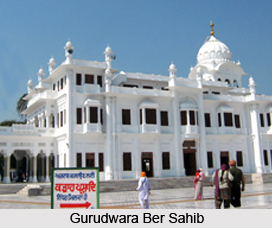
Gurudwara Ber Sahib: Gurudwara Ber Sahib is situated on the banks of holy Bein. This is where Guru Nanak entered the Bein rivulet, also known as the Babe di Nadi. This Gurudwara in the small town of Sultanpur Lodhi is a major destination for religious tourists.
Leisure Tourism in Kapurthala District -
Jagatjit Palace: Jagatjit Palace is, indisputably, Kapurthala`s most famous building. It was, once upon a time, the home of Maharaja Jagatjit Singh. It was constructed in 1906 by M. Marcel under the Maharaja`s guidance. Its architecture was inspired by the Palaces of Versallies and Fontainbleau. The roofs of the palace were made in the `beaux-art` style of the 19th century. Of these, the most impressive is the Mansard Roof with a double slope and windows like those of the Louvre. It also houses an interesting collection of artifacts including a mechanical clock which shows the moisture, the planetary position, the varying temperatures, and the timings in about 12 countries of Europe and Asia. The Jagatjit Palace enshrines the finest aspects of Indian and French aesthetics. The Maharaja`s Palace presently houses the prestigious Sainik School inaugurated in 1961.
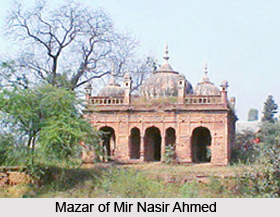
Mazar of Mir Nasir Ahmed: Mazar of Mir Nasir Ahmed, stands amidst dense shrubbery. Mir Nasir Ahmed, a descendant of the legendary Tansen, founded the Kapurthala Gharana, or the school of music. Today, this monument is a pilgrimage site for classical musicians; while the land is used as a graveyard.
Shahi Samadhs: Shahi Samadhs (The Royal Cenotaphs) in the Shalimar Gardens, emphasize the traditions of its ruling dynasty. Marble obelisks inside the red sandstone chambers, are the memorials to the former rulers and their families. Nearby, a grand structure built in 1880 and built on a marble plinth, houses the Samadhs of Maharajas Kharak Singh, Jagatjit Singh and Paramjit Singh. It is decorated with carved filigree work of great beauty. The Shalimar Gardens, which house these magnificent pieces of art, today, houses the offices of the Municipal Council of Kapurthala. The complex is a vibrant combination of the old and the new, the ancient and the modern.
War Memorial: The War memorial was commenced in 1923. This is a red sandstone building built in Indo- Saracenic style, housing a life sized bronze statue of a Kapurthala solider.
Elysee Palace: The Elysee Palace was built by Kanwar Bikrama Singh in 1862. This magnificent building with its imposing and elegant fa‡ade is now the famous MGN School of Kapurthala.
 Jubilee Hall: The imposing Jubilee Hall was built to celebrate the Silver Jubilee of Maharaja Jagatjit Singh`s rule in 1916. The State Assembly used to meet here. It presently houses a College which was established by Raja Randhir Singh in 1856. Its new name is Nawab Jassa Singh Ahluwalia Government College, though it is still popularly known as Randhir College, Kapurthala.
Durbar Hall: The stately Durbar Hall stands proudly at the heart of the city. It was, at one time the Court of Maharaja Jagatjit Singh, its creator. Maharaja`s annual birthday celebrations and other state rituals and ceremonies were also held here. Most suitably, this complex today, is the District Courts Complex which houses the Court of the District and the Sessions Judge as well as the offices of the Deputy Commissioner. The Durbar Hall was completed in 1889. Its architecture represents Indo-Saracenic style. There is a beautiful upper deck gallery running on both sides. It unfolds stylized domes and canopies, and superb lattice work executed in stone. Facing the massive wooden door of the main entrance is a splendid bronze equestrian statue of Raja Randhir Singh.
Ghanta Ghar: Ghanta Ghar or the Clock Tower still stands majestically as a constant reminder of the city`s royal past. It was built in 1901. Ironically enough, the clock stopped chiming in 1949 when Maharaja Jagatjit Singh breathed his last. With the recent restoration the clock has started resonating again.
Nature Tourism in Kapurthala District -
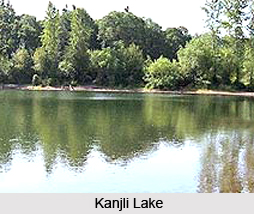 Kanjli Wetland: Kanjli Wetland, on the western Bein rivulet at the outskirts of the city, is a very popular site for bird watching and boating. An enormous project is currently being undertaken here to develop it into a destination for bird watching replete with modern day facilities. A 6 km long nature trail is also being developed for nature lovers.
Thus, Tourism in Kapurthala District means an enriching and memorable travelling experience for its visitors.
Recently updated articles in States of India
Bandare Waterfalls, Meghalaya
Bandare Waterfalls in South Garo Hills, Meghalaya, is a secluded natural attraction surrounded by dense subtropical forests and rugged mountain terrai...
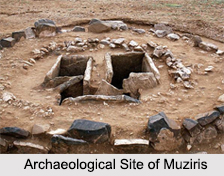
History of Thissur District
Early History of Thissur District explains flourishing of the port cities. Now these port cities are transformed into archaeological sites.
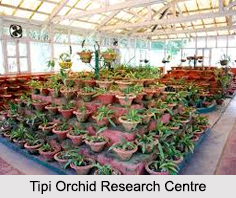
Tippi Orchid Research Centre, Arunachal Pradesh
Tippi Orchid Research Centre in Arunachal Pradesh is renowned for its rich collection of exotic and endangered orchids. Surrounded by lush rainforest...
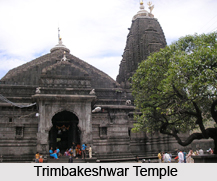
Tourism in Nashik District
Pilgrimage tourism in Nashik district involves visiting the various places of Hindu and Jain worship located here. Some of the holiest sites for Hind...
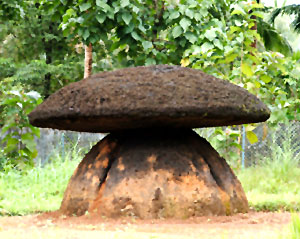
Mangadu, Kerala
Mangadu in Kerala’s Kollam district is a significant megalithic site known for its urn burials, cist burials, menhirs, and stone circles. Excavations...
Related articles in States of India
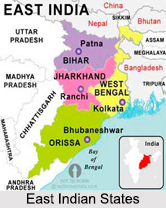
East Indian States
East Indian States comprises of Bihar, Jharkhand, West Bengal, Odisha and also the Union Territory of Andaman and Nicobar Islands. It defines the cult...
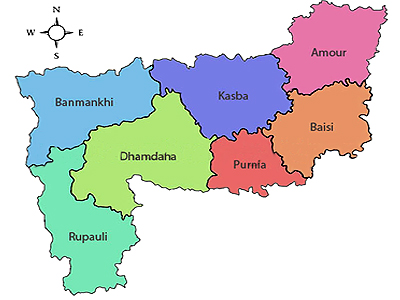
Purnia District in Bihar
Purnia District is located in Bihar and extends from River Ganga to Nepal. The district has a rich Hindu history and glorious past.
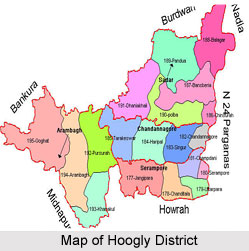
Hooghly district
Hooghly District along the bank of the river Hooghly is one of the principal trading ports of West Bengal.
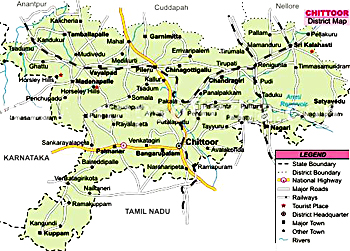
Geography Of Chittoor District
Geography of Chittoor district is spread along the topography of the land which is divided into two natural divisions; Chittoor has a dry and healthy...
Districts of West Bihar
Districts of West Bihar is comprised of medieval monuments that were built by the different governors of Mughal era.