
 Jorhat District is one of the districts of Assam. It is located between the Brahmaputra River on the north and Nagaland on the south. Jorhat District is situated at around 26 degrees 46 minutes north latitude and 96 degree 16 minutes longitude in the central part of Brahmaputra Valley. Jorhat town is the district headquarters of Jorhat District. Initially, Jorhat was sub-division of undivided Sibsagar District. In 1983, Jorhat was curved out of Sibsagar District. The present Jorhat District consists of three Sub-divisions namely Jorhat, Majuli and Titabor. The district is divided into six revenue circles and eight development blocks.
Jorhat District
Jorhat District is an administrative district of Assam with its headquarters at Jorhat town. Jorhat District is known for its educational system and cultural heritage. The economy of Jorhat District is mainly dependent on agriculture.
Introduction
Jorhat District is one of the districts of Assam. It is located between the Brahmaputra River on the north and Nagaland on the south. Jorhat District is situated at around 26 degrees 46 minutes north latitude and 96 degree 16 minutes longitude in the central part of Brahmaputra Valley. Jorhat town is the district headquarters of Jorhat District. Initially, Jorhat was sub-division of undivided Sibsagar District. In 1983, Jorhat was curved out of Sibsagar District. The present Jorhat District consists of three Sub-divisions namely Jorhat, Majuli and Titabor. The district is divided into six revenue circles and eight development blocks.History of Jorhat District
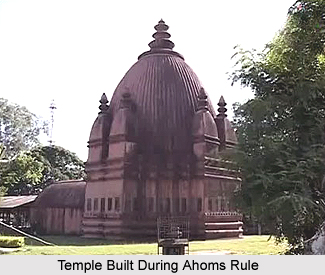
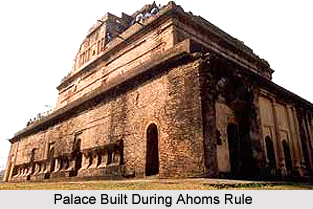 History of Jorhat District revealed from the chronological sequences associated that narrate its formation. Historical accounts suggest that "Jorhat" or "Jorehaut" means two hats - "Macharhat" and "Chowkihat" that existed on the two different banks of the River Bhogdoi. Jorhat was the last capital of the Ahom Kingdom. In 1794, Ahom king Gaurinath shifted the capital from Sibsagar (erstwhile "Rangpur") to Jorhat. This town was a flourishing and commercial metropolis but destroyed after a series of the Burmese invasions since 1817 until the arrival of the British force in the year 1824 under the stewardship of David Scott and Captain Richard.
Further, the history of Jorhat District also specifies that the British Rule, though, was not free from rebellions and revolutions, contributed to the re-emergence of this historical town. It states that since the very first decade of the British rule some great revolutionists emerged like Gomdhar Konwar, Jeuram and Piyali Barua. The British system of administration came into vogue in 1839 with the establishment of a police station. During the Sepoy Mutiny of 1857, these great leaders were hanged in the year 1858. Further, in 1885, narrow gauge train services (Jorhat Provincial Railway) had come into operation and ultimately became instrumental in the rapid growth of tea industry of the region.
Moreover, according to the historical accounts of this district of Assam, the civil sub-division under Sibsagar district at Jorhat was formed in the year 1869. Further, this place was declared as the administration head quarter of the undivided Sibsagar district in the year 1911, which comprised the present Sibsagar, Jorhat and Golaghat District. It also consisted of some parts of Karbi-Anglong district with Major A. Playfare as the first Deputy Commissioner of this district.
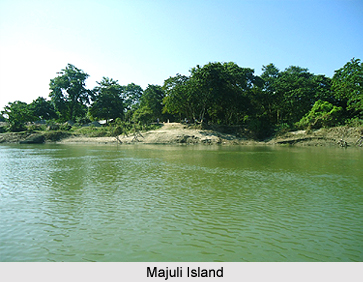
On the north of the district, Brahmaputra River forms the largest riverine island of the world, Majuli; spreading over 924.6 sq km. Majuli had been the principal place of pilgrimage of Vaishnavites since the ages of the Ahom rules. There are several Satras resembling medieval monasteries headed by Satradhikars preaching and teaching Vaishnavism, which was initiated by Sankaradeva (1449-1568). Jorhat district is spreading over a huge area. Thus, it can be said that the history of Jorhat District is interesting with a series of important changes and events.
Geography of Jorhat District
Jorhat district occupies an area of 2,851 square kilometres. The annual rainfall of the district is 2029 mm. The Brahmaputra River is situated on the north of the Jorhat district. This river forms the largest riverine island of the world, Majuli Island, spreading over 924.6 square kilometres with a population of about 1.50 lakh being threatened by the constant soil erosion by the river. Majuli had been the principal place of pilgrimage for the people who believe in Vaishnavism since the ages of the Ahom reign. There are several "Satras" resembling medieval monasteries headed by Satradhikars. They preached and taught the Vaishnavism, which Srimanta Sankardeva initiated, (1449-1568).
Demography of Jorhat District
Jorhat District had a population of 1,091,295 of which male and female were 557,944 and 533,351 respectively. This was revealed in the Population Census in 2011. The population of Jorhat District constituted 3.50 percent of total population of Assam. The population density of Jorhat district is 383 people per sq. km. Jorhat district administers 2,851 square kilometres of areas. The average literacy rate of Jorhat was 83.42 percent. The male and female literacy rate was 88.38 percent and 78.22 percent respectively. The total literates in Jorhat District were 812,328 of which male and female were 440,230 and 372,098 respectively.
Culture of Jorhat District
Jorhat District is popular for its glorious heritage and culture. The cultural environment that prevails in Jorhat District is the result of untiring effort of people to preserve its culture. Jorhat District has produced many creative writers, historians and journalists. Jorhat District has been the hometown of several renowned personalities like Krishna Kanta Handique, Shiva Prasad Baruah, Hemendra Prasad Baruah, Debeswar Sarma, Dinabandhu Dr. Prasad Bordoloi, Hiren Bhattacharya and Zubeen Garg.
Education in Jorhat District
Jorhat District is considered as a good place for modern education. The Jorhat Government High School is the oldest school established in the year 1883 with special facilities for science teaching. The Jagannath Barooah College is the oldest College in the district. It was set up in the year 1930 and said to be first college in upper Assam. Later, several degree colleges and schools came up. Jorhat District the Agricultural University established in the year 1948. In addition, it also has the Engineering College, Regional Research Laboratory, Prince of Wales College of Polytechnic (1926) along with other prestigious establishments like Air Force Base, ONGC, etc.
Tourism in Jorhat District
 Tourism in Jorhat District includes several places of interest. The amazing sightseeing options of this district of Assam offer the tourists a pleasurable experience filled with adventure and tranquillity. In fact, there is no dearth of enjoyment options in Jorhat district. Some of the tourist attractions of Jorhat district include Majuli, Lachit Borphukan Maidam, Dhekiakhowa Bar Namghar, Bangalpukhari and more. Moreover, the tourism in Jorhat district offers the travellers from different parts of the world through pilgrimage as well as leisure tourism. The historical places of interest of Jorhat District reflect the rich past of the place.
Pilgrimage Tourism in Jorhat District
Vaishnava Satras: The Vaishnava Satras were founded by Srimanta Sankaradeva, the father of Assamese culture. The historic and auspicious `Manikanchan Sanjog` was the first Satra in Majuli. Afterwards 65 more Satras grew which propagated the ethnic and socio-cultural ideals. At present, there are only 22 Satras in Majuli and rest have been shifted to other places owing to flood and erosion. These Satras are the treasure house of `Borgeet`, Matiakhara, Jumora dance, Chali dance, Noyua dance, Nande Vringee, Sutradhar, Ozapali, Apsara dance, Satria Krishna dance, Dashavatara Dance etc. which were contributed by Shri Sankaradeva.
Dakhinpat Satra: Dakhinpat Satra was established by Banamalidev, a supporter of Raslila, which is now observed as one of the prominent festivals of Assam.
Garamurh Satra: Lakshmikantadeva founded this Satra. During the end of autumn season traditional Raslila, is performed with great enthusiasm. Some ancient weapons are also preserved here.
Auniati Satra: Established by Niranjan Pathakdeva, this Satra is famous for `Paalnaam` and Apsara dance and it also has considerable collection of old Assamese utensils, jewellery and handicrafts.
Kamalabari Satra: Kamalabari Satra founded by Bedulapadma Ata, is a centre of art, culture, literature and classical studies. Its branch Uttar Kamalabari Satra has performed several cultural programme of satria art across the country and abroad.
Bengenaati Satra: This Satra is a storehouse of culturally important antiques and it is also described as an advanced centre of performing arts.
Nature Tourism in Jorhat District
Majuli: Majuli is the world`s biggest riverside island and a principal place of pilgrimage for the Vaishnavites of Assam since the Ahom age. Further, there are several Satras of Vaishnava religious beliefs. Of these holy seats, Auniati, Daksinpath, Garamur and Kamlabari are the four most prominent. What is of special importance is its Satra establishment, consisting of separate structures, which are built for different purposes.
Karanga: It is a village that caters to the demand of neighbouring tea estates and local people.
Nimati: Situated at a distance of around 17 km from Jorhat, it is an important river port of the district as well as of the upper Assam region.
Cinnamora Tea Estate: Cinnamora Tea Estate is the first tea garden of Assam established by Maniram Dewan in the year 1850.
Leisure Tourism in Jorhat District
Bangal Pukhari: On the southern side of Jorhat, near Na-ali, there is a tank that is popularly known as Bangalpukhari. Interestingly, people do not use the water of this tank.
Thengal Bhawan: Thengal Bhawan was build in the year 1880 by Raibahadur Shiva Prasad Barua. The first Assamese Daily "Dainik Batari" was started from this complex.
Kunwori Pukhari: About two Miles east of Jorhat town near the Grand Trunk Road there is a big tank which is known as Kunwori pukhari. This tank also has some historical importance associated with it.
Bilvesvar Shiva Temple: Around 35 km north of Jorhat town by the side of South Trunk Road, lies ruins of an old and small temple, along with a tank built by Rucinath Burgohain.
Gazpur: At a little distance towards north of Bilveswara temple the remains of Hathigarh can be seen. The Garh was erected to capture elephants. The king decided to make a town by collecting one thousand elephants. However, it was difficult to collect so many elephants. Therefore, the king gave up the idea and named the place as Gazpur.
Ladaigarh: King Pratap Sinha constructed a garh on the north and south to protect the kingdom. One part of this garh is called Mera garh which is Majuli. Swalat garh is on the northern side and Ladai garh on the southern side.
Baduli Pukhari: During the sovereignty of King Jayadhvaj Sinha, a tank was excavated by Baduli Borphukan near the Grand Trunk Road at Teok, and it was named after Baduli Borphukan.
These are some of the major attractions of Jorhat District that collectively offer a worthy tourism experience to the travellers.
Recently updated articles in States of India
Bandare Waterfalls, Meghalaya
Bandare Waterfalls in South Garo Hills, Meghalaya, is a secluded natural attraction surrounded by dense subtropical forests and rugged mountain terrai...
History of Thissur District
Early History of Thissur District explains flourishing of the port cities. Now these port cities are transformed into archaeological sites.
Tippi Orchid Research Centre, Arunachal Pradesh
Tippi Orchid Research Centre in Arunachal Pradesh is renowned for its rich collection of exotic and endangered orchids. Surrounded by lush rainforest...
Tourism in Nashik District
Pilgrimage tourism in Nashik district involves visiting the various places of Hindu and Jain worship located here. Some of the holiest sites for Hind...
Mangadu, Kerala
Mangadu in Kerala’s Kollam district is a significant megalithic site known for its urn burials, cist burials, menhirs, and stone circles. Excavations...
Related articles in States of India
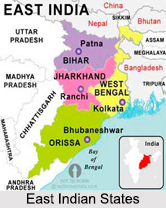
East Indian States
East Indian States comprises of Bihar, Jharkhand, West Bengal, Odisha and also the Union Territory of Andaman and Nicobar Islands. It defines the cult...
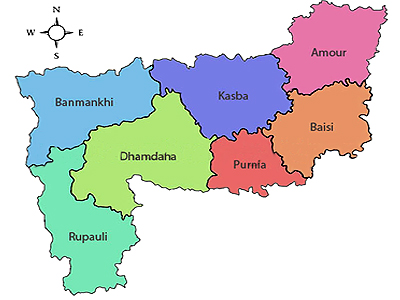
Purnia District in Bihar
Purnia District is located in Bihar and extends from River Ganga to Nepal. The district has a rich Hindu history and glorious past.
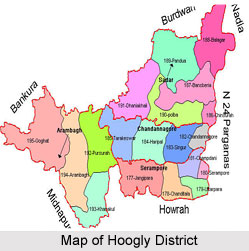
Hooghly district
Hooghly District along the bank of the river Hooghly is one of the principal trading ports of West Bengal.
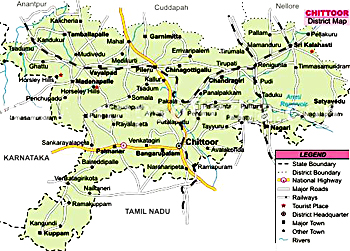
Geography Of Chittoor District
Geography of Chittoor district is spread along the topography of the land which is divided into two natural divisions; Chittoor has a dry and healthy...
Districts of West Bihar
Districts of West Bihar is comprised of medieval monuments that were built by the different governors of Mughal era.