
Sanskrit theatre is essentially of religious nature. Invocation is a vital part of Sanskrit play. The Natyashastra was spoken of as the fifth Veda and Bharata, who wrote it, was considered as the stage manager of the gods. He is said to have received a revelation of the dramatic art from Lord Brahma, the creator, who entered into meditation and from the depths of the divine thought brought forth the arts of drama, music and dance for the ecstasy of the universe. According to the Natyashastra, the Natyaveda aimed at the attainment of the four purusarthas or objects of human pursuit, namely dharma (ethical and spiritual development of the individual), artha (social and civic life and the gaining of wealth), Kama (conjugal love and physical bliss of environment) and moksha (attainment of salvation).
Bharata pays great attention to the forms and ceremonies for worshipping the presiding deities of the theatre. They are Chandra (moon god), Lokapalas (guardians of the world), Agni (fire god), Varuna, Rudras, Apsaras, the Ocean Gods, Niyati, Mrityu, Indra, Vidyut, Yakshas, Lord Brahma, Lord Vishnu, Lord Shiva, Kartikeya, Goddess Saraswati and Onkara. These deities should be worshipped with offerings and sacrifices. Mantras, sacrifices, herbs, recitation, and food should be offered on the natyamandapa. The show should not commence before the offerings are made. If this rule is ignored, the knowledge of the performer becomes futile. So the stage manager should make the offerings with all enthusiasm. According to the dramaturgic treatises, he who makes offerings gets the desired object and goes to heaven.
Elaborate forms of worship are prescribed in connection with the formation of the theatre.
Brahmanas are to be fed at every turn, sometimes with rich and sometimes with ordinary food. A white thread, strong enough to measure the building, should be laid around the theatre. If the thread is broken into two pieces, the death of the manager is signified; if it is broken into three, a political chaos will occur in the land, and if it is broken into four, the master of the dramatic art will pass away. To avoid these, measurement of the theatre should be done on an auspicious day and Brahmanas propitiated. Deformed and ugly persons should on no account be engaged in any work relating to the building. Monks and mendicants should not be allowed to come near the building.
Bharata prescribes the correct invocation to be used while laying the foundation of the theatre. While erecting the mattavarams, garlands, clothes and perfumes should be given away in charity. Offerings liked by bhiltas should be given to the different castes. Milk should be offered under the pillars of the mattavarams. Food-rice mixed with pulses should be given to Brahmanas. In the Natyashastra, a detailed description of the worship of the gods on the stage is given by Bharata. Of the wide-ranging aspects of the preliminaries, special significance seems to have been attached to the admiration of the world`s guardians and reverence to Indra`s banner. The flagstaff is erected in the stage in the evening after the mantras have been chanted the day preceding the event. On the day of the festivity, all the deities and the flag-staff are worshipped. Brahma, Shiva, Vishnu, Kartikeya and the three great serpents Sesa, Vasuki and Taksaka are supposed to supervise in the five knots of the flag-staff. Different deities are invoked with different mantras according to the Natyashastra.
Invocation in Sanskrit Theatre
Invocation is a very important part of the entire edifice of Sanskrit theatre which has a fundamental religious basis.
Recently updated articles in Indian Dances
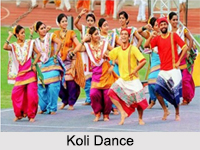
Koli Dance
A folk-dance form of Maharashtra, the Koli dance is mainly performance by the Koli community of the region. Known for their primary profession of fish...
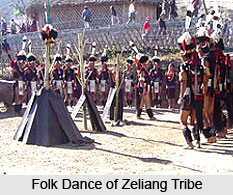
Folk Dances of Nagaland
Folk Dances of Nagaland reflects the naga tradition and culture of the local habitants. In most of the cases, naga dances are monopoly of men with som...
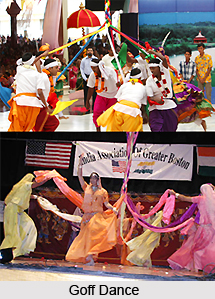
Goff Dance
Goff dance of Goa is performed during the Shigmo festival in the month of Phalgun in Hindu calendar. Goan peasants mainly practice this dance after th...
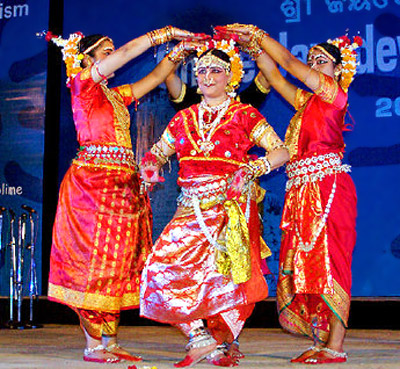
Abhinaya Chandrika
Abhinaya Chandrika is an ancient text on Odissi dance that explain every minute details of Odissi performance. The text explains about different mudra...
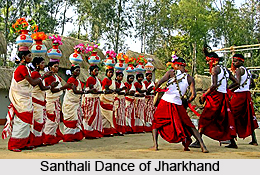
Santhali Dance
Santhali dance is a vibrant folk tradition of the Santhal tribe, reflecting the deep connection of the Santhal tribe with nature, community, and celeb...
Related articles in Indian Dances
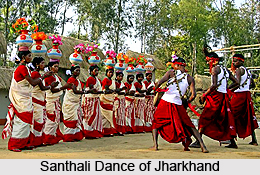
Santhali Dance
Santhali dance is a vibrant folk tradition of the Santhal tribe, reflecting the deep connection of the Santhal tribe with nature, community, and celeb...
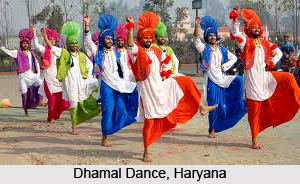
Dhamal Dance
A folk dance form of Haryana, the Dhamal Dance has its roots in the days of the Mahabharata. This dance form is primarily performed by men in the outd...
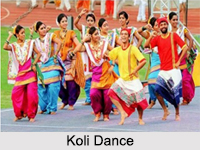
Koli Dance
A folk-dance form of Maharashtra, the Koli dance is mainly performance by the Koli community of the region. Known for their primary profession of fish...
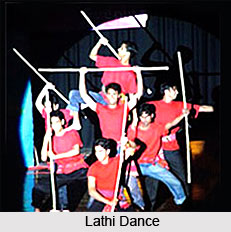
Lathi Dance
Lathi dance is a dance form of West Bengal performed on the occasion of Muharram.
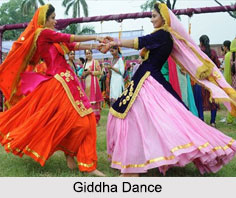
Giddha Dance
Giddha Dance of Punjab, performed only by the women, is a very popular folk art form in India. During Lohri, the Punjabi women reveal their joy throug...