
Indian mythological places along with their divine spirituality and rich history have further enriched the history of India to a great extent. From the remote past of the ancient times, myth has definitely played a major role in almost every sphere of Indian religion, culture and in the Indian spiritual beliefs. There are several mythological places in India which are described in some of the famous epics like the Ramayana, Mahabharata and the Upanishad.
Atharva Veda compares the opulence of Ayodhya to that of the glory and splendour of the Swarga or Paradise. Indraprastha has been elaborately described in the great epic Mahabharata. The conflict between the Pandavas and Kauravas of Mahabharata generated with regard to the inheritance of the kingdom of Indraprastha. Indraprastha was one of the ancient India cities and also the capital of the Pandavas of Mahabharata. The city was situated by the side of the Yamuna River and also in close proximity to the modern national capital of Delhi.
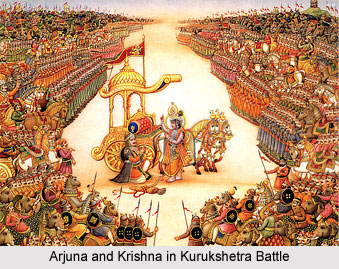
The difference between the Pandavas and the Kauravas generating from the game of dice, led to the battle of Kurukshetra. The Kurukshetra war was fought between the Pandavas and Kauravas, a vital part of the epic Mahabharata. As per this epic, a dynastic fight involving the Pandavas and the Kauravas for Hastinapura resulted in fierce battle in which a large number of ancient kingdoms took part as allies of the rival clans. The battle field was situated in Haryana, one of the modern states of India. Another myth is the Lakshagriha where Duryodhana wanted to set fire and kill the Pandavas.
In the epic of Ramayana, Manu established the primitive city of Ayodhya. For centuries, Ayodhya stayed as the capital of the Surya Dynasty. Lord Rama was born to this dynasty as the 7th avatar or incarnation of Lord Vishnu. It has been mentioned in the Atharvaveda that Ayodhya is a city which was constructed by gods. There is another set of folklores which links the landscape of Hampi with Ramayana. The monkey kingdom of Kishkinda is exhibited as the place around Hampi. Anjayaneya Hill, situated across the Tungabhadra River, is considered to be the place where Lord Hanuman was born. As per myth, the Hemakuta Hill in Hampi is believed to be the place where Lord Shiva did his penance before his marriage to Pampa.
Lanka was the name of the capital of the demon king Ravana in the epic Ramayana.
Lord Vishwakarma, the divine carpenter and master craftsman, is believed to have designed the weapons of the gods and constructed their chariots and cities. He is also considered to have created the mythical city of Lanka and also the image of Lord Jagannath in the district of Puri in Orissa. He is believed to have revealed the sciences of mechanics and architecture to men and is also the workman`s patron deity.
Indian Mythological Places
Indian Mythological Places play a significant role in the religion, culture and history of the subcontinent.
Recently updated articles in Indian Puranas
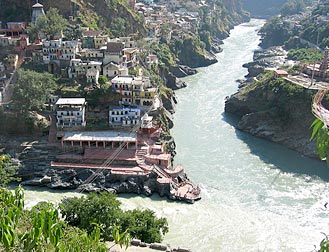
Mandakini, Holy River
Mandakini River is a significant Himalayan river in Uttarakhand, renowned for its ecological, cultural, and religious importance. Originating near the...
Kausika, Son of Vasudeva
Kausika is a minor figure in Hindu mythology and is identified in the Vishnu Purana as the only son of Vasudeva and his wife Vaishali. He is recognize...
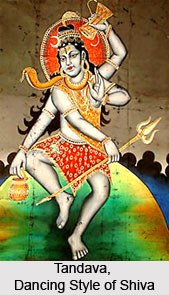
Tandu, Attendant of Lord Shiva
Tandu is revered as the divine attendant of Lord Shiva and the foremost exponent of the Tandava dance. According to the Natya Shastra, he instructed S...
Niramitra, Mahabharata
Niramitra was a son of Nakula and Kareṇumati in the Mahabharata. A descendant of the Pandavas and the Kuru dynasty, he fought on the Pandava side duri...
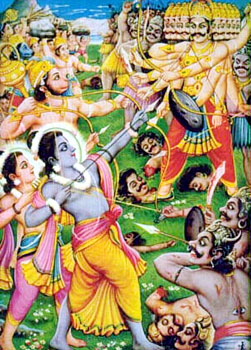
Mahodara, Ramayana
Mahodara was a prominent Rakshasa warrior, minister, and army chief who served under Rāvaṇa during the Battle of Lanka in the Ramayana. Celebrated for...
Related articles in Indian Puranas
Adhyayas in Agni Purana
Adhyayas in Agni Purana are all encompassing. The chapters have dealt with a variety of subjects related to human lives. A large number of chapters ha...
Indian Puranic Tribes
The existence of Indian Puranic tribes is often mixed with mythology and fiction that depict them as superhuman or sub.
Puranic Texts
Puranic Texts are vital according to Hindu, Jain or Buddhist religion; they describe the history of the Universe.

Puranic Shaivism
Puranic Shaivism established during the Gupta Dynasty. This puranic religion developed and expanded, and was accompanied by the development of Brahman...
Nilamata Purana
Nilamata Purana is a Kashmiri Purana that is referred by Kalhana. It is considered as one of the sources of ancient history of Kashmir.