 History of Satara district has followed a long and rich line of development. There are several great warriors, kings, saints and great personalities who have contributed to the rich heritage of the district. Inscriptions as old as 200 B.C reveal that probably the oldest known place in Satara district is Karad (mentioned as Karhakada). It is also believed that Wai in Satara district is the `Viratnagari` where the Pandavas of Mahabharat lived in the 13th year of their exile. The Mauryan Empire in the Deccan was followed by the rulers of the Satavahana dynasty for about two centuries (between 550 A.D. and 750 A.D.) Satara, as also the southern part of Maharashtra, was ruled by the Chalukyas of Badami and later by the Rashtrakutas dynasty, the Silaharas and Yadavas of Devagiri, the Bahamanis, Adil Shahi dynasty, Muslim Rule, Shivaji (Maratha rule), Shahu Ram Raja and Shahu II Pratapsinh.
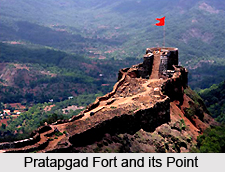
The first Muslim invasion of the Deccan took place in 1296. Muslim rule over Satara lasted till 1707. In 1636 the Nizam Shahi Dynasty came to an end. Shahaji`s son Shivaji, the founder of the Maratha Empire had begun to establish himself in the hilly part of Poona in the north where he had been put in possession of his father`s estate (Subhedari) at Poona and Supa. The golden age of Maratha rule was at its peak under the able rule of Chatrapati Shivaji. The western part of the district of Satara was covered by dense forests and high hills which is the main reason why Shivaji Maharaj built a number of forts here, figuring almost 25 in number. He fought with a number of adversaries, including the Adil Shahi rulers and the Mughals. One of the major victories of Shivaji Mharaj was his win over Afzal Khan. Due to the growing exploits of Shivaji, Adilshah send Afzal Khan, the giant sardar of Bijapur, to put an end to Shivaji`s kingdom. He was accompanied by a huge army. He harassed the people and destroyed several temples from the holy cities of Pandharpur and Tuljapur. The historical defeat and end of Afzal Khan took place at Pratapgad fort, a fort built on a high hill (called Bhorpyacha Dongar) covered with very dense forests and high hills. The fort of Satara was taken over by Aurangzeb on the death of Shivaji.