 History of Gaya District gives a complete idea of the origin of Indian mythology and the land of Buddhism and Hinduism. In the early era, Bihar was the administrative seat of Magadhan Empire that later went in the hands of Mauryas and Guptas. Gaya is known as the sacred place for both Hindus and Buddhists.
Early History of Gaya District
Gaya District experienced the rise and fall of many Hindu and Buddhist dynasties in the Magadha region. From 6th century BC to the 18th century AD, at about 2300-2400 years, Gaya District has been occupying an important place in the cultural history of the region. History of Gaya District opened up with the Sisunaga dynasty founded by Sisunaga, who exercised power over Patna and Gaya around 600 BC. Bimbisara, fifth in line, who lived and ruled around 519 BC, had projected Gaya District to the world of religion. Having attained an important place in the history of civilisation, the area experienced the works and the life of Gautam Buddha and Lord Mahavir during the reign of Bimbisara. After a short spell of Nanda dynasty, Gaya and the entire Magadha region came under the Mauryan rule with Ashoka (272 BC - 232 BC) embracing Buddhism after the battle of Kalinga, which is now located in Odisha. He visited Gaya and built the first temple at Bodh Gaya to commemorate Gautama Buddha"s attainment of supreme enlightenment. The period of Hindu revivalism commenced with the coming of the Guptas during the 4th and 5th century A.D. Samudragupta of Magadha helped to bring Gaya in limelight, just like Bimbisara. It was the headquarters of Bihar district during the Gupta Empire.
Medieval History of Gaya District
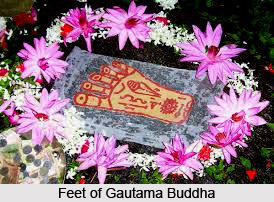 Gaya District went to different hands after the decline of Gupta Empire. After a hundred years of anarchy in Bengal and Bihar, Gopala emerged as the local king of Bengal and thereby forms Pala Dynasty. It is believed that the present temple of Bodh Gaya was built during the reign of Dharmapala, son of Gopala. Gaya, in the 12th century, was invaded by Muhammad Bakhtiyar Khilji. Then this place was plundered. But the Hindu rulers defeated his generals later.
Modern History of Gaya District
Modern history of Gaya District started after the decline of Mughals and the emergence of British East India Company in India and Bengal became the administrative seat. The place finally passed on to the British East India Company in India, after the Battle of Buxar in 1764, defeating Mir Kasim, after Siraj Ud Daullah in The Battle of Palssey.