
Historical themes in Indian theatre played crucial in the 19th century towards promotion of Indian theatre. The enactment of historical plays in various languages coincided with the growth of interest in history in general and the Indian past in particular. It was taken forward further by the Indian writers to the European historical drama and romance. In the beginning the main motivation was mainly the romantic interest of the past as a means of escape from the harsher present, but the Indian dramatist soon comprehended the genre`s probable, making it an efficient instrument for the proliferation of socio-political ideals.
Historical drama or plays followed a parallel line of development to historical novels and poems, based on well-known episodes and exploiting, more or less, identical ideas projecting a new vision of national history. However, compared to drama dealing with contemporary social problems or interpreting myths, which revealed a remarkable unity of themes, the historical plays presented a widely divergent world of subjects and characters.
Mythological drama derived inspiration mainly from pan-Indian Hindu sources, whereas historical drama accorded greater importance to regional sources. The Assamese authors Padmanath Gohain Barooah and Lakshminath Bezbaroa, for example, chose the tragic life of the princess Jaymati, who bravely suffered at the hands of an Ahom king, for Jaymati in 1900 and Jaymati Kunwari i.e. "Princess Jaymati" in 1915 respectively. Similarly, Kanchi-Kaveri in 1880 by Ramshankar Ray and Engrez kartrika Kataka vijaya i.e. "Conquest of Cuttack by the British" in 1901 by Bhikari Charan Patnaik drew upon the history of Orissa. Venkataraya Sastry`s Prataparudriya natakam i.e. "Prataparudra`s Play" in 1897 in Telugu portrayed the glories of ancient Andhra. Likewise E. V. Krishna Pillai`s Malayalam Sitalakshmi in 1932 dealt with the time of Martanda Varma, several Marathi writers projected Shivaji with great pride, and Bengali dramatists discovered new icons like Pratapaditya and Sirajuddaula. The celebration of regional heroes and heroines contributed significantly to the growth of patriotism as well as towards the search for identities of different cultural and linguistic groups.
Curiously, ancient India provided subject matter occasionally. The examples can be mentioned as Dwijendra Lal Roy`s Chandragupta in 1911. This was one of the most popular plays based on ancient history, whereas medieval India fired the imagination of dramatists more significantly. The palace intrigues, heroism, romance, lust for political power, treachery, and self-sacrifice formed the stuff of which most Indian historical plays were made. The most important role that the genre played till Independence was the creation of secular national heroes and heroines. Political theatre had its beginnings in historical drama. Among the distinguished writers was Girish Ghosh who`s Sirajuddaula in 1905 and Mirkasim in 1906 both lionizing protagonists who died protecting the freedom of India.
Historical Themes in Modern Indian Theatre
Historical themes in Indian theatre played a major role during the revival of Indian theatre in the 19th century.
Recently updated articles in Indian Drama & Theatre
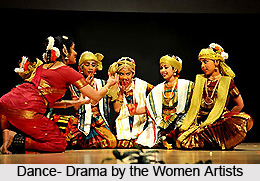
Amateur Theatre
Development of Amateur Theatre has been responsible for useful innovations in theatre culture of Karnataka.
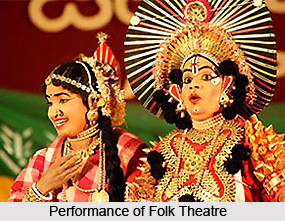
Surendranath Ghosh
Surendranath Ghosh or Dani Babu was a Bengali thespian active during the mid-20th century. He was mostly known for his contributions to Bengal’s moder...
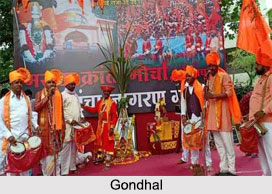
Gondhal Dance
Gondhal is a religious folk dance of Maharashtra. It is performed on special days like when there is a newborn in a family or marriage. Dedicated to g...

Pravritti in Natyashastra
Pravritti in Natyashastra refers to specific human behaviour varying from region to region. There are four types of Pravritti namely, dakshinatya, ava...
Padma Bhushan Awardees (2010-2019)
Padma Bhushan Awardees (2010-2019)
Related articles in Indian Drama & Theatre
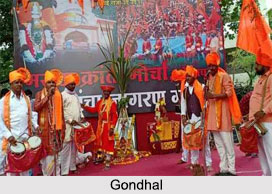
Gondhal Dance
Gondhal is a religious folk dance of Maharashtra. It is performed on special days like when there is a newborn in a family or marriage. Dedicated to g...
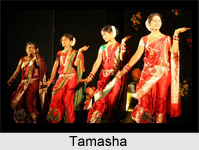
Tamasha Folk Dance
Tamasha is a folk art, which includes the love songs, which are traditional lavanis and dance along with the music.
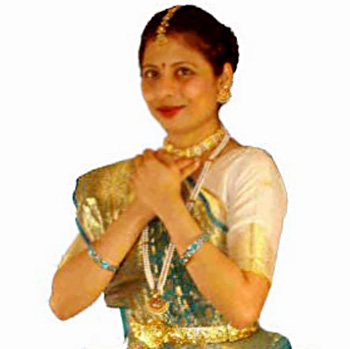
Sringara Rasa
Sringara Rasa is mentioned in Natyashastra as one of the important rasas. The Sthayi bhava in Sringara rasa is Rati or love.
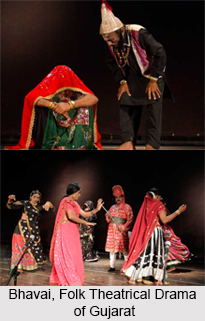
Bhavai - Folk Theatre of Gujarat
Bhavai is a popular folk theatre form of Gujarat that belongs to the tradition of theatre of entertainment.
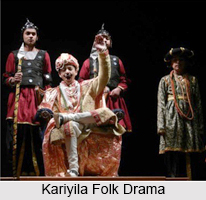
Kariyila Folk Dance
Kariyila is one of the most appealing and popular folk drama forms of Himachal Pradesh, portraying social satire with the accompaniment of folk dance...