 Himalayan Flameback is an Indian bird that bears the scientific name of "Dinopium shorii", and has the little concentration in the northern Indian states because of deforestation. This bird is mostly concentrated in the Indian states like Himachal Pradesh, Arunachal Pradesh, Uttar Pradesh, northern fringes of West Bengal and Odisha.
Identification of Himalayan Flameback
Himalayan Flameback is very similar in appearance to the Greater Goldenback (Chrysocolaptes lucidus), but is not at all closely related.
Structure of Himalayan Flameback
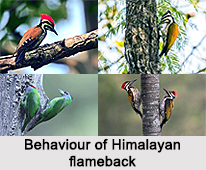
The primary difference of Himalayan Flameback is the smaller size and bill. Himalayan Flameback can be identified by their black hind neck, the brownish centre on their throat, which can go down the breast on some and is bordered by an irregular black spotting. They also have an indistinct divided moustachial stripe, the centre of which is brownish and some times reddish in males.
Eyes of Himalayan Flameback
Himalayan Flameback also has either reddish or brown eyes and has three toes. The breast of the Himalayan Flameback is irregularly streaked with black but on occasion completely white. Their wings are coppery brown to red in colour. The male Himalayan flameback have a yellowish-red forehead that becomes redder on the crest. In contrast the females crest is entirely black streaked with white. In both sexes the crest is bordered by white and black bands on either side of their head.
Concentration of Himalayan Flameback
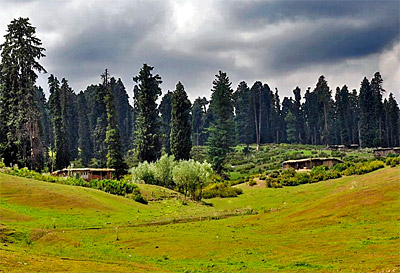
Himalayan Flamebacks are commonly found in the Indian states, primarily in the lower-to-middle altitudes of the Himalayan sal forest region. The forest range spans across Bangladesh, Bhutan, India, Myanmar, and Nepal, where they are year round residents.
Population of Himalayan Flameback
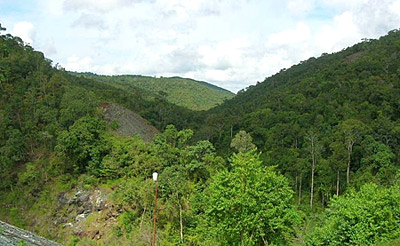
A disjunct population of Himalayan Flameback also occurs in south-eastern Ghats. The habitat of Himalayan Flameback mainly compromises of mature tropical/subtropical deciduous forests as well as semi-evergreen forests. They prefer lowland Ficus and Bombax forest.
Call of Himalayan Flameback
Himalayan Flameback"s call is a series of rapidly repeated klak-klak-klak-klak-klak. The call is slower and softer then the Greater
Diet of Himalayan Flameback
The diets of Himalayan flamebacks are poorly known. They mainly flock and feed together with other birds such as the Greater Goldenback. It is assumed that their primary prey is arthropod insects the same as many other woodpecker species.