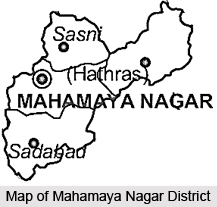
 Hathras is a district in the state of Uttar Pradesh, India. It came into being in the year 1997 on the 3rd of May and was known as Mahamaya Nagar prior to its formation. It was created by assimilating Agra, Aligarh and Mathura district and soon after it was named as Hathras district.
LOCATION OF HATHRAS DISTRICT
Hathras district lies in the Brij region. Its latitudinal extent is 27.64N and the longitudinal extent is 78.11E. The average elevation of Hathras district is 185 meters. The district extends to an area of 1,800.1 sq. km. The District Headquarters is at Hathras.
HISTORY OF HATHRAS DISTRICT
Hathras district has an enriched history. It also has a mythological background. The old folk tales and the archeological evidences link the history of Hathras district to the age of the Mahabharata. It was a town of Aligarh district in British India. The relics of the forts and monuments claim the rule of the Rajputs, the Marathas, the Kushan and the Jats over this region. During the later half of 18th century, Hathras was under the rule of a Jat chieftain but subsequently in the year 1817 it came under the dominion of the British. Many archeological objects of Buddhist, Hindu, Jain culture and also of the Kushan Period were excavated at several places in Hathras. Hathras district, during the 18th century was the abode of the famous saint Tulsidas whose renowned works include Ratan Sagar and Ghat Ramayan. The popular Hindi poet and musician Kaka Hathrasi was also the resident of Hathras.
GEOGRAPHY OF HATHRAS DISTRICT
Hathras district of Uttar Pradesh is a part of Agra division. It is surrounded in the north by Aligarh district, district Etah is in the east, in the south of Hathras there is Firozabad and district Mathura lies to its west.
 PEOPLE OF HATHRAS DISTRICT
According to the Indian census of 2001, the total population of Hathras district was 123,243. 53% of the total population is male and 47% constitute of females. The literacy rate of Hathras district is 60% which is higher than the national average of 59.5%. Of this the male literacy accounts to 66% and the female literacy is 53%. 14% of the total population is below the age of six years.
CULTURE OF HATHRAS DISTRICT
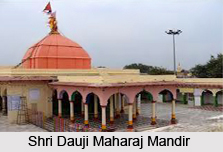
The Hathras district has been a regular centre for the progress of arts and has flourished on its cultural richness. Swangs and Rasiya are the traditional folk dance and folk song respectively of Hathras district which are still organised with great pomp and show. Cultural fairs and events are celebrated all throughout the year and the most popular fair is the historical Dauji fair. It is held near the 19th century ruined fort which has the Dauji temple at its pinnacle. The main language is Hindi and in this region the people communicate in Brajbhasha dialect.
ECONOMY OF HATHRAS DISTRICT
Under the British supremacy, Hathras was an important industrial hub. At present the prime industries are of Desi ghee and Asafoetida. Economy depends much on agriculture and industries. Sugar and grain are the main articles of trade. The market of Hathras district is distinguished for chemicals, readymade garments, carpet, brass, art ware, edible oil, Indian beverages, and medicine. The major crops which are cultivated in the district are jowar, bajra, pulses and potato.
TOURISM OF HATHRAS DISTRICT
Hathras district has numerous temples due to its rich cultural background. Mahakali temple and Mandir Shri Dauji Maharaj are the main tourist attraction.
TRANSPORT IN HATHRAS DISTRICT
By Air: The nearest airport is at Agra. Hathras district has no direct air way communication.
By Rail: Hathras Junction Railway station is 10 Km away from Hathras. It is on Delhi - Kanpur Broad Gauge Railway Track.
By Road: There is a good system of roadways. It connects major parts of the state with Hathras.
Hathras district of Uttar Pradesh is rich in its history and culture. Even at the present time it has succeeded in upholding its tradition by clinging on to its roots.