Western Ganga Dynasty
Western Ganga Dynasty was patrons of religion and built many temples of brilliant architecture.

Share this Article:

Introduction

Western Ganga DynastyWestern Ganga Dynasty was significant ruling dynasty of ancient Karnataka. Western Ganga Dynasty lasted from about 350 to 1000 AD. They are known as Western Ganga to distinguish them from the Eastern Western Ganga Dynasty who in later centuries ruled over Kalinga. The sovereignty of Western Ganga Dynasty lasted from about 350 to 550 AD, initially ruling from Kolar and later, moving their capital to Talkad on the banks of the Kaveri River in modern Mysore district of Karnataka.

The rule of Western Ganga Dynasty is important in the history of Karnataka, as this dynasty had a major contribution in arts, science and culture. After the emergence of Chalukya Dynasty of Badami, the Western Ganga Dynasty accepted Chalukya over lordship and fought for the cause of their overlords against the Pallava Dynasty of Kanchi.

Later, the Rashtrakuta Dynasty of Manyakheta replaced the Chalukyas in 753 AD, as Rashtrakutas were dominant in the power of Deccan Plateau Region. After a century of struggle for autonomy, the Western Ganga Dynasty finally accepted the over lordship of Rashtrakuta and successfully fought alongside them against their rivals, the Chola Dynasty of Tanjavur.

In the late 10th century AD that is during the Medieval Age in Indian History, the emerging Western Chalukya Empire replaced the Rashtrakutas and the Chola Dynasty saw renewed power south of the Kaveri River. The defeat of the Western Ganga Dynasty by Chola Dynasty around 1000 resulted in the end of the Western Ganga Dynasty influence over the region.
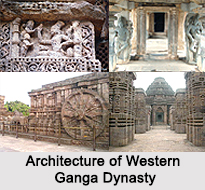

Architecture of Western Ganga Dynasty

Architecture of Western Ganga DynastyArchitecture of Western Ganga Dynasty is a perfect conglomeration of Jain culture and the conventional art form of Karnataka.
The temples, pillars and other structures built by Western Ganga Dynasty have been influenced by various factors. The pillars with a conventional lion at the pedestal and a circular shaft of the pillar on its head, the stepped Vimana of the shrine with horizontal mouldings and square pillars have been inherited from the Pallava Dynasty.

Chavundaraya commissioned the Gomateshwara monolith. It is considered as the highlight of the sculpture of Ganga dynasty in Karnataka. It has been carved from fine-grained white granite and the image stands on a lotus. It is the mightiest achievement in sculptural art in medieval Karnataka. This monolith is the largest monolithic statue in the world. The freestanding pillars called Mahasthambha or Bhrahmasthambha are unique. Examples of Bhrahmasthambha are the Brahmadeva pillar and Tyaga Brahma pillars. At the top of the pillar Lord Brahma is seated. The shaft of the pillar is cylindrical or octagonal and is decorated with creepers and other floral motifs. The base of the pillar has engravings of important Jain personalities and inscriptions.

Other contributions are the Jain basadis` whose towers have receding stories ornamented with small models of temples. These tiny shrines have engravings of Tirthankars. Semicircular windows connect the shrines. Decorative Kirthimukha are used at the top. The Chavundaraya basadi of the 10th or 11th century, Chandragupta basadi of the 6th century and the monolith of Gomateshwara of 10th century are the important monuments at Shravanabelagola. The Panchakuta basadi or the five-towered temple at Kambadahalli of 10th century with a Brahmadeva pillar is an example of Dravidian art.

The Gangas built many Hindu temples with impressive Dravidian gopuras containing figures from the Hindu pantheon. These temples have decorated pierced screen windows, which are featured in the Mandapa along with Saptamatrika carvings. Some examples are the Kapileswara temple at Manne, Kolaramma temple at Kolar and the Kallesvara temple at Aralaguppe. The Maralesvara temple at Talkad, the Arakesvara temple and the Patalesvara temple are other examples. Hindu temples were distinguished by a slab of stone with decorative sculptures that depict episodes from the epics.

Western Ganga Dynasty has also left behind virgal or hero stones that are memorials containing sculptural details of war scenes, Hindu deities, saptamatrikas and Jain Tirthankars.


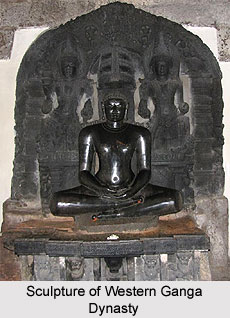
Sculpture of Western Ganga Dynasty

Sculpture of Western Ganga DynastySculpture of Western Ganga dynasty cannot be distinguished as Dravida style has been adopted. Their sculpture was also influenced by Pallava and Badami Chalukyas. Many edifices have remained either as they were conceived or in transformed versions. However many towns and villages in South Karnataka have retained temples that depict various stages of Ganga sculpture.
Manne which was an important city during the regime of Gangas, has retained some brick temples built during the eighth century. They are kapileshvara and Someshvara temples along with a Jaina basadi. The Ramalingeshvara temple at narasamangala in Chamarajanagara talluk is one of the earliest and the best models of the Ganga brick temples. The panels along the inner wall contain carvings depicting stories from Ramayana and Panchatantra. The grandeur of the Ganga style is evident in the temples. The carvings on the inner ceiling of the temples are charming.

The carving on the ceilings of the navaranga is a feature of sculpture of Ganga dynasty. Boga nandishvara temple at Nandi, Adinatha basadi at kambadahalli and the Cavundarya basadi at shravana belagola are the most important places containing many illustrations of the Ganga architecture and sculpture. Chandraprabha basadi built during the reign of Shivamara-2 and iruve brahmadeva of 9th century are other specimens. The Chavundaraya basadi is one of the largest structures in the area. Sculpture of Ganga dynasty exhibits variety. Thin carvings on hard granite stone and well rounded full fledged idols are reminiscent of Buddhist sculptures. Jaina, Shaiva and Vaishnava idols have retained their individuality. Mahisasuramardini icon at Kunigal and nandi, nataraja and umamaheshvara idols at araluguppe and Dharanendra yaksha idol at kambadahali are remarkable.

The great monolithic statue of Bagavan bahubali at shravanabelagola is a masterpiece of sculpture of Western Ganga dyansty.


Share this Article:

More Articles in States of India


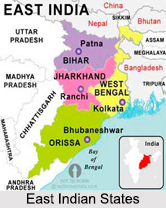
East Indian States
East Indian States comprises of Bihar, Jharkhand, West Bengal, Odisha and also the Union Territory of Andaman and Nicobar Islands. It defines the cultural heritage, rich historical background and the linguistic unity.
Erode District
Erode District is one of the districts in the state of Tamil Nadu. The district of Erode is having a land-locked area with no sea coast.
Purnia District in Bihar
Purnia District is located in Bihar and extends from River Ganga to Nepal. The district has a rich Hindu history and glorious past.
South Delhi District
South Delhi District is the third largest district of Delhi as far as its area is concerned. South Delhi District is known for its economic, historical, cultural and social significance.
North Indian States
North Indian States formed the cultural and religious unity in spite of having many foreign invasion and the political disturbances from the early era till the British gained supremacy in Indian sub continent.
Kendujhar District
Kendujhar District, spread over an area of 8,240 sq kms, is as varied as the whole of Orissa with waterfalls roaring gorges, mountains and minerals. The manifold expressions of nature in Kendujhar District are considered as unique.
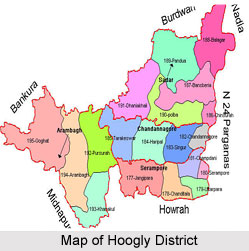
Hooghly district
Hooghly District along the bank of the river Hooghly is one of the principal trading ports of West Bengal.
Districts of South Tamil Nadu
Districts of South Tamil Nadu consist of many tourism destinations like archaeological sites and the history of Pandyas and Cholas. Considering their proximity to the sea, many districts also boast of serene beaches and coastal beauty.
Flora of Arunachal Pradesh
Flora of Arunachal Pradesh includes infinite species and is a subject of great interests for the botanists.
Districts of South Gujarat
Districts of South Gujarat are the epicenter of Jain pilgrimages and the early Hindu kingdoms.
North West States of India
North West States of India consist of three states, which are Rajasthan, Punjab and Haryana. All of them are culturally and traditionally diverse and they have been ruled by different dynasties in historical time.
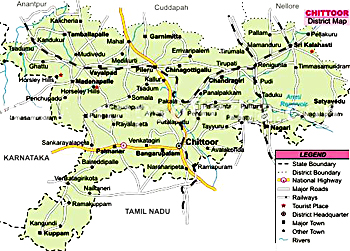
Geography Of Chittoor District
Geography of Chittoor district is spread along the topography of the land which is divided into two natural divisions; Chittoor has a dry and healthy climate.
Districts of North Rajasthan
District of Northern part of Rajasthan is dotted with ancient forts and medieval villages.
Districts of North Odisha
District of North Odisha has Bengal boundary and shares the same culture. These are reachable if one pays a weekend visit to Digha.
Districts of West Bihar
Districts of West Bihar is comprised of medieval monuments that were built by the different governors of Mughal era.
Districts of South Haryana
Districts of South Haryana consists of many cities of industrial excellence. These districts are dotted with popular tourism destinations.
Medieval History of Assam
Medieval history of Assam narrates the advent and rule of a number of kingdoms in the region. The prominent dynasties of the kingdom left an everlasting imprint on the socio cultural heritage of India.
Geography of Meghalaya
The suitable climate, highland plateaus, rivers and the flora and fauna together forms the geography of Meghalaya.
Districts of Rayalaseema
Districts of Rayalaseema in Andhra Pradesh state has urban population and rural settlements as well.
Districts of South Punjab
Districts of Southern part of Punjab depict medieval history of Punjab and the rise of Sikhs.