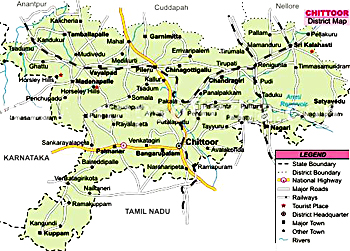
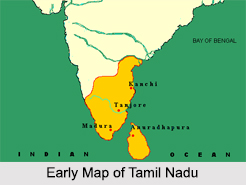
 Early History of Tamil Nadu is comprised with three monarchical states, headed by kings called Vendhar and several tribal chieftaincies, headed by the chiefs called by the general denomination Vel or Velir. Then it came under the rule of Mauryan Empire of Chandragupta era.
Tamil Nadu in 3rd Century BC
During the 3rd century BC, the Deccan Plateau was part of the Mauryan Empire, and from the middle of the 1st century BCE to 2nd century the same area was ruled by the Satavahana dynasty.
Tamil Kings in Early Era
The Tamil area had an independent existence outside the control of these northern empires. The Tamil kings and chiefs were always in conflict with each other mostly over property. The royal courts were mostly places of social gathering rather than places of dispensation of authority; they were centers for distribution of resources.
Tamil Literature in Early Era
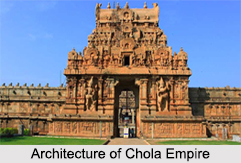 The Tamil literature, Tolkappiyam sheds some light on early religion. Gradually the rulers came under the influence of Vedic beliefs, which encouraged performance of sacrifices to enhance the status of the ruler. Buddhism, Jainism and Ajivika co-existed with early Shaivite, Vaishnavism and Shaktism during the first five centuries.
Rule of Chola- Pandyas and Cheras
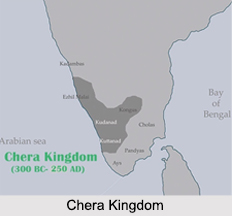
Cholas, Pandyas, and Cheras are mentioned in the Pillars of Ashoka inscriptions, among the kingdoms, which though not subject to Ashoka, were on friendly terms with him. The king of Kalinga, Kharavela, who ruled around 150 BCE, mentioned in the famous Hathigumpha inscription of the confederacy of the Tamil kingdoms that had existed for over 100 years.
Rise of Pallavas in Tamil nadu
The 7th century Tamil Nadu saw the rise of the Pallavas under Mahendravarman I and his son Mamalla Narasimhavarman I. The Pallavas were not a recognized political power before the 2nd century. It has been widely accepted by scholars that they were originally executive officers under the Satavahana kings. After the fall of the Satavahanas, they began to get control over parts of Andhra and the Tamil country. Later they had marital ties with the Vishnukundina who ruled over the Deccan. It was around 550 CE under King Simhavishnu that the Pallavas emerged into prominence. They subjugated the Cholas and reigned as far south as the Kaveri River. The Pallavas were at their finest during the reigns of Narasimhavarman I and Pallavamalla Nandivarman II. Pallavas ruled a large portion of South India with Kanchipuram as their capital.
Rise of Chalukyas in Tamil Nadu
The modern Deccan and Tamil Nadu saw the rise of the Chalukyas based in Vatapi. Pulakeshin II invaded the Pallava kingdom in the reign of Mahendravarman I. Narasimhavarman who succeeded Mahendravarman mounted a counter invasion of the Chalukya country and captured the Chalukyan capital Vatapi and ruled it for 12 years.
Decline of Pandyas and the Rise of Islam
After the decline of Pallavas and Cholas, Pandiyas came into power for a very short span of time. Pandiyas revived their fortunes in the 13th century. The monarchy of Pandya was extended from the Telugu countries on banks of the Godavari river to the northern half of Sri Lanka. Soon Madurai fell into the hands of the invading armies of the Delhi Sultanate and the whole Tamil Nadu came under the influence of Islam.