Dumal Caste
Dumal Caste is considered as one of the prominent castes in the western part of the state of Odisha. Dumal Caste is basically an agricultural caste found principally in Sonepur.

Share this Article:

Introduction

Dumal caste, also called Dumla, is categorized among Other Backward Classes in the Reservation system of India. Dumal caste is an agricultural caste mostly found in the state of Odisha. However, they are also found in some other states of Eastern India. The caste claims that they were previously a sub-caste of the Gaurs, with whom they have no special connection presently. The caste derives its name from a village known as ‘Dumba Hadap,’ in the former Athamallik state. Some scholars suggest that the Dumal or Jadupuria Gaura is a group of local people. Dumal caste is distributed over several regions of the state such as BoudhBalangir, Sonepur, Bargarh, Sambalpur district and Deogarh district.


Mythology related to Dumal Caste

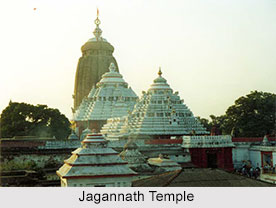
Dumas, from ancient times, are known to serve the temple of Lord Jagannath of Puri. It is believed that the people of Dumal Caste were milk suppliers in Puri. They supplied milk, curd, and ghee to the temple of Lord Jagannath. One day, a vulture was found sitting on the Neelachakra of the Puri temple. The pandit (priest) had a dream in which he learned that the ghee served to the deity was impure, which had displeased Lord Jagannath and led to the appearance of the vulture. The priest secretly informed the Gajapati Maharaja, who ordered punishment for those responsible. However, an official from the court quietly warned the suppliers about the king’s decision to punish them the next day. That night, the innocent people of the Dumal caste who supplied ghee to the temple left their homes in Puri with their families to save themselves and moved toward the west.

Over time, their settlements became scattered across Odisha, and many of them eventually took up agriculture as their primary occupation. Gradually Dumals became landlords among Oriya speaking communities. They became major contributors to wet farming that once formed the backbone of the economy of the state.


Culture of Dumal Community

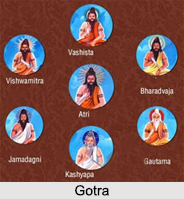
Dumal caste is considered as an economically backward community of the region. Members of Dumal caste are traditional cultivators of local crops. Dumals have no sub-castes and they have a complicated exogamy system. This exogamy system of Dumal includes three kinds of sections or divisions. The gotra or sect of the Dumal caste is related to the earth from which they sprang. Their family title or varga comes from the name of the village from where the name of the clan has been originated. Members of the same exogamous group are prohibited to marry.

In Dumal community, girls get married before attaining the stage of adolescence. If the parents fail to find a suitable match for their daughter before this then heavy penalty is imposed on the girl. She is excluded from the caste. She is taken to a forest and tied to a tree with a thread. Any person belonging to another caste can marry her if he wishes to do so. However, this penalty is rarely imposed on a girl. Marriage proposal usually comes from the boy’s side. They follow several rituals associated with marriage. They make offerings to their ancestors. A Brahmin priest is employed for completing the rituals of the wedding. After marriage, a girl goes to her husband’s house and returns back to her house after three days. Widow re-marriage and divorce are allowed. Divorce is said to be accepted only in the presence of the members of the caste’s committee or Panchayat. A divorced woman can marry again if she wants to do so.

Dumals eat meat but they refrain from any kind of liquor. Tattooing is an important part of their culture. Slowly and gradually, education is also making its way into this community.


Religious Faith of Dumal Caste

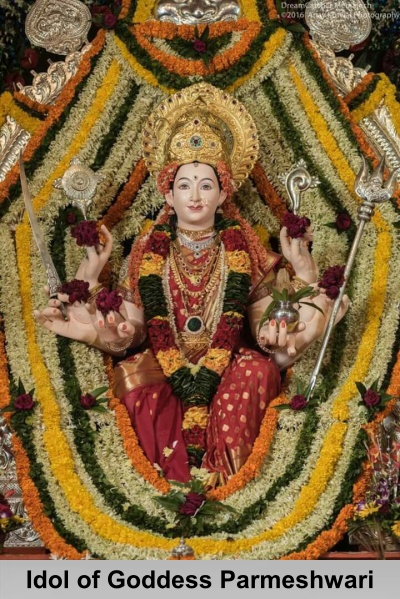
Members of Dumal caste are highly religious Hindus and they worship Goddess Parmeshwari, wife of Lord Vishnu. They also worship Lord Jagannath, a form of Lord Vishnu. The Dumal community performs a dance known as ‘Dalkhai’, which serves as a primary medium for social unity during religious festivals. The priest called ‘Dehuri’ worships Stambheshwari, also called Khambeshwari, for most of the year, but during the month of Ashwin the puja is conducted by Brahmin priests. There is also a cultural connection between the Nabakalebara ritual of Shri Jagannath and the Stambheshwari tradition. 

The Dumal community follows a polytheistic belief system. Their deities are divided into local and adopted forms. The first type arises from the community’s own beliefs, while the second is derived from Hindu mythology. These deities are worshipped in the form of wood, stone, or pillars.


Surnames within Dumal Caste

The surnames of the Dumal caste are derived from the Odia language, Sanskrit origins, and social usage. These surnames are categorized into occupational, geographical, natural, and qualitative types. In modern times, they have come to represent symbols of social unity in Odisha. Here are a few examples of surnames within Dumal caste. 

·       Surname ‘Amat’ comes from "Amatya", meaning “minister”

·       Surname ‘Karmi’ means “Hardworking person”

·       Surname ‘Kheti’ denotes Agriculture, Farmer or landowner

·       Surname ‘Karna/ Karan’ indicates “Writer”

·       Surname ‘Naik/Nayak’ signifies “Leader”

·       Surname ‘Padhan’ denotes “Village head”

·       Surname ‘Behera’ means “Owner” 

·       Surname ‘Mahakur’ indicates “Great lineage”

·       Surname ‘Singh’ means “Lion” 


Share this Article:

More Articles in Religion in India


Religion in Indus Valley Civilization
Religion in Indus Valley Civilisation included Hinduism, Buddhism and Jainism. Details about the religion in Indus Valley Civilization have been gathered from archaeological artefacts.
Shaivism Religion
Shaivism is the second largest “religious community” in modern India with its roots deeply seated in the Hindu Vedic belief.
Vaishnavism
Vaishnavism is among the more popular denominations of Hinduism, with its own distinctive ideas about spirituality and morality. Vaishnavism concentrates on worshipping god Vishnu and of his incarnations.
Hinduism Religion
Hinduism is more of a philosophy which is a way of living according to the understanding of the principles of Vedas and Upanishads.
Islam
Islam is a religion that beliefs in Allah as the one and only God and creator of the Universe. Islamic law or Sharia is characterised by the five pillars of Islam which comprise the essential duties of every Muslim.
Christianity
Christianity is a religion based on the teachings and life of Jesus Christ and it is the largest religion in the world.
Buddhism
Buddhism is a religion and a philosophy that encompasses a wide variety of beliefs, practices and traditions that are chiefly based on the teachings of Gautama Buddha and its later disciples.
Jainism
Jainism chronologically preceded the religion of Buddhism. It is considered as one of the oldest religions of India. Jainism in India shared with Hinduism and Buddhism. It is an integral part of South Asian religious belief and practice, but it is not a Hindu sect and not a Buddhist heresy, as earlier scholars believed.
Zoroastrianism
Zoroastrianism, closely related to Judaism, Christianity and Islam was founded by Zoroaster.
Sikhism
Sikhism is a religion started by Guru Nanak in land of Punjab in 15th century A.D.
Iyer Brahmin
Iyer Brahmins are originally from Tamil Nadu of South India. The Iyers have always taken an interest in preserving the arts and sciences.
Barai Caste
Barai Caste is the professional cultivator caste of betel leaf. Tamboli and Pansari are the terms used indifferently to the people of Barai Caste. The diversity of names of the sub-divisions of Barai Caste highlights the mixed elements that formed the caste.
Dangi Caste
Dangi Caste is largely distributed in the high land regions, and the word Dangi is said to have originated from the geographical features of their territory. Main occupation of the members of Dangi Caste is cultivation.
Nadar Caste
One of the most renowned castes of Tamil Nadu is the Nadar caste. The Nadar community is a mixture of sub-castes and classes of different origins, which came under one banner of Nadar caste gradually.
Kumbhakar Caste
Kumbhakar is the potter caste who manufactures all kinds of earthen vessels.
Gujjars in Maharashtra
Gujjars in Maharashtra have several sub-castes. Here, in this state the Gurjars are listed as a separate caste. They are included in the Maharashtra OBC list.
Awasthi Brahmin
Awasthi Brahmins are a sub-group of the Kanyakubja Brahmin community traditionally associated with Vedic scholarship and priestly duties. The surname “Awasthi” is linked to the Sanskrit word avastha.
Bhoyar Caste
Bhoyar Caste is largely found in the Central Provinces of the country. Traditional occupation of Bhoyars is agriculture. They are good cultivators and mostly grow sugarcane.
Gujjars in Mughal Era
Gujjars in the Mughal era enjoyed great power. Further their power increased with the decline of Aurangzeb, Mughal emperor.
Origin of Vaishnavism
Origin of Vaishnavism shares its attributes to many sources and religious evolution, dating back to pre-Vedic epoch.
Gotra in Hinduism
In Hinduism, gotra refers to a lineage system tracing descent from ancient sages, primarily through the paternal line. Originating from Vedic tradition, it plays a crucial role in identity and marriage customs. Individuals from the same gotra are considered to share a common ancestor and are traditionally prohibited from intermarrying.