
Phiribi or Applique textile design is the feature of many textile products of Manipur, used for multifarious purposes and occasions. The border works in the Phiribi garments meant for ladies of the ruling family, showcase skilled workmanship. The colour of the articles meant for personal use are of pale but clean hue of yellow and white, accentuated by application of black or yellow thread hemming stitches. Later, when Applique centred the field of showmanship as in Rasa dance in the temples, the Lai Haraoba dance during the Lai Haraoba festival and the Gostha Lila, the design became bold, the colour became deep and the colour combinations more contrasting, such as vermilion red on green superimposed with a white cut-out and hemmed with gold coloured silk and cotton or silk tassels, hanging down the appliqué motif. The items that are more glamorous, vibrant with gold eye and silver utensils, sequins with gold and silver fabric threads include - the dress of Gopis in the Rasa dance, those of the Kumins and the Poshwans, headgears, side hangings, cross straps studded with mirror, the dress of Krishna especially the side hangings and the back and the headgear with a hanging paper tassel.
In the Khamba-Thoibi dance costume, Applique work is found on Samjin, Khadangyet etc. The technique for the ends and the borders of the ladies "odni" encompasses white fine lines cut out intricately and hemmed with black threads onto the ends and sides. The ends are also decorated with tassel. In the Lai Haraoba costume, Ningkham is a triangular shaped piece. The motif is cut out of red flannel and stitched on the green line fabric. The hemming is done with red threads and is not visible. The motif is elliptical, placed slightly perpendicular and is cut out of yellow or white linens, stitched on to the white base. There are three such pieces of applique and from the last tensile of threads hand down white threads crossed, making quadrilateral shapes and ending in bunch tassels. Khadangyet is the strap holding down the turban and tied under the chin to prevent the turban from falling off. The motif and get up is like that of the Samjin. The top of curtains are appliqued with "Khoi" patterns but hold in white lines. Pillow ends are very intricate designs hemmed with black yellow or white threads as required. It becomes more ornamental when studded with golden sequins and tassels of different shapes. For personal use by the chief and the nobles, strips of appliqued designs are affixed on white turbans.
The technique, colour, motif, use and purpose of Applique are quite different from what is prevalent outside Manipur. Therefore, Phiribi is the heritage of the Meithei culture in Manipur and the beauty and exclusivity of this craft of the state is elucidated in some of the products developed with Phiribi textile design.
•"Khoilonba" - This design was first introduced in Manipur during the 10th century, when King Yanglou Keiphaba (969 to 984 AD) was the ruler, as recorded in the Royal Chronicle Cheitharol. It is recorded that Yanglou Keiphaba ascended the throne in "Sakbda 891" (968 AD). During his reign, the design of Khoilonba on the border of the prominent Manipuri Phanek was introduced. This design is found used in Ningkham Samjin, which is like a national costume of Manipur, worn in the festive boat race and the Lai Haraoba dance.
•"Thambal Chedplei"{ - It is a design made of the shape of a lotus flower "Thambal" meaning lotus). This design was used in the Khadangyet (fillet wrapped round the chin) of the King.
"Phantup Mayek"- This is a design used in the Ningkham (a long triangular piece of cloth tied at the loin of the nobles.
•"Pakhangba Mayek" - A derivation of the Khoi design, it was used in the Ningkham of the Meithei King.
•"Pheiroi" - It is the portion of thread design hung on the Khadangyet of Samjin.
•"Kwakli" - Originally called "Kwalei", derived from the blooming of Kwalei that is a dark bluish orchid (Venda coebulea), it is used as lace on the border of the nobles` Samjin.
•"Phijin" - Phijins are laced-border designs, of different types: Paona Singnas Monget is the referred to the design used in connection with the marriage of a maiden; Harao Phijin is the design used on the borders of girl"s "chaddar", to be worn by ordinary girls on the occasion of Lai Haraoba festive; Ariba Palgi Khwangyet Phijin imply the two different types of Phijin designs of Khwangyet (a Loin cloth) used by the artists of Ariba Pala, one for the Leipak Chaba Pala and another for the Sebok Pala. The approximate length and breadth of the Phijin is l inch x 7.4 inches. The patterns decorated in the Khwangyet
Phijin of Ariba Pala are termed Yensil Aphangba, comprising white cut off cotton cloth stitched on a green base cloth, while design in the cloth of Sebok Pala is composed of two upside down Yensil Aphangbas, with Khongnang design in the middle.
•"Nagamhai Mamit" - Nagamhai is a kind of small bony, silvery fish. In the Meithei dialect, this fish is called "Nongyenghicha", meaning the fish with turn up eyes. This design is used in Monmai (side covers of pillows).
•"Ising Mapi" - This design refers to a large decorative metal work, looking like Ising Mapi, a tiny aquatic swift moving insect (Dincutus spinosun), hence the term. This design is also used in Monmai.
•"Kongon Thinba" - It is a bubble formation design, again also used in Monmai.
While Applique work in the rest of India has flourished with various inputs with new and new design inputs, the craft has lost its glamour in Manipur. It is dwindling fast and the number of artisans is reducing day by day. The various reasons for this could include the intricacy of the design, which demands meticulous and time consuming labour, which has discouraged the artisans who did not get the wages worth this labour, while also the consequent flooding in of cheap machine products, made this craft products fail to get market. The valued craft which flourished under royal patronage also had its support withdrawn. Till 1972, Manipur was ruled by administrators who had no idea about virtues of Manipur, thus almost all crafts reached a languishing state. Also the insurgency and ethnic violence prevalent in the state dwindled the tourist footfall in the state, who encourage the Phiribi art and its products.
Post World War II, especially from the 1960s onwards, a few Applique workers of geometrical design were observed emerging, but the beauty and meticulous workmanship of the past is found absent. The motifs are bold but lack refinement. They are used as draperies. Today, these bold motifs of Applique art are found used only in the dance costumes of Khamba (in Ningkham and Samjin) and in the costume of Manipuri bride (Kumin Mapal). In this scenario where no help seemed coming from any corner, the Craft Society of Manipur under the leadership of Sri Kamesh Salam, came up with an effective action plan. Artisans from Odisha were brought to give training to Meithei artisans and soon, up to certain extent, the craft could be revived. To bring back the past glory of Phiribi in Manipur, such attempts need to be initiated and supported.
Related Articles:
Applique
Manipur
Textiles of Manipur
Crafts of Manipur
Weaving and Dyeing Craft
Embroidery
Lai Haraoba
Rasa Dance of Manipur
Khamba Thoibi Dance
Meithei
Designs and Costumes with Phiribi
Phiribi or Manipuri Applique is worked on multiple textile designs and products of Manipur, used in multifarious occasions and purposes.
Recently updated articles in Indian Crafts
Indian Crafts
Indian Crafts have evolved over thousands of years. Various Indian crafts are product of the skilled artisans and craftsmen of India.
Crafts of Indian States
Crafts of Indian states have not only created a demand in the local market but have attracted foreign tourists.
Hand Driven Dancing Dolls
Hand Driven Dancing Doll is a folk art of West Bengal, which is about to get extinct now.
Directorate of Handicrafts and Handlooms
Directorate of Handicraft and Handloom in Sikkim was established in 1957. It had an aim of preserving and promoting the art and craft of the people of...
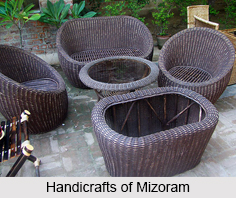
Handicrafts of Mizoram
Handicrafts of Mizoram are mainly based upon cane, bamboo and weaving. Native people of the state produce utility and decorative items with these craf...
Related articles in Indian Crafts
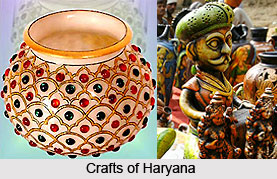
Crafts of Haryana
The crafts of Haryana are rooted to the rural economy and are more than artistic showpieces, they are utilitarian in nature originally crafted as home...
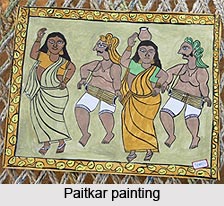
Crafts of Jharkhand
Mainly dominated by the tribal art the crafts of Jharkhand reflect the color of the state. The handicrafts of this young tribal state are mainly made...
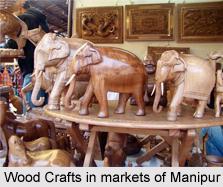
Wood Craft of Manipur
The ancient Indian craft of Wood Craft has seen its evolution in Manipur, from the traditional artistic designs which still sustain their appeal to to...
Ivory Craft in India
Ivory Craft is engraving and carving on ivory that is a medium of artistic expression practiced in many parts of India.
Bamboo Crafts in India
Bamboo crafts in India show a wide variety. Furniture, showpieces, and various home decors made out of bamboo add extra richness to the looks of the h...