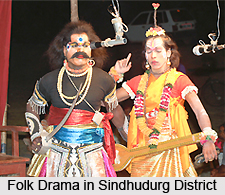
 In Indian mythology the ten incarnations of Lord Vishnu is collectively known as Dasavatar. To preserve the universe from destruction, Vishnu took ten different forms (Avatar) from time to time. These forms are Matsya avatar (Fish), Katchha (Turtle), Varaha avatar (Boar), Narashima avatar (half man half Lion), Vamana avatar (A brahman boy), Parashurama avatar, Rama, Krishna, Budhha avatar and Kalki avatar. In Sindhudurg district, Dasavatar is a most popular art form. Dance ritual dramas are held in most of the temples during festive occasions.
There are nine original Dasavatar performing groups in the Sindhudurg district, and the Walawalkar group is believed to be the first. Dashavtar was introduced in Sindhudurg in the 11th century, and this tradition of presenting Lord Vishnu in his ten forms is still practised till date. It is now popularly known as the Adivere Dasavatar.
A from called Aatdasavatar is also highly appreciated by the locals. It is presented in two parts. Part one begins with Ganeshstavan, Saraswatistavan, the Brahmin priest`s entry and the killing of Shankasura (Purvarang). Part two is a proper play and it includes mythological stories, known as Uttarang or Leelantya. The first incarnation of the Matsya Avatar is presented to the audience in the theatre. The myth begins with Lord Brahma who is shown as being busy in penance. The demon Shankasura seizes this opportunity to steal his Veda and shastras (holy Books). Lord Vishnu who is witness to this incident then promises Bramha that he would bring back the Vedas. He wanders in search of Shankarasura and when he finds him, a fierce battle takes place between them. Shankarasura runs from the battlefield and hides under the water in a conch shell. As the Vedas were with him, they were drowned in water. To retrieve them Vishnu descends into the water in the form of a fish, i.e., the lower part of the body was like that of a fish and the upper part like that of a man (Matsya Avatar). Under the water, Vishnu finally defeats Shankarasura who surrenders and explains the motives behind the stealing of the vedas. He goes on to explain that the reason he stole the Vedas was to pass philosophical knowledge of the Vedas from the elite people to the down trodden in society (Bahojan Samaj). Vishnu appreciated Shankarsuras courage and gave him a vow that in the three worlds (Trailokya), before worshipping Vishnu, people will worship his conch shell. Vishnu then restored the Vedas to Brahma.
Thus the famous art form of the Dasavatar is performed with great energy in the district of Sindhudurg. The most interesting of the characters in these dramas are the Apsaras. Their role is played by men in women`s attire.