 Culture of Kanyakumari district has a bearing on how the district presents itself to others. Tamil and Malayalam are the main languages of this district. Hindus and Christians form a considerable percentage of the population of the district and there are a number of Muslim dominated belts in the district. The caste system in the Society has weakened to a great extent especially after independence because of growth of education and improvements in transport and communication. Some of the communities in the district are Nadars, Vilakki Thalanayar, Paravas, Mukthavas, Kammalar or Asari, Nairs, Chackarevars, Nanjil Nadu Vellalars, Kerala Mudalis etc. Rice is the staple food of the rich and poor alike in the district. Some among the poorer section also use tapioca. Beverages like tea and coffee are widely spread even in to the rural area of the district. A number of festivals are held in this district throughout the year.
The culture followed by the people of this district is mixed and it bears maximum influence from Travancore. Kathakali is a unique form of drama having its origin in Travancore.
 Kathakali or the story-dance is a relatively recent development of earlier dances, which arose out of religious expression through symbolical action. It is now played in the temples at Kuzhithurai, Thiruvattar, Ponmana, Thirparappu, Neyyoor and Munchira in the Kanyakumari district twice a year during the festive seasons.
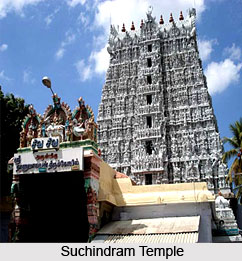
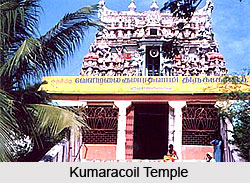
The mixed culture of this district enables its people to celebrate with equal ease and comfort various festivals in temples, churches and mosques. The car festival at Suchindram temple attracts large number of crowds in January. The Kodai festival at Mondaicadu temple in the Kalkulam taluk in March attracts a large number of devotees. The Thirukalya Utsavam at Kumaracoil temple in the Kalkulam taluk between March and April is observed as an important festival. Pongal in January and Diwali in November are the best occasions for festivity and rejoicing within the Hindu Communities. The Malayalis celebrate Onam between the month of August and September with sports and feasts. Muslims in this district observe Muharram and Ramzan. Christmas is another major festival for the Christians in the district of Kanyakumari. In the St.Xavier`s Church at Kottar, as annual festival in December is generally celebrated on a large scale and attracts Catholics from all parts of South India. Many folk arts and dances are also popular in this district which is played during festivals in temples, celebrations in schools etc.
The age old culture and tradition is reflected in its various forms of art like the Villu Pattu or Bow song. It is an ancient form of musical story-telling art of southern Tamil Nadu. Bow is the age-old weapon of warriors which lends itself to be used as a primary musical instrument for the Villu Pattu artists. There are Udukku, Kudam, Thala-Kattai, etc as supplementary instrument in the performances.
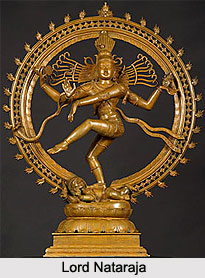
 Udukku is cited in the ancient Tamil literature as Thudi. It is a small drum with a slender middle portion held in the left hand and played by the right hand fingers. It is seen in the pictures and statues of Lord Nataraja, - the cosmic dancer, adoring his left hand. The Villu Pattu team also divides itself into two groups, each trying to prove opposite view points of a subject by carrying out a program by exchange of questions and answers and it is known as Lavani Pattu. The Villu-Pattu artists use mainly the traditional folk-songs.
The Thiruvathirai Kali is a folk dance which holds a prominent position in the cultural life of the people of Kanyakumari district. It resembles Kummi and is played mainly in the time of the Onam. The players are young girls. The number of girls required varies from eight, ten, twelve or sixteen for each dance. They move round and sing in a chorus. Each girl strikes the Kole or stick which she holds in each hand and the striking of the sticks and the steps, which she makes, are in sync with the tune. Thus the various folk dances form a major part of the culture of this district of the state of Tamil Nadu. Apart from this, Karagam dance is a form of dance which is common in the country side. It is played by both men and women during festivals and marriages.