
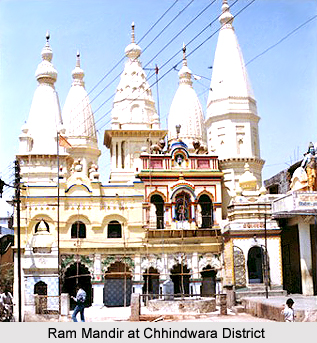
 Chhindwara district one of the important district of Madhya Pradesh is part of the Jabalpur Division. It occupies 4 percent of the state and ranks first in terms of area in Madhya Pradesh. Chhindwara town is the district headquarters. The name of the place is derived from "Chhind" (date palm) "Wada" (place) trees, as it is believed that this place was full of wild date palm trees and hence "Chhindwara".
Chhindwara District
Chhindwara district occupies 4 percent of the state and ranks first in terms of area in the state. The name of the district comes from date palm.
Introduction
Chhindwara district one of the important district of Madhya Pradesh is part of the Jabalpur Division. It occupies 4 percent of the state and ranks first in terms of area in Madhya Pradesh. Chhindwara town is the district headquarters. The name of the place is derived from "Chhind" (date palm) "Wada" (place) trees, as it is believed that this place was full of wild date palm trees and hence "Chhindwara".History of Chhindwara District
History records the place from the time of the rule of Bhakth Bulund King, whose kingdom was spread over the Satpura Mountain range and it is believed that his rule was up to the 3rd Century. This dynasty ruled up to the 7th Century. Then the "Gondvana" dynasty had ruled the area with "Devgarh" as the capital. King "Jatav" of `Gond` community had built the Devgarh fort. Bhakth Bulund King was most powerful in the dynasty and he had adopted the Muslim religion during the rule of Emperor Aurangzeb. Later the power had changed many hands and finally `Maratha rule` ended in 1803. On 17th September 1803, British East India Company had taken over this kingdom by defeating `Raghuji II` and hence had started the British rule. After Independence `Nagpur` was made the capital of Chhindwara District, and on 1st November 1956 this district was re-constituted with Chhindwara as the capital.
Geography of Chhindwara District
Chhindwara District is located on the South-West region of `Satpura Range of Mountains`. It is spread from 21.28 to 22.49 Degree North (longitude) and 78.40 to 79.24 degrees East (latitude). It spread over an area of 11,815 Sq. Km. This district is bounded by the plains of Nagpur District (in Maharashtra State) on the South, Hoshangabad District and Narsinghpur District on the North, Betul District on the West and Seoni Districts on the East.
There are five major rivers, which flow through the district namely Kanhan River, Pench River, Jam River, Kulbehra River, Shakkar River, and Doodh River. Kanhan River flows in the Southern direction through the western parts of Chhindwara Tahsil and mixes with the Wainganga River. Jam river flows mostly through the Sausar region and joins with the Kanhan River. Pench River flows in the border areas of Chhindwara and Seoni Districts and mixes with the Kanhan River in Nagpur District. Kulbehra River starts at Umreth, flows through Chhindwara and Mohkhed, and joins with Pench River.
There are five major rivers, which flow through the district namely Kanhan River, Pench River, Jam River, Kulbehra River, Shakkar River, and Doodh River. Kanhan River flows in the Southern direction through the western parts of Chhindwara Tahsil and mixes with the Wainganga River. Jam river flows mostly through the Sausar region and joins with the Kanhan River. Pench River flows in the border areas of Chhindwara and Seoni Districts and mixes with the Kanhan River in Nagpur District. Kulbehra River starts at Umreth, flows through Chhindwara and Mohkhed, and joins with Pench River.
Demography of Chhindwara District
According to the Population Census in 2011, the Chhindwara District had population of 2,090,306. Out of which the male and female were 1,063,302 and 1,027,004 respectively. Chhindwara District population constituted 2.88 percent of total population of Madhya Pradesh. The population density of Chhindwara district is 177 people per sq. km. The average literacy rate of Chhindwara in 2011 was 72.21. If things are looked out at gender wise, male and female literacy were 80.76 and 63.38 respectively. The total literates in Chhindwara District were 1,316,324 of which male and female were 747,981 and 568,343 respectively.
Culture of Chhindwara District
Chhindwara District has majority of tribal population. The tribal communities include Gond tribe, Pardhan tribe, Bharia tribe, Korku tribe. Hindi language, Marathi language, Gondi language, Urdu language, Korku language, Musai language, Parvari language etc. languages are in use in the district. Majority of the tribals speak in Gondi and Hindi mixed with Marathi. Among the cultural festivals in the district are Pola, Bhujalia, Meghnath, Akhadi, Harijyoti etc. `Gotmat Mela` of Pandhurna is unique and world renowned fair. On Maha Shivratri day, `Mahadev Mela` will be celebrated each year on "Choudagadh".
Economy of Chhindwara District
Economy of Chhindwara District is based on large-scale industries. Some of the prominent industries are The Raymond Chhindwara plant, Spices Park, Bhansali Engineering Polymers, Suryawanshi Spinning Mills and many other heavy industries. This district also has a unit of Hindustan Unilever Limited, which is one of the most essential multinational companies in India. Spices Park in this district is India`s first spice park. It was opened in Chhindwara on 25th Feb 2009. This park includes an assemble part of seven parks. The Spices Board planned to build this park. The initial phase of the park consists of a Garlic Dehydration Plant set up by the Spices Board and a Steam Sterilization Unit set up by STCL Ltd., a public sector company. The park has come up in an area of 18 acres of land in Laas village, Umranala, on Chhindwara-Nagpur Highway.
Tourism of Chhindwara District
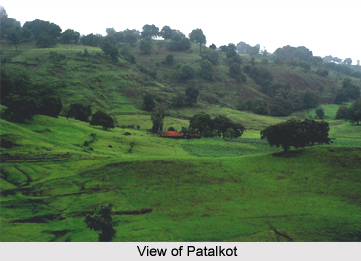 Tourism in Chhindwara District in Madhya Pradesh deals with both the natural, historical and the pilgrimage tourism. Some of the prominent tourist destinations of Chhindwara District are Patalkot , Devgarh Fort, the waterfalls at Kukdi Thapa and Lilahi and the Tribal Musuem.
Patalkot
"Patalkot" is situated in the hilly block `Tamia` of Chhindwara District. It has acquired great importance because of its geographical and scenic beauty. Patalkot is a lovely landscape located at a depth of 1200-1500 feet in a valley. Because of the great depth at which it is located this place is christened as `Patalkot`. When one looks down the place sitting at the top of the valley, the place looks like a horseshoe in shape. People believe it as the entrance to `Patal`. There is one more belief that after worshipping `Lord Shiva` Prince `Meghnath` had gone to Patal-lok through this place only. There was a long historical tunnel connecting this place to `Pachmarhi` in Hoshangabad District.
Devgarh Fort
 The famous historical fort of Devgarh is situated 24 miles south of Chhindwara beyond Mohkhed. The fort is built on a hill, which is fortified by a deep valley clothed with dense reserve forest. The fort is approachable up to its foot by motor road. Nature has been bountiful in the region.
Waterfalls at Kukdi Khapa and Lilahi
The picturesque location of Kukdi khapa water fall falls in the Chhindwara to Nagpur narrow gauge railway line, between the stations Umaranala and Ramakona. The waterfall is situated in the panoramic `Sillevani` Mountain range. The height of this fall is approximately 60 feet. The location is more beautiful immediately after a spell of good rains. While travelling in the train along the narrow gauge towards Nagpur the visitor can visualise this beautiful picnic spot.
The Lilahi Water fall is located in the down stream of the District`s second biggest river `Kanhan River`. This fall is situated in the route from Mohkhed to Pandhurna via Devgarh. It is close to the place called `Narayan Ghat` near Lilahi village on the Kanhan River. The lovely sight of the waterfall bounded by mountain rocks and colourful nature is in deed a feast to the visitor. The waterfall has sufficient down flow water from July to January months.
Tribal Museum
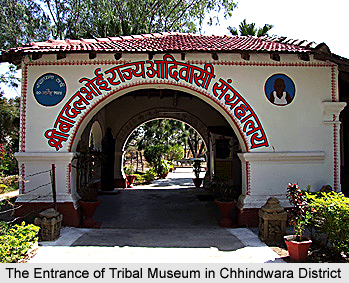
The Tribal Museum started in Chhindwara was established in 20th April 1954. It has acquired the position of `State Museum` status in the year 1975. Moreover, on 8th September 1997 the Tribal Museum name has been changed to "Shri Badal Bhoi State Tribal Museum".
Recently updated articles in States of India
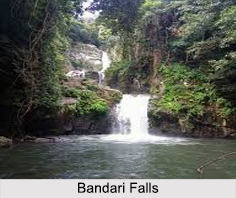
Bandare Waterfalls, Meghalaya
Bandare Waterfalls in South Garo Hills, Meghalaya, is a secluded natural attraction surrounded by dense subtropical forests and rugged mountain terrai...
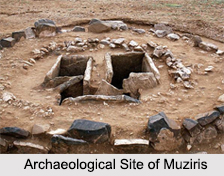
History of Thissur District
Early History of Thissur District explains flourishing of the port cities. Now these port cities are transformed into archaeological sites.
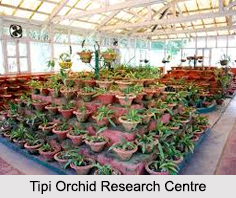
Tippi Orchid Research Centre, Arunachal Pradesh
Tippi Orchid Research Centre in Arunachal Pradesh is renowned for its rich collection of exotic and endangered orchids. Surrounded by lush rainforest...
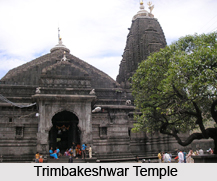
Tourism in Nashik District
Pilgrimage tourism in Nashik district involves visiting the various places of Hindu and Jain worship located here. Some of the holiest sites for Hind...
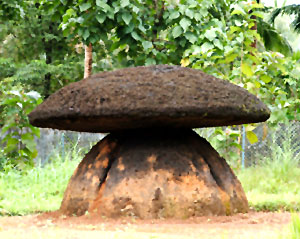
Mangadu, Kerala
Mangadu in Kerala’s Kollam district is a significant megalithic site known for its urn burials, cist burials, menhirs, and stone circles. Excavations...
Related articles in States of India
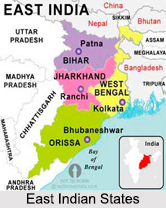
East Indian States
East Indian States comprises of Bihar, Jharkhand, West Bengal, Odisha and also the Union Territory of Andaman and Nicobar Islands. It defines the cult...
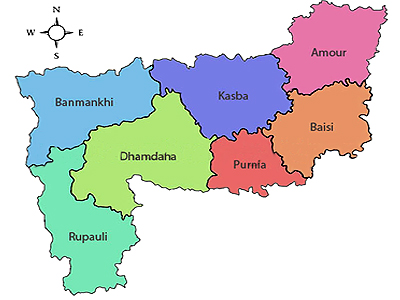
Purnia District in Bihar
Purnia District is located in Bihar and extends from River Ganga to Nepal. The district has a rich Hindu history and glorious past.
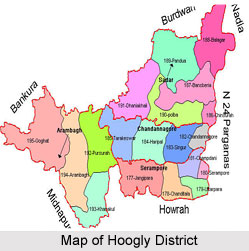
Hooghly district
Hooghly District along the bank of the river Hooghly is one of the principal trading ports of West Bengal.
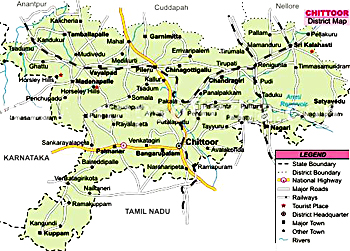
Geography Of Chittoor District
Geography of Chittoor district is spread along the topography of the land which is divided into two natural divisions; Chittoor has a dry and healthy...
Districts of West Bihar
Districts of West Bihar is comprised of medieval monuments that were built by the different governors of Mughal era.