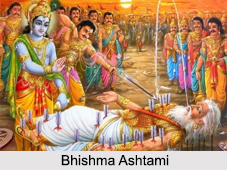
 "Bhishma Ashtami" is dedicated to the most devoted and respected character of "Mahabharat", known as "Bhishma". It is celebrated on the twenty-third day of Magha and eighth lunar day of the light half. Bhishmashtami festival has special and traditional origin. The origin of Bhishmashtami has in the institutes of the Hindus. Important part of the Bhishmashtami festival is the worship of the Pitris, the patriarchs or progenitors, the Dii Manes. Past suffering from continual pain and sacrificing all his life for betterment of others, on this fortunate day, Bhishma left his human body to accomplish "moksha".
History of Bhishmashtami
According to folklore, in the "Dwapara Yuga", Bhishma was the son of King Shantanu and Ganga. The Bhishmashtami day is dedicated to Bhishma, the son of Ganga, and great uncle of the Pandava and Kaurava princes. Bhishma was killed in the course of the Great War and died childless with no descendant in the direct line.
In order to pacify his soul, all the persons in general join to make libations of water on this day to his spirit as he is called `pitamaha` by all. People offer him sesamum seeds and boiled rice on this particular day. These rituals performed on the Bhishmashtami day, is believed to compensate the sins of a whole year.
Significance of Bhishma Ashtami
One of the peculiarities of Bhishmashtami is that persons of all the four original castes need to perform this as per a text of Dhavala. Dhavala was an ancient lawgiver, quoted by Raghunandana. Because of his loyalty towards his father and determined devotion, he was blessed with the power of choosing his time of death himself. He was roughly injured during the war of Mahabharata and he didn"t left his body and waited for the day of Magha Shukla Ashtmati for leaving his body. Magha Shukla Ashtmati is considered as an auspicious day to meet the supreme soul. According to this, persons of all Varnas should offer water, sesamum seeds and rice, to Bhishma on Bhishmashtami, which is on the eighth lunar day. Otherwise the value of all the good deeds done by a person during the preceding year is terminated.
Again, as per a different reading of the text, only the Brahmans, Kshatriyas and Vaisyas should make the oblations. The Sudras are excluded from this duty of offering oblations during Bhishmashtami.
This offering is given to the childless hero Bhishma of the race of Vyaghrapada. Then people pray saying, "May Bhishma, the son of Santanu, the speaker of truth and defeater of his passions, obtain by this water the oblations due by sons and grandsons." The simple nature of the offerings which are sufficient on such occasions, water and sesamum seeds, justifies the remark made by Ovid on the Feralia. All the people of Hindu Dharma perform this ritual.
Celebration of Bhishma Ashtami
People believe that the ritual of "Ekodishta Shraddha" is in the honor of Bhishma. According to the belief, only those devotees whose fathers are not alive anymore can perform this ritual and some communities, on the other hand, do not follow this and believe that anyone can perform the "pooja". People visit the near river banks and do "Tarpan" ritual in order to bring peace to Bhishma Pitamah"s soul and they also honor their ancestors through the same.
People take holy dip in the Ganga River and offer boiled rice and sesame seeds in order to come out of the cycle of life and death and purify their souls. Devotees observe fast during the day and perform, "Arghyam" and chant "Bhishma Ashtami mantra" to seek the deity"s blessings.