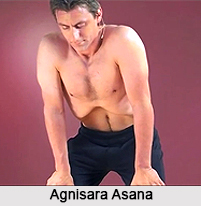
 Agnisara Asana, one of the cultural asanas, requires pushing the navel against the spine as many times as possible. Agnisara Asana requires a sequential contraction and release of the abdominal muscles. Agnisara requires long-term training and daily practice is very necessary. This asana should be practised early morning when the bowels and stomach are empty. One can also practice before meals, before bed and during a yoga routine.
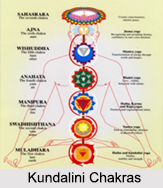
`Agni` basically is the Sanskrit word meaning fire and "sara" stands for wash, so the yoga practice of agnisara asana basically implies the washing of the fire chakra or the Manipur chakra which is located at the navel region of an individual.
Practice of Agnisara Asana
•One should stand erect and make a distance of 1-1/2 feet between legs and place both hands on respective knees.
•Start by contracting the pelvic floor and the lowest portion of the abdomen as one begins to exhale.
•Then contract and pull the lower belly in and up.
•Continue exhaling and contract the upper belly.
•When the whole abdominal wall is strongly contracted and drawn in and up, and the breath completely emptied out, suck the diaphragm up under the ribs.
•Immediately release the diaphragm and begin the inhalation by releasing the upper abdominal wall above the navel center.
•Then release the lower belly, continue inhaling and release the pelvic floor as one finishes the inhalation.
•Without pause, begin exhaling and draw the pelvic floor and the lowest portion of the abdomen in and up.
•Continue exhaling and contract the upper belly, and draw the diaphragm up.
•Then release the diaphragm, and as one inhale, release the upper abdomen, then the lower abdomen, and finally the pelvic floor.
Benefits of Agnisara Asana
Some of the key benefits of the Agnisara asana is that it is helpful in combating diabetes naturally, stimulates the immune system of the individual and also improves the process of digestion in the individual. This asana ensures curing of abdominal diseases, like gastric trouble, ulcers and so on. Benefits of the Agnisara asana also include strengthening of the abdominal organs such as the spleen, kidneys, liver and also the intestines. Agnisara Asana is also known to improve the appetite of the individual and provide relief from chronic constipation. One should practice Agnisara asana only in empty stomach and never execute it at least for 4 hours after meal.
Contraindications of Agnisara Asana
Avoid agnisara if one has a hiatus hernia, are menstruating or pregnant, as well as if anyone have ulcers, cardiovascular disease or high blood pressure. Those who have just undergone abdominal surgery or have an intestinal ailment should not practice the Agnisara Asana.