
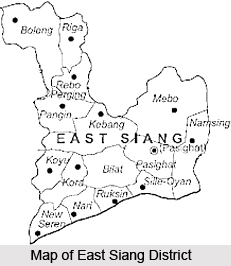
 East Siang District is one of the district of Arunachal Pradesh, is remarkable to the tourists for the natural beauty. The presentable topography takes an artist to paint the landscape beauty of cloud capped mountains and the green coniferous forests.
East Siang District
East Siang District is covered with mountains of East Himalayas. Mostly populated with Adi tribe, the people are engaging themselves handicrafts and other works for their self development.
Introduction
East Siang District is one of the district of Arunachal Pradesh, is remarkable to the tourists for the natural beauty. The presentable topography takes an artist to paint the landscape beauty of cloud capped mountains and the green coniferous forests.Geography of East Siang District
East Siang District is a wild mountainous area covered with Eastern Himalayas and the green forestry. East Siang District has an area of 4005 sq. km. The latitudinal extent of this district is approximately between 27 degree and 43 minutes and 29 degree and 20 minutes North latitudes and 94 degree and 42 minutes and 95 degree and 35 minutes East latitudes. East Siang District took its name from the mighty river of Arunachal Pradesh, named Siang River. This river is basically called as Tsangpo River which is sourced from Tibet. Tsangpo River transcends down and flows through the entire length of the area until it descends down into the plains of Assam south of Pasighat town, where it meets Dihang District and Lohit District and after that becomes the Brahmaputra River , as it entered in India.
People of East Siang District
The district of East Siang is mostly populated by the Adi tribe. This tribe comprised of a large number of tribal groups, which can be divided into various subgroups such as the Minyong Tribe, Padam Tribe, Shimong Tribe, Milang Tribe, Pasis Tribe, Karkos Tribe, Ashings Tribe, Pangis Tribe, Tangmas Tribe and Boris Tribe. The Adi tribal community belongs to the Astro-Mongolide race. The languages spoken in East Siang District are put together under the North-Assam group of the Tibeto-Burmese group.
Culture of East Siang District
The social structure of East Siang District, like most parts of Arunachal Pradesh is organized on the basis of clan. The social relationships in Adi Tribe are determined on the basis of kinship or locality. The family, called Rutum, is the smallest social entity. The society of the Adi Tribe in Arunachal Pradesh is patriarchal type. The sons inherit the property. One outstanding feature of the Adi tribal society that sets it aside from the mainland is the absence of the caste system. Among this tribal community there are some social distinctions, but all people eat together on social occasion and take their part in social councils. The tribal dances of Adi are an integral part of the lives of the people of East Siang District. Some of the famous dances are Ponung Dance, Popir dance, Dishang dance and Tapu dance.
Administration of East Siang District
The administration of this district is dependant on the Local Self Government called Kebang. These village councils are time-honoured socio-political institutions deriving their authority from tradition. They function as village governments expressing the will and power of the members of the society. The functions of these Kebangs are three- fold - judicial, administrative and developmental. Pasighat town, the headquarter of the East Siang District, which is situated at an altitude of 155 metres above main sea level. This is the oldest town in Arunachal Pradesh, established in the year 1911.
Tourism in East Siang District
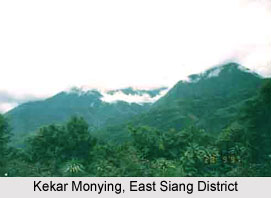 Tourism in East Siang district includes the numerable attractive tourist locales like Kekar Monying, Daying Ering Wildlife Sanctuary, Pangin and several other interesting places which are thronged by innumerable visitors. A vast quantity of aboriginal groups like Karkos, Tangmas, Milangs, Shimongs, Padams, Karkos, Minyongs, Pasis and Pangis inhabit the East Siang district. These regional communities belong to the local `Adi Tribe`.
Kekar Monying : Kekar Monying is a picturesque mountain cliff which possesses a historical significance. During the year 1911, the Adi tribals fought boldly against the British at this very spot. Matmur Jamoh, a resident of Yagrung village had assassinated a British officer named Noel Williamson in 1910. Therefore the British wanted to avenge his death by declaring war against the local residents of the place. Williamson was killed in Komsing village, which is located on the left bank of Siang. Near Siang, a stone epitaph containing the name of Williamson is present near Siang. Gomsi, which is situated near Rani village is a beautiful area which is utilized for cultivation and is yet another historical site of East Siang district. In the year 1996, a group of archaeologists headed by Shri T. Tada, conducted some excavations at Gomsi site. Their excavations helped discover some remnants of the glorious past of the Pre-Ahom period associated to this place. A rectangular canal is existent at this site, which measures about 3.5 metres in width, and also a pond which measures 38 X 36 metres. The canal area consists of a mound which is composed of bricks of about 13 sizes.
Daying Ering Wildlife Sanctuary : Daying Ering Wildlife Sanctuary is based about 13 km away from the region of Pasighat. Visitors must take a cruise through Siangby River with the aide of country boat in order to reach this beautiful sanctuary. Several species of migratory birds like hornbills, cranes, water fowls, wild ducks and stork can be noticed here during the months of September till February. Buffaloes, wild elephants, deers and other animals are also present in the sanctuary. If tourists are lucky, they can enjoy occasional sights of tigers.
Pangin : Pangin is located nearly 60 km away from Pasighat and is linked by a road at the intersection of the Rivers Siang and Siyom. The green waters of Siang River and the blue waters of Siyom River meet near Pangin and the beauty exuded by this region is quite breathtaking.
Other Tourist Attractions of East Siang District : Apart from the above mentioned tourist attractions, East Siang district is also home to numerous other thrilling tourist destinations. Rare herbs and plants of medicinal importance are also present here. The regional inhabitants of East Siang district celebrate traditional festivals like Pime, Etor, Mopin, Ali-Aye Ligang and Unying-Aran. Dances like Tapu, Ponung, Gumrak Soman, Yakjong and Delong are performed, wearing bright and attractive costumes.
Ayeng village, Boleng, Ranaghat at Pasighat, Yambung and Rottung are amongst the other wonderful tourist spots located here. Pasighat and District Museum run by Research Department and J.N. College, Craft Centre are also some significant centres which are visited by a number of visitors to East Siang district.
Adventure Tourism in East Siang District
 Adventure tourism in East Siang district has earned great fame not only in the country but also across the globe. Recently, Arunachal Pradesh government has taken up a number of policies and schemes to improve and promote the tourism of the district. Conducting package tours, construction of tourist lodges and training the officials are some of the government policies to encourage the tourism. Tourism is East Siang district greatly supports the economy of the district. The dense forest, vibrant wildlife, exotic natural beauty and mesmerizing climate of the region make the place highly alluring for numerous tourists. The district is exploiting its natural resources very well to cater both domestic and foreign tourists. Adventure tourism in East Siang district forms an apt source of revenue earning as well as economic condition of the district.
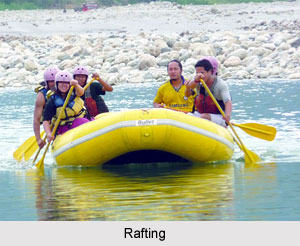
Rafting : Through the heart of East Siang district meanders the beautiful Siang River which finally joins the Brahmaputra River near Oriamghat of Assam. The river forms an ideal place for white water rafting. Till date, three rafting expeditions have been successfully conducted here form Gelling of far Upper Siang up to Pasighat. Out of these, two expeditions were undertaken by Indian Army and the third one was conducted by a joint Indo-Japanese team in the year 1990. The experience offered by this rafting is unmatched with any other rafting routes.
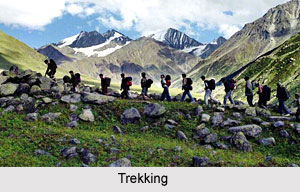
Trekking and Mountaineering : Trekking and mountaineering are other adventurous activities one can experience in East Siang district. The district offers a high scope for enjoying these activities owing to a plethora of majestic hills including Bapi Adi, Regam Dite, Rum Gonng Adi, Kiki, Bayor Adi and Messing Plateau. The altitude of these mountains ranges from 3000 to 4000 feet above sea level. Located at both sides of Siang these mountains can be approached from Boleng, Pangin and Pasighat. These trekking are organized near the banks of Siang villages which are situated in the nearby hills and along the Siang valley.
Angling : The confluence of Siang and Simang River, one of its tributaries, is known as Simang and is situated near Boleng. Simang is a well known angling destination in the East Siang district. The Department of Tourism had organized an angling festival in the year 1995 which also attracted foreigners from all over the world. Other popular angling spots in the district are formed by the confluence of Siyon and Siang, Dite-Dime and Yambung.
Recently updated articles in States of India
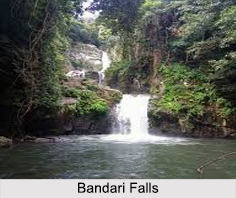
Bandare Waterfalls, Meghalaya
Bandare Waterfalls in South Garo Hills, Meghalaya, is a secluded natural attraction surrounded by dense subtropical forests and rugged mountain terrai...
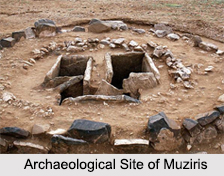
History of Thissur District
Early History of Thissur District explains flourishing of the port cities. Now these port cities are transformed into archaeological sites.
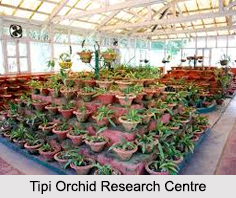
Tippi Orchid Research Centre, Arunachal Pradesh
Tippi Orchid Research Centre in Arunachal Pradesh is renowned for its rich collection of exotic and endangered orchids. Surrounded by lush rainforest...
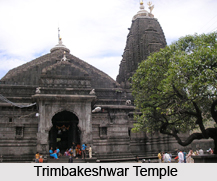
Tourism in Nashik District
Pilgrimage tourism in Nashik district involves visiting the various places of Hindu and Jain worship located here. Some of the holiest sites for Hind...
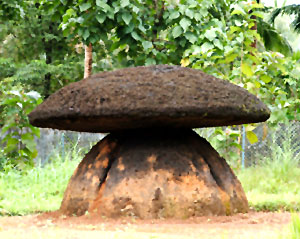
Mangadu, Kerala
Mangadu in Kerala’s Kollam district is a significant megalithic site known for its urn burials, cist burials, menhirs, and stone circles. Excavations...
Related articles in States of India
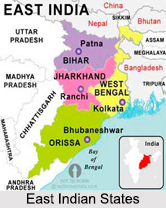
East Indian States
East Indian States comprises of Bihar, Jharkhand, West Bengal, Odisha and also the Union Territory of Andaman and Nicobar Islands. It defines the cult...
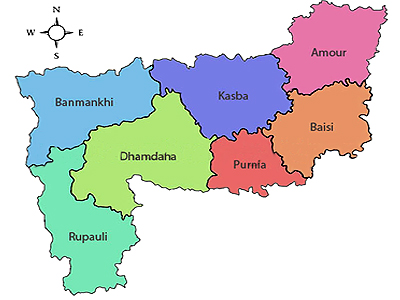
Purnia District in Bihar
Purnia District is located in Bihar and extends from River Ganga to Nepal. The district has a rich Hindu history and glorious past.
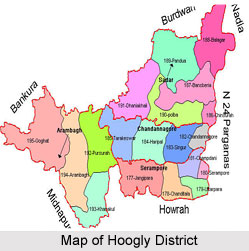
Hooghly district
Hooghly District along the bank of the river Hooghly is one of the principal trading ports of West Bengal.
Geography Of Chittoor District
Geography of Chittoor district is spread along the topography of the land which is divided into two natural divisions; Chittoor has a dry and healthy...
Districts of West Bihar
Districts of West Bihar is comprised of medieval monuments that were built by the different governors of Mughal era.