Administration of Bihar
Administration of Bihar comprises of secular democratic structure along with the political culture.

Share this Article:

Introduction

Administration of BiharAdministration of Bihar is headed by the Governor of the state. The present governor of Bihar is Ram Nath Kovind.

Ram Nath Kovind is a politician from the Bharatiya Janata Party (BJP). He was elected to Rajya Sabha from state of Uttar Pradesh during the two terms of 1994-2000 and 2000-2006. He is an advocate by profession and practices in Delhi. He is a former President of the BJP Dalit Morcha and President of the All-India Koli Samaj. He also served as national spokesperson of the party. On 8th August 2015 the President of India appointed him the Governor of Bihar.


Administration of Bihar during Mughal Period

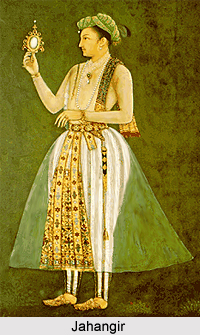
Administration of Bihar during Mughal PeriodAdministration of Bihar during the Mughal rule was an exact miniature of the central government. The head of our administration was the governor officially styled as Nazim and popularly known as Subadar. Jahangir began the practice of appointing royal princes to hold charge of the province of Bihar.

Prince Parwez was the first Mughal prince to get this office. The others who also belonged to this post were Suleman Shikoh, Azam and Azimusshan. Parwez gave his name to Paleza (Parwezabad) and built the Sangi (Pathar-ka-Masjid) at Patna. Mukhlis Khan was Parwez`s agent at Patna. Besides Governor, there were Diwan, Bakshi, Qazi, Sadar, keeper of the government property and Muhtasib. Each Subadar tried to play the role of the Emperor in his own jurisdiction. The Dewan was responsible for the management of the Exchequer and the revenue, Bakshi was the paymaster and kept the official account. The Qazi looked to the maintenance of canon law. The Sadar was in-charge of religious endowments and charity. The Muhtasib was in-charge of the public morals. His duty was to regulate the lives of the people in strict accordance with the Quranic rules and to enforce Prophet`s commands by putting down the drinking of distilled spirit, Bhang and other liquid intoxicants, gambling and the practice of immorality as a profession or in public.

There was no check upon the royal will. The office of the Wazir depended entirely on Emperor`s caprice. The Fauzdars were appointed at important centers to maintain order, punish rebels and wrong doers and help out in the collection of revenue when opposed. The villages were neglected and were left to live their own lives as self-governing units. Kotwai or Prefect of the Police was appointed in the cities.

The Kotwals had to enforce law and order and to discharge many functions of a modern municipality, control markets and maintain the Quranic rules of morality. The Subadar used to commit excesses and oppress the people. They used to seize merchants` goods in transit pay inadequate price or no price at all for them and utilized them for personal purposes. In spite of the repeated efforts of the emperors, such activities could not be checked.

The people had no economic liberty, no indefeasible right to justice or personal freedom. Political rights were unknown in those days. The nobles had no constitutional position. Popular happiness was unstable because it depended upon the sweet-will of the sovereign. During the later period, officials became corrupt and bribery and nepotism became rampant. However the people at the bottom were pure and simple.


Provincial Administration of Bihar

Provincial Administration of BiharProvincial Administration of Bihar was authorized in the Charter Act of 1853. The Charter Act of 1853 certified the Directors to constitute a new Province or to appoint Lieutenant-Governor.

Bengal was placed under a Lieutenant Governor in 1854 and this arrangement lasted till 1912 when it was again raised to the status of a full-fledged Governorship. Bihar was placed under a Lieutenant Governor in 1912 and subsequently under a Governor. Under the regime of British East India Company, the Provincial Governor had huge powers and he was the chief authority. He was the President of the Executive Council. He had the power to summon, prorogue or dissolve the Legislative Council and to order fresh elections. His permission was necessary for the introduction of private members` resolution for discussion in the Council He possessed the powers of certification against Legislature with regard to all bills including money-grants. The Act of 1919 introduced the system of Dual Government in the Provinces. There was an Executive Council in each of the Governor`s Province after 1919.

The Ministers were normally selected by the Governor. The Secretaries had direct access to the Governor and they were independent of Ministerial Control. The system could be demoralized into subservience to an irremovable executive. The successful working of the diarchy thus became impossible from the very beginning. The absence of well organized political parties in the Legislative Council, the existence of commercial differences, the financial difficulties and the consequent inability of Ministers and last, the inherent defects of the novel machinery of joint Government, made the diarchy a failure.

The introduction of diarchy created certain problems. The diarchy continued from 1921 to 1937. Muddiman Committee was appointed by the Government of India to investigate into the working of the diarchy. The report was published in 1925. Therein it was pointed out that the Finance member must be a member of the Executive Council. There was no force in the argument put forward in defense of this rule that trained men were required to fill the office. Bihar and Orissa was the only Province where there was an Indian Finance member and it was only here that expenditure on Transferred Department was not less than seventy percent.

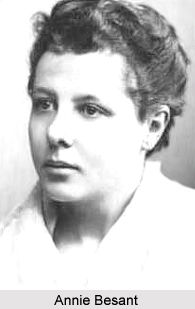
This was no mean achievement for Bihar in the face of such stiff opposition from the Government side. On the basis of Bihar, Dr. Annie Besant proposed that the division between the Transferred and Reserved subject be reduced, and in her opinion the work of Dr. Sinha proved that the constitutional difficulties with regard to finance could be reduced to a vanishing point if the department was placed under an able Indian. Viewed in the light of constitutional difficulties of the ministers under diarchy, the credit of establishing utilitarian institutions goes to Sir Ganesh Datta Singh, whose ministry was the longest and at the same time most remarkable. As a minister he was credited with having placed on the Statute-Book a liberally-conceived Local-Self Government Act, which is one of the best enacted under Diarchic regime as it enfranchised the District and Municipal Boards by vesting in them the right to elect their own Chairman and also larger powers of administration and control.

Role of Governor in Bihar

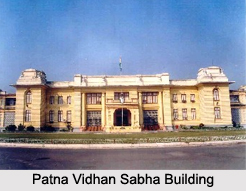
The constitutional head of the Government of Bihar is the Governor, who is appointed by the President of India. The real executive power rests with the Chief Minister of Bihar. The present Chief Minister of Bihar is Nitish Kumar. The political party or the coalition of political parties having a majority in the Legislative Assembly forms the Government.


Head of the Bureaucracy of Bihar

The head of the bureaucracy of the State is the Chief Secretary. Under this position, is a hierarchy of officials drawn from the Indian Administrative Service, Indian Police Service, and different wings of the State Civil Services.


Judicial Head of Bihar

The judiciary is headed by the Chief Justice of Bihar. The present Chief Justice of Patna High Court is Honourable The Acting Chief Justice Hemant Gupta. Bihar has a High Court which has been functioning since 1916. All the branches of the government are located in the state capital, Patna. The state is divided into nine divisions and 38 districts, for administrative purposes


Political Formation of Bihar

From the inception of political history of Bihar in independent India, this state goes into huge struggle against poverty and political anarchy. Lalu Prasad Yadav was the most popular Chief Minister of Bihar. Currently, there are two main political formations: the National Democratic Alliance (NDA) which comprises Bharatiya Janata Party, Lok Janashakti Party, Rashtriya Lok Samta Party and Hindustani Awam Morcha. JD(U)-led coalition which includes Rashtriya Janata Dal (RJD) and Indian National Congress. There are many other political formations in independent Bihar. The Communist Party of India, Marxist (CPIM) had a strong presence in Bihar at one time, but is weakened now. The CPM and Forward Bloc have a minor presence, along with the other extreme Left.

In contrast to prior governments, which emphasized divisions of caste and religion, Nitish Kumar`s manifesto was based on economic development, curbs on crime and corruption and greater social equality for all sections of society. Simultaneously the present government of Bihar introduced Bihar Special Court Act to curb crime, violence and domestic violence. It has also legislated for a two-hour break on Fridays, including lunch, to enable Muslim employees to pray and thus cut down on post-lunch absenteeism by them. The government has prohibited the sale and consumption of alcohol in the state since March 2016.


Share this Article:

Related Articles

More Articles in States of India


East Indian States
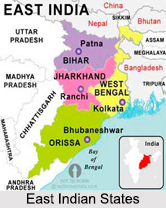
East Indian States comprises of Bihar, Jharkhand, West Bengal, Odisha and also the Union Territory of Andaman and Nicobar Islands. It defines the cultural heritage, rich historical background and the linguistic unity.
Erode District
Erode District is one of the districts in the state of Tamil Nadu. The district of Erode is having a land-locked area with no sea coast.
Purnia District in Bihar
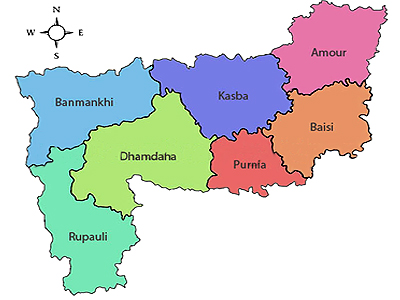
Purnia District is located in Bihar and extends from River Ganga to Nepal. The district has a rich Hindu history and glorious past.
South Delhi District
South Delhi District is the third largest district of Delhi as far as its area is concerned. South Delhi District is known for its economic, historical, cultural and social significance.
North Indian States
North Indian States formed the cultural and religious unity in spite of having many foreign invasion and the political disturbances from the early era till the British gained supremacy in Indian sub continent.
Kendujhar District
Kendujhar District, spread over an area of 8,240 sq kms, is as varied as the whole of Orissa with waterfalls roaring gorges, mountains and minerals. The manifold expressions of nature in Kendujhar District are considered as unique.
Hooghly district
Hooghly District along the bank of the river Hooghly is one of the principal trading ports of West Bengal.
Districts of South Tamil Nadu
Districts of South Tamil Nadu consist of many tourism destinations like archaeological sites and the history of Pandyas and Cholas. Considering their proximity to the sea, many districts also boast of serene beaches and coastal beauty.
Flora of Arunachal Pradesh
Flora of Arunachal Pradesh includes infinite species and is a subject of great interests for the botanists.
Districts of South Gujarat
Districts of South Gujarat are the epicenter of Jain pilgrimages and the early Hindu kingdoms.
North West States of India
North West States of India consist of three states, which are Rajasthan, Punjab and Haryana. All of them are culturally and traditionally diverse and they have been ruled by different dynasties in historical time.
Geography Of Chittoor District
Geography of Chittoor district is spread along the topography of the land which is divided into two natural divisions; Chittoor has a dry and healthy climate.
Districts of North Rajasthan
District of Northern part of Rajasthan is dotted with ancient forts and medieval villages.
Districts of North Odisha
District of North Odisha has Bengal boundary and shares the same culture. These are reachable if one pays a weekend visit to Digha.
Districts of West Bihar
Districts of West Bihar is comprised of medieval monuments that were built by the different governors of Mughal era.
Districts of South Haryana
Districts of South Haryana consists of many cities of industrial excellence. These districts are dotted with popular tourism destinations.
Medieval History of Assam
Medieval history of Assam narrates the advent and rule of a number of kingdoms in the region. The prominent dynasties of the kingdom left an everlasting imprint on the socio cultural heritage of India.
Geography of Meghalaya
The suitable climate, highland plateaus, rivers and the flora and fauna together forms the geography of Meghalaya.
Districts of Rayalaseema
Districts of Rayalaseema in Andhra Pradesh state has urban population and rural settlements as well.
Districts of South Punjab
Districts of Southern part of Punjab depict medieval history of Punjab and the rise of Sikhs.