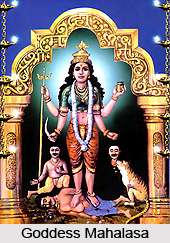
 Goddess Mahalasa also known as Mhalshi is considered as the Mohini avatar of Lord Vishnu. The people of Goa refer to the goddess as `Mahalasa Narayani.` Goddess Mahalasa is considered as the main deity or the family goddess of the Goud Saraswat Brahmins, Karhade Brahmins, Daivajnas and Bhandaris. The goddess is uniquely dressed with a holy thread that is worn only by the Brahmin men and also the male gods. This sacred thread is also worn by the goddess Parvati.
According another tradition, Mahalasa is believed to be a combined avatara of Mohini and Parvati and the first wife of Khandoba who is a warrior god in Maharashtra and believed to be an incarnation of Lord Shiva. She is worshipped with Khandoba in all centres of his worship, including Jejuri.
Legend of Goddess Mahalasa
According to legend when the Amrit was being churned from of the ocean a fight broke out between the Devas and Danavas to claim it. In order to help the Devas Lord Vishnu took the form of Mohini Avatar, a beautiful goddess. Mohini then took the jar and tactfully deceiving the Danavas served the Amrit to the devas. This Mohini form of Lord Vishnu is worshipped by the Hindus as the Goddess Mahalasa Narayani.
According to another legend Mahalasa is believed to be a combined avatara of Mohini and Parvati. Mahalasa is said to have been born as the daughter of a rich merchant in Newase named Timshet. On the divine orders of Khandoba in a dream to Timshet, Mahalasa was married to Khandoba on Pausha Pournima in Pali. Thus two shivlingas appeared on this occasion. An annual festival marking this event is celebrated in Pali every Paush Purnima.
Temples of Goddess Mahalasa
The main temple of Mahalasa in Mardol in the Indian state of Goa was shifted to this place when the Portuguese conquered Goa. The Mahalasa Narayani Temple has many other smaller temples of Santeri and Laxmi-Narayan who are worshipped daily with Mahalasa. The five main ganas of the Goddess namely Grampurush, Bhagwati, Dadh, Simha Purush and Mhal Purush are also located within the same temple premises and daily worship of all these deities is carried out before worshipping the main goddess.
Presently because of the increased popularity of the goddess, new temples have been established in Verna, Kumta, Mudgeri, Kundapura, Basruru, Shirva, Mangalore and many other places.