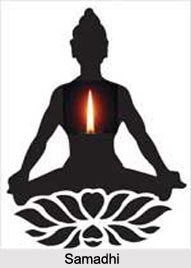
 Chandogya Upanishad is one of the oldest Upanishad written on the Vedic Brahmana period about ninth to eighth century BC. Chandogya Upanishad is associated with Sama Veda. It is ranked ninth in the Muktika canon of hundred and eight Upanishadas. The 1st Khanda of Chapter Eight of Chandogya Upanishad states about the Brahman in the heart. It states that within the abode of Brahman i.e. the human body Brahmapura there is a small lotus like chamber. Within it is a small akasa. That which is within the akasa is worthy of search and should be inquired after. One should desire to understand it. As far as this great akasa extends, the akasa also extends within the heart. The heaven and earth exist within it. Both Agni, and Vayu, both the sun and the moon, as also lightning and the stars, and whatever else exist in this universe as well as what not all exist within this akasa. However, one might have doubt that when old age overcomes it or when it perishes but the reality is even if the body becomes aged the Brahman, described as the akasa in the heart does not age. The body dies but the Brahman does not die. The Brahman and the body is the real truth. All desires exist in it. It is the real Self that is free from sin, free from death, free from old age, free from thirst, free from grief, free from hunger. All its desires and thoughts that come from the Self come true.
It further explains that just as people here on earth follow their leader`s commands and depends on the objects they desire, so also the people who are unaware of the real Self depend on other objects and attain results of their deeds. Just as, on earth, whatever is earned through work perishes, so does the next world, won by virtuous deeds, perish. It states that one who departs from the world without realizing the Self and the true desires cannot become free from the cycle of birth and death. Thus, one must try to understand and realize the real Self to get freedom in all the worlds.