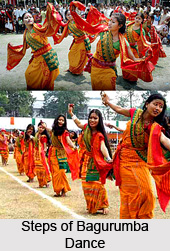
 Bagurumba dance is a folk dance practiced in the Assam state of India. The dance is also called as the "butterfly dance" due to its motion that resembles butterflies. The Bagurumba dance is usually performed during Bwishagu festival of the Bodos in the Bishuba Sankranti or in Mid-April. The Bwishagu festival begins with the worship of cows and then the young people bow down to their parents and other elders in the house. After this the Bathou is worshipped by offering the deity chicken and zou i.e., rice beer. The festival is celebrated with pleasure in all areas of Bodo community. The festival ends with a community prayer at Garjasali.
Performance of Bagurumba Dance
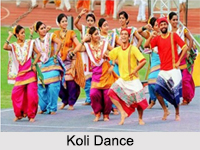
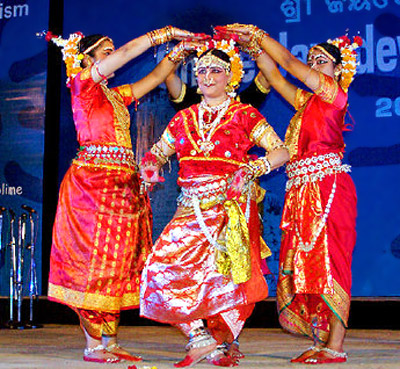
Among all the dances, the Bagurumba dance is considered as the best and the most attractive dance in Assam. This dance is an amalgamation of rhythm and vivacity. The dancers hop and swing, bend and unbend, and at times, give the impression of fluttering butterflies. This is mainly a formation dance performed with slow steps and outstretched hands. Bagurumba dance is generally performed by female dancers. A group of girls dressed in most colourful dokhna, jwmgra and aronai costumes usually perform this dance with the accompaniment of traditional musical instruments of Bodos. The dancers also decorate themselves with traditional jewellery. While dancing the performers utter words like "bagurumba hay bagurumba" etc.
The Bagurumba dance is executed to appease "Bathou" who is the supreme god of the Boros. The Sizu Plant is regarded as the symbol of this deity or god by the Boros. This dance is attractive, solemn and essays a simple description of the world of nature. Bagurumba dance is common in the Bodo inhabited areas of Kokrajhar, Bongaigaon, Nalbari, Darrang and Sonitpur districts. This dance is also called as the Bardwisikhla dance.
Musical Instruments of Bagurumba Dance
Musical instruments like Serja (a bowed instrument), Sifung (flute) and Tharkha (a piece of split bamboo), accompany this dance. Along with these, instruments like Kham, a long drum made of wood and goatskin and Gongona, a musical instrument of a curved horn is also used.
Classification of Bagurumba Dance
Over the years, the dance has gone certain modifications and has got two variations. One is Natural Bagurumba, which is performed without song, and the other is Royal Bagurumba, which is accompanied by songs.