
Chandogya Upanishad is one of the oldest Upanishad written on the Vedic Brahmana period about ninth to eighth century BC. Chandogya Upanishad is associated with Sama Veda. It is ranked ninth in the Muktika canon of hundred and eight Upanishadas. The 13th Khanda of Chapter One of Chandogya Upanishad states about the mystical meaning of the Stobha Syllables. According to it the Earth is verily the syllable hau; the air is the syllable hai; the moon is the syllable atha; the self is the syllable iha; the fire is the syllable i. The sun is the syllable u; the invocation is the syllable e; the Visva devas are the syllable au-ho-i; Prajapati is the syllable him; the Prana the syllable svara; food is the syllable ya; Virat is the syllable vak. The thirteenth stobha is indefinable. One who is aware of this and realises the secret knowledge of the Samans is receives the blessings of the speech.
This article is a stub. You can enrich by adding more information to it. Send your Write Up to content@indianetzone.com
13th Khanda of Chapter One
13th Khanda of Chapter One of Chandogya Upanishad states about the mystical meaning of the Stobha Syllables.
Recently updated articles in Indian Philosophy
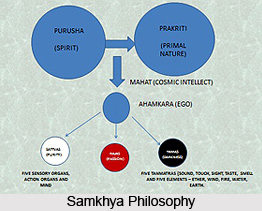
Samkhya Philosophy
Samkhya philosophy is one of India’s oldest intellectual traditions, explaining reality through the interplay of Puruṣha (pure consciousness) and Prak...

Maya, Prakriti in Hinduism
Maya or illusion is a very potent instrument of the Divine Prakriti, the Primal nature. In Hinduism one must be able to come out of Maya in order to a...

Samadhi in Hinduism
Samadhi is the result of meditation or that state of mind when there is an absence of all idea of individuality.

Samadhi in Buddhism
According to Buddhism, oen can only achieve samadhi through strict meditation and right concentration.

Abdul Rehman Jilani Dehlvi
Syed Abdul Rehman Jilani Dehlvi was a renowned Sufi saint of the Qadri Order in India.
Related articles in Indian Philosophy

Ajivika Philosophy
Ajivika philosophy is different from the mainstream religion
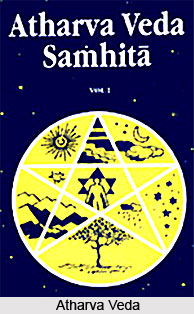
Indian Philosophy In The Vedic Period
Indian Philosophy in the Vedic Period was primarily based on the concepts of nature worship.
Achintya Bheda Abheda Philosophy
Achintya-Bheda-Abheda is a School of Vedanta that represents the philosophy of unimaginable one-ness and difference in relation to the power creation...
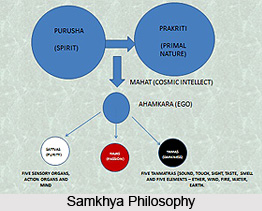
Samkhya Philosophy
Samkhya philosophy is one of India’s oldest intellectual traditions, explaining reality through the interplay of Puruṣha (pure consciousness) and Prak...
Charvaka Philosophy
The Charvaka Philosophy believes that only those things that can be perceived is the ultimate reality.