
Asiatic Society of Kolkata
Asiatic Society of Kolkata has done much towards the preservation of Indian archaeological and literary works. The Society, currently housing a Library and Museum, was set up by Sir William Jones in 1784.
Introduction
Asiatic Society was founded by Sir William Jones on January 15, 1784. The society acted as a kind of catalyst in archaeological research in that the study of antiquities found an institutional focus among the Europeans in India. Jones was interested in Indian products including plants and timber, the traditional system of Indian legal philosophy and the study of Sanskrit literature. The Society`s journal, Asiatick Researches was edited by Jones, where his `discourses`, before the Society were published between 1788 and 1793. There were ten such `discourses` which constitute the basic source of his ideas about ancient India.
Formation of Asiatic Society
William Jones came to India as a judge of the British East India Company court in Kolkata after a career as an oriental scholar and poet in England. He was very interested in the Oriental arts and works and it war with his initiative that the society was set up. The decision to form the society was taken in a meeting presided over by Sir Robert Chambers, the Chief Justice of the Supreme Court at the Fort William in Calcutta, then capital of the British Raj. The main reason behind forming the society was to f to enhance and further the cause of Oriental research.
History of Asiatic Society
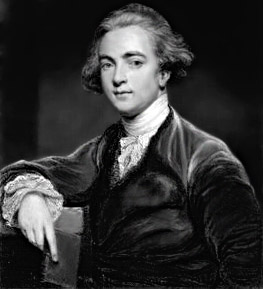 History of Asiatic Society reveals a long and tireless effort being made towards the preservation and propagation of Oriental literature and culture. Sir William Jones had set it up with the aim of establishing a centre for Asian studies including almost everything concerning man and nature within the geographical limits of the continent. Sir William Jones was the first man to think in terms of a permanent organisation for Oriental studies and researches on a grand scale in India. In the early days of the Asiatic Society, William Jones was unable to acquire land or funds to set up a permanent establishment for the Society to meet and hold meetings.
Formation of Asiatic Society : William Jones took the initiative and in January 1784 sent out a circular letter to selected persons of the elite with a view to establishing a Society for this purpose. In response to his letter, thirty European gentlemen of Kolkata including Mr. Justice John Hyde, Henry Vansittart, Charles Wilkins, Francis Gladwin, Jonathan Duncan and others gathered on 15 January 1784 in the Grand Jury Room of the old Supreme Court of Kolkata. The Chief Justice Sir Robert Chambers presided at the first meeting and Jones delivered his first discourse in which he put forward his plans for the Society. He proposed to found a Society under the name of The Asiatic Society. All the thirty European gentlemen who had assembled accepted the membership of this Society.
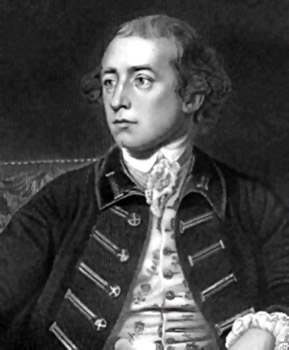
Beginnings of Asiatic Society : In the first meeting, the Governor-General, Warren Hastings, a scholar and patron of learning, was elected its fist President and Sir William Jones the Vice-President. Warren Hastings greatly sympathized with the aims and objects of the Society. But he declined to continue in this post. On his request and advice Sir William Jones was elected President of the Society on 5 February 1784 and held this post till his death in 1794. The pioneering activity of the Society was praised abroad. But the first two decades of the Society`s existence remained precarious. The original plan of holding meetings every week had to be discarded, and even monthly meetings were not possible. When William Jones died in 1794, till then the Society did not own any premise nor did it have any assured funds.
Building of Asiatic Society :
 In 1805 the Government gifted to the Society a plot of land at the corner of Park Street and Chowringhee, the present site of the Asiatic Society, to which was added later, in 1849, a small portion on the western side. The construction of the Society`s own building on the plot was completed in 1808, and the books, papers and records that had accumulated over the years could get a permanent shelter. As late as 1961, with the help extended by the Government of India and the Government of West Bengal, the construction of a new building was started in the premises of the Society to solve the problem of space, and the new four-storied building was formally opened by Dr. Sarvepalli Radhakrishnan, the then President of India, on 22 February 1965.
Library of Asiatic Society
 The Library of the Asiatic Society is the glory and honour of the Society. Its importance lies not in numerical strength but in its rich and unique contents. The collection has been built up mainly with gifts received from the members, dating back to 25 March 1784, when the Society received with thanks seven Persian manuscripts from Henri Richardson. The next gift came from William Marsden, F.R.S., his book, History of Island of Sumatra (1783) on 10 November, 1984.
Since the foundation of the Society, books, manuscripts, drawings, coins, antiquarian and other objects of historical importance were exhibited to the society`s meetings, and kept in the custody of the Secretary. As the Society had no habitat of its own, the risk of loss was serious. After the demise of the founder, the question of a permanent house for the Society was strongly felt for transacting its academic activities and for keeping and preserving for the posterity books, records, art, antiquarian and museum objects. The Society moved into its own building in the early part of 1808 and the Library was thrown open to the members and the public in the same year. Thus the Society laid the foundation of the first Academic as well as Public Library in India. The books that had been received till then formed the nucleus of the collection. Since then, gifts were pouring in from heads of States, like the Emperor of Russia, Institutions, Societies and individuals. Robert Home who was for some time Secretary of the Society and the first Library-in-Charge (1804), donated his small but very valuable collection of works on Art.
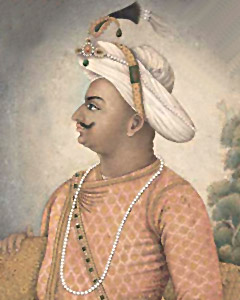
The first accession of importance was a gift from the Seringapatam Committee on 3 February 1808 being a selection from the Palace Library of Tipu Sultan. The Collection contains many old and rare works. Special mention may be made of an illuminated manuscript of the Holy Quran and an old text of Gulistan, and manuscripts of Padshanamah bearing an autograph of Emperor Shah Jahan. Similarly, Surveyor-General Colonel Mackenzie`s collection of manuscripts and drawings were received in December 1822. The collection has been grouped into three departments e.g.
(1) Printed Books and Periodicals
(2) Manuscripts and Archives and
(3) Museum Objects
The Printed Books Department has four sections, viz;
(1) European Languages
(2) Sanskritic & other Modern Indian Languages
(3) Perso-Arabic and Urdu and
(4) Sino-Tibetan and South-Asian Languages
Printed books are there in almost all the major languages of the world. There are about 1,49,000 volumes, particularly rich in works on Indology and Asiatic Lore, and in standard philological and scientific serials. The printed books in this department range in date from the latter half of the fifteenth century A.D. and one of its special features consists in the many items of rare works, otherwise unavailable, or scarcely available, including books printed in India in the late 18th and early 19th centuries. Total number of Manuscripts in 26 scripts and languages are 47,000 (approx). The total numbers of Journals are about 80,000.
Museum of Asiatic Society
The proposal for the construction of a Museum of the Asiatic Society was forwarded in 1796. And the structure got its final shape during the initial phase of 1814. Dr. N. Wallich was appointed as the supervisor of this Museum of the Asiatic Society. The Museum of the Asiatic Society flaunts a massive as well as remarkable repertory of Paintings, Manuscripts, Bronzes, Numismatic articles, i.e., coins, and Inscriptions. In 1849, the Museum launched the publication of its first catalogue, along with the informative catalogues, detailing regarding the other segments. Besides these a wide array of paintings, treasures, marvellous specimens such as the painting imaging Cupid asleep on Cloud, painted by the famous Artist Joshua Reynolds can also be found at the Asiatic Society. Moreover, Guido`s Cleopatra, A Ghat at Varanasi by Daniell, and other instances, glorify the gallery of paintings.
Contribution of Asiatic Society
The Asiatic Society authorities were the masterminds behind the construction of a public museum in Kolkata, so as to create awareness about the value of antiquity and heritage in India. Inevitably their proposal made to the Indian Government in 1839, received its appropriate response with the inauguration of the Indian Museum, Kolkata in 1866. The Asiatic Society, Kolkata had donated many of the precious items of its repository to the Indian Museum.
In the field of archaeology the contribution of Asiatic Society in Kolkata is undeniable. When James Prinsep, Assay-master of the East India Company mint in Kolkata, became the Secretary of the Asiatic Society in the early 1830`s, he played a major role in the initiation of field research. His own contribution to Indian studies makes him a legendary character. He was primarily responsible for the decipherment of the two most important historical scripts of India namely Brahmi Script and Kharosthi Script. With the decipherment of these two ancient scripts rapid progress was made in the fields of epigraphical and numismatic studies. This, in turn, led to a proper understanding of the chronology of historical sites. This was also the time when attempts were made to understand Buddhist legends on the basis of the two Sri Lankan chronicles, the Dipavamsa and the Mahavamsa. An important result was the discovery of the name Piyadasi or Ashoka in these Buddhist chronicles.
The Asiatic Society, Kolkata, has gone a long way in escalating the disciplines of Humanities and Science to the high pedestals of research and subsequent improvement. The Asiatic Society has propelled the establishment of the Trigonometrical Survey of India in 1818, the Geological Survey of India in 1851, the Indian Metrological Department in 1875, the Zoological Survey of India in 1911, and the Botanical Survey of India in 1912, etc.
In the field of archaeology the contribution of Asiatic Society in Kolkata is undeniable. When James Prinsep, Assay-master of the East India Company mint in Kolkata, became the Secretary of the Asiatic Society in the early 1830`s, he played a major role in the initiation of field research. His own contribution to Indian studies makes him a legendary character. He was primarily responsible for the decipherment of the two most important historical scripts of India namely Brahmi Script and Kharosthi Script. With the decipherment of these two ancient scripts rapid progress was made in the fields of epigraphical and numismatic studies. This, in turn, led to a proper understanding of the chronology of historical sites. This was also the time when attempts were made to understand Buddhist legends on the basis of the two Sri Lankan chronicles, the Dipavamsa and the Mahavamsa. An important result was the discovery of the name Piyadasi or Ashoka in these Buddhist chronicles.
The Asiatic Society, Kolkata, has gone a long way in escalating the disciplines of Humanities and Science to the high pedestals of research and subsequent improvement. The Asiatic Society has propelled the establishment of the Trigonometrical Survey of India in 1818, the Geological Survey of India in 1851, the Indian Metrological Department in 1875, the Zoological Survey of India in 1911, and the Botanical Survey of India in 1912, etc.
Membership of Asiatic Society
Membership of the Society for many years remained exclusively European, and only in January 1829, on the suggestion of Dr. Horace Hayman Wilson, Secretary of the Asiatic Society, Indian members were for the first time admitted to the Society. The earliest Indian members of the Society were Prasanna Kumar Tagore, Dwarkanath Tagore, Russamay Dutt and Ram Camul Sen.
Organisation of Asiatic Society
the beginning, the Society was very loosely organised and had no real Executive Body. It had only two important functionaries: a President who conducted meetings, and a Secretary who kept the minutes. Ram Comal Sen, the `native` manager of Hunter`s Press, later on became the `native` Secretary of the Asiatic Society itself.
Publications of Asiatic Society
The Transactions of the Asiatic Society were first published under the title of Asiatick Researches in 1788, the subsequent four volumes being published in 1790, 1793, 1795 and 1797 respectively. The publications were very popular and even translated into French and German. Through its published Transactions the Society came in touch with several distinguished scholarly Associations abroad such as the American Philosophical Society of Philadelphia, the Royal Society of Edinburgh and the Society of Antiquities of England. From 1788 till its cessation in 1839 the journal Asiatic Researches ran into twenty volumes and was superseded by the Journal of the Asiatic Society, henceforth the official organ of the Society.
Recently updated articles in Museums in India

Jaswant Garh Memorial
Jaswant Garh Memorial, located near Tawang in Arunachal Pradesh, commemorates the bravery of Rifleman Jaswant Singh Rawat, a hero of the 1962 Sino-Ind...
War Museum in Ranikhet
The War Museum at the Kumaon Regimental Centre in Ranikhet preserves the distinguished military heritage of the Kumaon Regiment. Its galleries feature...
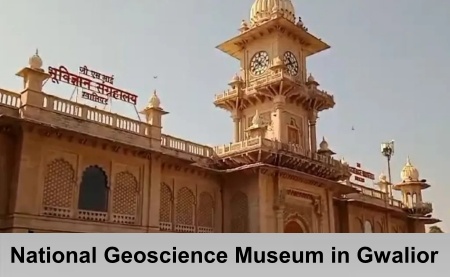
National Geoscience Museum in Gwalior
The National Geoscience Museum in Gwalior showcases India’s rich geological heritage through fascinating exhibits, including fossils, volcanic rocks,...
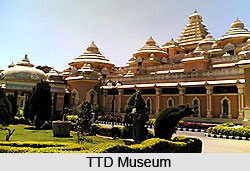
Sri Venkateswara Dhyana Jnana Mandiram/ TTD Museum
Sri Venkateswara Dhyana Jnana Mandiram, popularly known as the S.V. Museum, is a prominent cultural institution in Tirumala dedicated to preserving th...
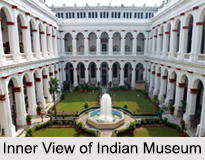
Indian Museum in Kolkata
Indian Museum at Kolkata is a versatile and multi disciplinary institution of national importance.
Related articles in Museums in India
National Geoscience Museum in Gwalior
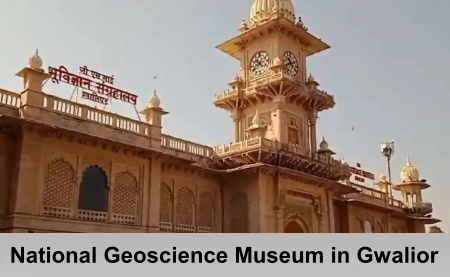
The National Geoscience Museum in Gwalior showcases India’s rich geological heritage through fascinating exhibits, including fossils, volcanic rocks,...
Indian Archaeological Museums
Indian Archaeological Museums are famous worldwide for their wonderful collection of archaeological elements. They represent the national and cultural...
Indian Museums
The various types of museums in India are the Indian art museums and galleries, Indian archeological museums, Indian historical museums and Indian sci...
Mizoram State Museum
The Mizoram State Museum nestled at Aizwal exhibits different archaeological objects, musical instruments, etc.