
Chandogya Upanishad, one of the oldest Upanishad has been written during the Vedic Brahmana period. Chandogya Upanishad is associated with Sama Veda. It is ranked ninth in the Muktika canon of hundred and eight Upanishadas. Chandogya Upanishad is the part of Chandogya Brahaman that contains ten chapters. The 10th Khanda of Chapter Four of Chandogya Upanishad describes about the story of Upakosala, the son of Kamala. He led the life of a Brahmachirin (religious student) with Satyakama, the son of Jabala. For twelve years he carefully attended his household fires. Satyakama permitted his other pupils to return to their homes after they had completed their Vedic studies but he kept back Upakosala and did not allow him to depart. Satyakama`s wife told him the Brahmachirin had successfully attended the household fires hence he must be taught completely. Else the fire would blame him. The teacher, however, went away on a journey without teaching him. Out of grief Upakosala began to fast and soon fell ill. The wife of the teacher enquired about the reason from abstaining from food. Upakosala told her that like many other men there are many desires within him. He is full of sorrows and would eat nothing. Considering his pitiful condition the fires discussed amongst themselves that they should teach him and he had faithfully attended to them. Thereupon the fires told him that the
Life (prana) is Brahman, Ka (joy) is Brahma and Kha (the akasa) is Brahma. Upakosala replied that he is aware of the knowledge that the Prana is Brahman, but he is unaware of neither the Ka nor the Kha. The fires told him that verily, that which is Ka is Kha, and that which is Kha is Ka, i.e. joy is the akasa and akasa is the joy. They taught him the prana (i.e. Brahman) and the akasa are related to each other.
10th Khanda of Chapter Four
10th Khanda of Chapter Four of Chandogya Upanishad describes about the story of Upakosala, the son of Kamala.
Recently updated articles in Indian Philosophy
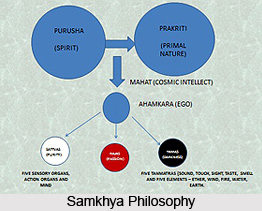
Samkhya Philosophy
Samkhya philosophy is one of India’s oldest intellectual traditions, explaining reality through the interplay of Puruṣha (pure consciousness) and Prak...
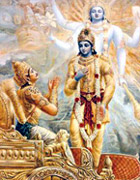
Maya, Prakriti in Hinduism
Maya or illusion is a very potent instrument of the Divine Prakriti, the Primal nature. In Hinduism one must be able to come out of Maya in order to a...
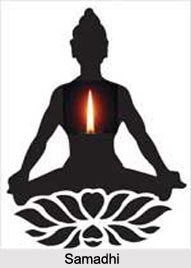
Samadhi in Hinduism
Samadhi is the result of meditation or that state of mind when there is an absence of all idea of individuality.
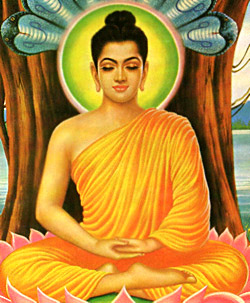
Samadhi in Buddhism
According to Buddhism, oen can only achieve samadhi through strict meditation and right concentration.
Abdul Rehman Jilani Dehlvi
Syed Abdul Rehman Jilani Dehlvi was a renowned Sufi saint of the Qadri Order in India.
Related articles in Indian Philosophy

Ajivika Philosophy
Ajivika philosophy is different from the mainstream religion
Indian Philosophy In The Vedic Period
Indian Philosophy in the Vedic Period was primarily based on the concepts of nature worship.
Achintya Bheda Abheda Philosophy
Achintya-Bheda-Abheda is a School of Vedanta that represents the philosophy of unimaginable one-ness and difference in relation to the power creation...
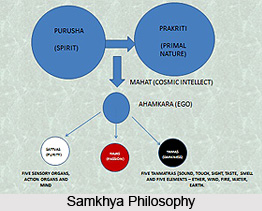
Samkhya Philosophy
Samkhya philosophy is one of India’s oldest intellectual traditions, explaining reality through the interplay of Puruṣha (pure consciousness) and Prak...
Charvaka Philosophy
The Charvaka Philosophy believes that only those things that can be perceived is the ultimate reality.